
Malala Yousafzai Biography Quotes 5 Report mistakes
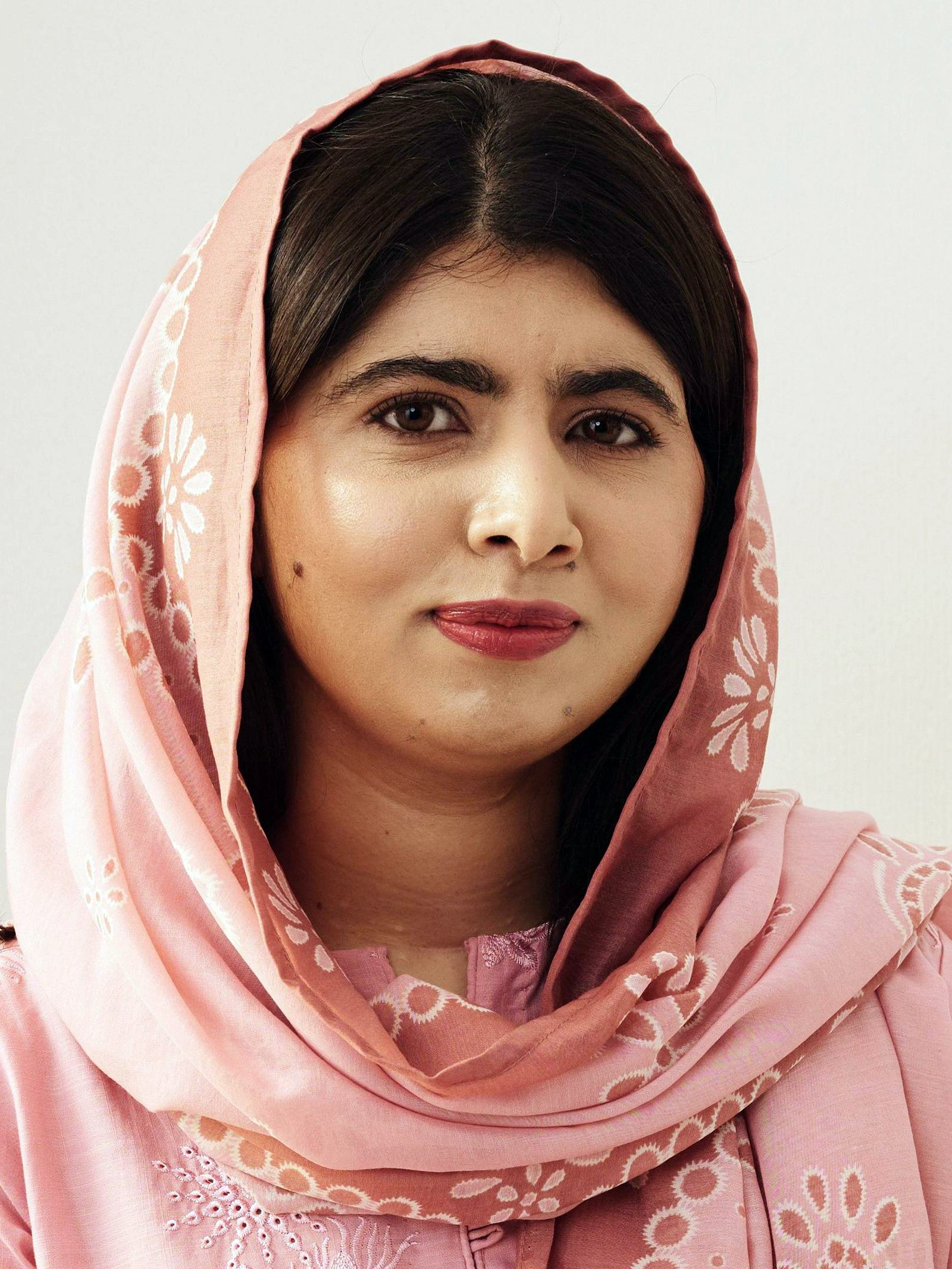
Attr: BBC News
| 5 Quotes | |
| Native name | ملاله یوسفزۍ |
| Occup. | Activist |
| From | Pakistan |
| Spouse | Asser Malik |
| Born | July 12, 1997 Mingora, Swat District, Khyber Pakhtunkhwa, Pakistan |
| Age | 28 years |
| Cite | |
Citation Formats
APA Style (7th ed.)
Malala yousafzai biography, facts and quotes. (2026, March 19). FixQuotes. https://fixquotes.com/authors/malala-yousafzai/
Chicago Style
"Malala Yousafzai biography, facts and quotes." FixQuotes. March 19, 2026. https://fixquotes.com/authors/malala-yousafzai/.
MLA Style (9th ed.)
"Malala Yousafzai biography, facts and quotes." FixQuotes, 19 Mar. 2026, https://fixquotes.com/authors/malala-yousafzai/. Accessed 20 Mar. 2026.
Early Life and Background
Malala Yousafzai was born on July 12, 1997, in Mingora, in Pakistan's Swat Valley, a region of great beauty that became, during her childhood, a theater of militancy, fear, and state failure. She was named after Malalai of Maiwand, the Pashtun folk heroine, and that choice mattered: in a culture where many girls' births were met with muted celebration, her father, Ziauddin Yousafzai, greeted her as a child to be heard. He was a teacher, poet, and school founder; her mother, Toor Pekai, brought religious devotion, practical strength, and a quieter model of endurance. The household was not wealthy, but it was intellectually alive. Discussion, poetry, and politics were ordinary parts of domestic life, and Malala grew up with an unusual conviction that her mind was not secondary to her sex.Her early years unfolded against the instability that followed the post-9/11 era in Pakistan, when the Taliban's influence spread into Swat under Maulana Fazlullah. What had been a tourist valley became a place of bombings, edicts, and assassinations. Girls' schools were threatened, then destroyed; public life narrowed; fear entered classrooms. For Malala, this was not abstract geopolitics but the intimate demolition of childhood routine. The conflict sharpened her sense that education was not merely personal advancement but a line between dignity and subjugation. The very fact that she wanted to go to school became a political act, and the violence around her accelerated a moral seriousness rare in adolescence.
Education and Formative Influences
Malala was educated first in the schools her father ran, especially Khushal Public School, where she absorbed both formal lessons and the civic idealism of a teacher who believed speech could resist terror. Ziauddin's activism on behalf of schooling gave her a script and a stage, but she quickly made the cause her own. In 2008, while still a child, she began speaking publicly about girls' right to education. In early 2009, as the Taliban tightened their rule, she wrote an anonymous diary for BBC Urdu under the pseudonym Gul Makai, describing the closing of schools and the psychology of living under threat. These entries are among the clearest windows into her formation: they show not only courage but a habit of witness, a refusal to let coercion define reality. Television appearances and interviews followed, and with them a widening public identity. Yet the central influence remained simple and durable - a home that treated learning as liberation, and a father who gave her language for injustice without scripting her conscience.Career, Major Works, and Turning Points
The decisive rupture came on October 9, 2012, when a Taliban gunman boarded her school bus and shot her in the head at close range, targeting her by name. The attack, intended to silence a schoolgirl, transformed her into an international symbol. After emergency treatment in Pakistan, she was flown to Birmingham, England, where she underwent surgeries and a long recovery. Rather than retreat, she converted survival into public purpose. In 2013 she addressed the United Nations on her sixteenth birthday, published the memoir I Am Malala, and helped launch the Malala Fund to support girls' education globally. In 2014 she became, with Kailash Satyarthi, the youngest Nobel Peace Prize laureate in history. Her later work widened from testimony to institution-building: advocacy in Nigeria, Syria's refugee context, Afghanistan, and many other regions; books including Malala's Magic Pencil and We Are Displaced; and, after studying Philosophy, Politics, and Economics at Oxford, a more expansive role as writer, producer, and global campaigner. The turning point was not only the assassination attempt itself, but her refusal to let victimhood become her final identity.Philosophy, Style, and Themes
Malala's public philosophy is built on an idea at once modest and radical: the classroom is the first architecture of freedom. Her rhetoric favors moral clarity over ideological complexity, which is part of its power. “Education is education. We should learn everything and then choose which path to follow. Education is neither eastern nor western, it is human”. That sentence reveals her instinctive universalism. She rejects the false choice between cultural authenticity and girls' schooling, framing education as a human right prior to political camps. Her thought also carries a democratic minimalism: “One child, one teacher, one book, one pen can change the world”. The inventory is ordinary, almost disarmingly so, which is precisely the point - transformation begins not with grand abstractions but with accessible tools and relationships.Psychologically, her style fuses vulnerability with multiplication of self. She often presents her own body as historically contingent, even fragile, then immediately turns outward toward collective agency. “Though I appear as one girl, one person, who is 5 foot 2 inches tall, if you include my high heels, I am not a lone voice, I am many”. That wit is not incidental; it is a defense against sanctification and a method of reclaiming narrative control after trauma. She has consistently refused the narrower script of heroic martyrdom, preferring the language of continuity, discipline, and shared struggle. The deepest theme in her work is not bravery in the cinematic sense, but persistence - the belief that terror can wound a person without owning her imagination. Her speeches and writing return again and again to girls as political subjects, not objects of pity, and to literacy as a way of entering history with one's own voice intact.
Legacy and Influence
Malala Yousafzai's legacy lies in how she altered the moral vocabulary of global education activism. She made the denial of schooling to girls harder to treat as a local custom and easier to recognize as a universal injustice. Her influence extends beyond awards and headlines because she joined symbol to structure: a survivor's story to a sustained funding and advocacy network. She also changed representation itself - a young Muslim Pakistani woman speaking in her own name to global institutions, without surrendering either faith or feminism. For many admirers she stands for courage; for historians, something more durable: the conversion of private injury into public ethics. Her life belongs to the era of the war on terror, media globalization, and transnational human-rights politics, yet it also exceeds that era. She remains a reminder that the defense of a girl's desk in a classroom can become a referendum on the conscience of the world.Our collection contains 5 quotes written by Malala.
Source / external links