
Malcolm Bradbury Biography Quotes 8 Report mistakes
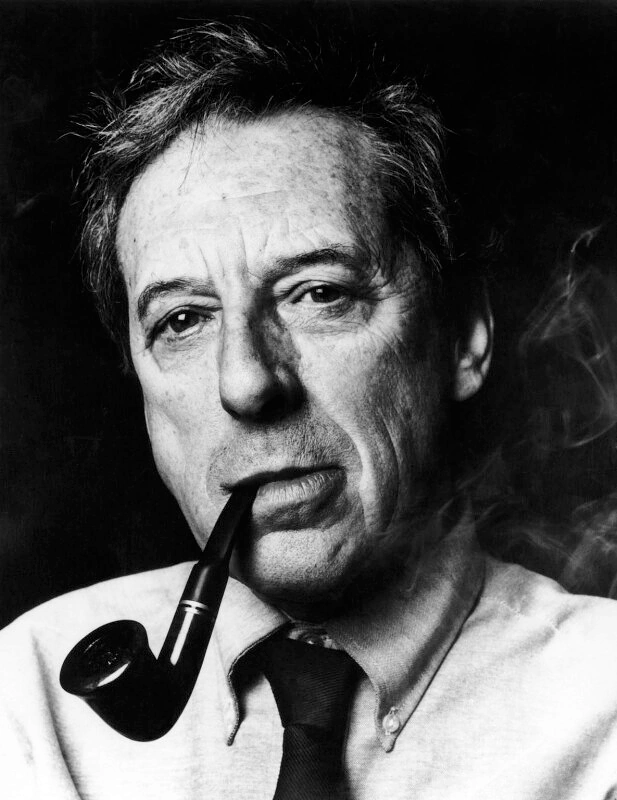
| 8 Quotes | |
| Born as | Malcolm Stanley Bradbury |
| Occup. | Novelist |
| From | United Kingdom |
| Born | September 7, 1932 Sheffield, England |
| Died | November 27, 2000 Norwich, England |
| Cause | Stroke |
| Aged | 68 years |
| Cite | |
Citation Formats
APA Style (7th ed.)
Malcolm bradbury biography, facts and quotes. (2026, February 11). FixQuotes. https://fixquotes.com/authors/malcolm-bradbury/
Chicago Style
"Malcolm Bradbury biography, facts and quotes." FixQuotes. February 11, 2026. https://fixquotes.com/authors/malcolm-bradbury/.
MLA Style (9th ed.)
"Malcolm Bradbury biography, facts and quotes." FixQuotes, 11 Feb. 2026, https://fixquotes.com/authors/malcolm-bradbury/. Accessed 27 Mar. 2026.
Early Life and Background
Malcolm Stanley Bradbury was born on September 7, 1932, in Sheffield, Yorkshire, into an England still marked by interwar austerity and, soon, wartime rationing. He grew up in the cultural afterimage of the Blitz and the political afterimage of empire - a setting that sharpened his ear for class codes, institutional manners, and the comedy that leaks from public seriousness. The postwar settlement promised fairness and education, but it also produced new bureaucracies, new orthodoxies, and new forms of self-deception - material Bradbury would later mine with affectionate skepticism.He moved between northern provincial life and the widening horizons of a country rebuilding itself and refashioning its identity. That tension - between local accent and national ambition, between inherited decorum and modern disruption - became his psychological home ground. In his fiction, England is rarely merely a place; it is a set of habits, evasions, and social signals, and his early years gave him the instinct to treat those signals as both comedy and evidence.
Education and Formative Influences
Bradbury studied at University College Leicester (later the University of Leicester), where he encountered the postwar expansion of higher education from the inside, then went on to Queen Mary College, University of London, and later the United States, where he absorbed the swagger and restlessness of American academic and literary culture. He came of age as British fiction shifted from high modernist monumentality toward satire, campus comedy, and the documentary feel of postwar realism - while American writing offered him a different rhythm of speech, ambition, and cultural confidence. These cross-Atlantic experiences became formative not only to his settings but to his sense of literature as a living argument between societies.Career, Major Works, and Turning Points
Bradbury built a dual career as novelist and scholar, becoming one of the most influential teachers of creative writing in Britain through the University of East Anglia (UEA), where he helped found its pioneering Creative Writing program. He wrote the era-defining campus novel The History Man (1975), a sharp portrait of ideological fashion and personal opportunism in a 1970s university, and followed with novels that tested modernity through comedy and unease, including Rates of Exchange (1983) and Doctor Criminale (1992). As a critic and historian of fiction, he co-authored The Modern British Novel (1993) and wrote widely on postwar literature, helping to explain the very cultural machinery he satirized. A key turning point was his sustained engagement with America - as visitor, observer, and comparatist - which gave him a wider stage for examining Englishness and the new professional class of writers, academics, and media figures.Philosophy, Style, and Themes
Bradbury was a comic anatomist of culture: he treated institutions as theaters where people perform virtue, trendiness, and rebellion, often simultaneously. His prose favors brisk intelligence, quick scene-setting, and dialogue that exposes the gap between what characters say and what they mean. He distrusted slogans, whether conservative or radical, not because he lacked convictions but because he saw how easily convictions can become career strategies. The university in his work is less a sanctuary of truth than a marketplace of reputations, where politics can become a new etiquette and scholarship a type of status display.His underlying psychology was that of a humane skeptic who believed detail is the antidote to grandiosity. “Culture is a way of coping with the world by defining it in detail”. That line captures both his method and his inner posture: when ideology inflates, he zooms in on the furniture of daily life - seminars, dinner parties, committees - to show how power actually moves. He also played English social manners against American directness, using national contrasts to expose self-flattery and hypocrisy: “The English are polite by telling lies. The Americans are polite by telling the truth”. Even his sharper one-liners are diagnostic rather than merely cruel; “I like the English. They have the most rigid code of immorality in the world”. In Bradbury, wit is never ornament - it is a scalpel used to cut through piety, revealing how decent people rationalize their compromises and how intelligent people confuse verbal agility with moral clarity.
Legacy and Influence
Bradbury died on November 27, 2000, leaving a body of work that helped define the modern British campus novel and, more broadly, the comedy of contemporary intellectual life. His influence extends through the writers he taught at UEA, the critical frameworks he helped popularize for understanding postwar fiction, and the durable example of satire that remains serious about culture without becoming solemn. In an age of competing certainties, his novels continue to read as field reports from inside the institutions that manufacture opinion - funny, uncomfortable, and unexpectedly tender toward the human need to belong.Our collection contains 8 quotes written by Malcolm, under the main topics: Witty One-Liners - Ethics & Morality - Wisdom - Sarcastic - Father.
Other people related to Malcolm: Ian Mcewan (Author)
Malcolm Bradbury Famous Works
- 2000 To the Hermitage (Novel)
- 1992 Doctor Criminale (Novel)
- 1987 Cuts (Novel)
- 1983 Rates of Exchange (Novel)
- 1975 The History Man (Novel)
- 1965 Stepping Westward (Novel)
- 1959 Eating People is Wrong (Novel)
Source / external links