
Malcolm Campbell Biography Quotes 3 Report mistakes
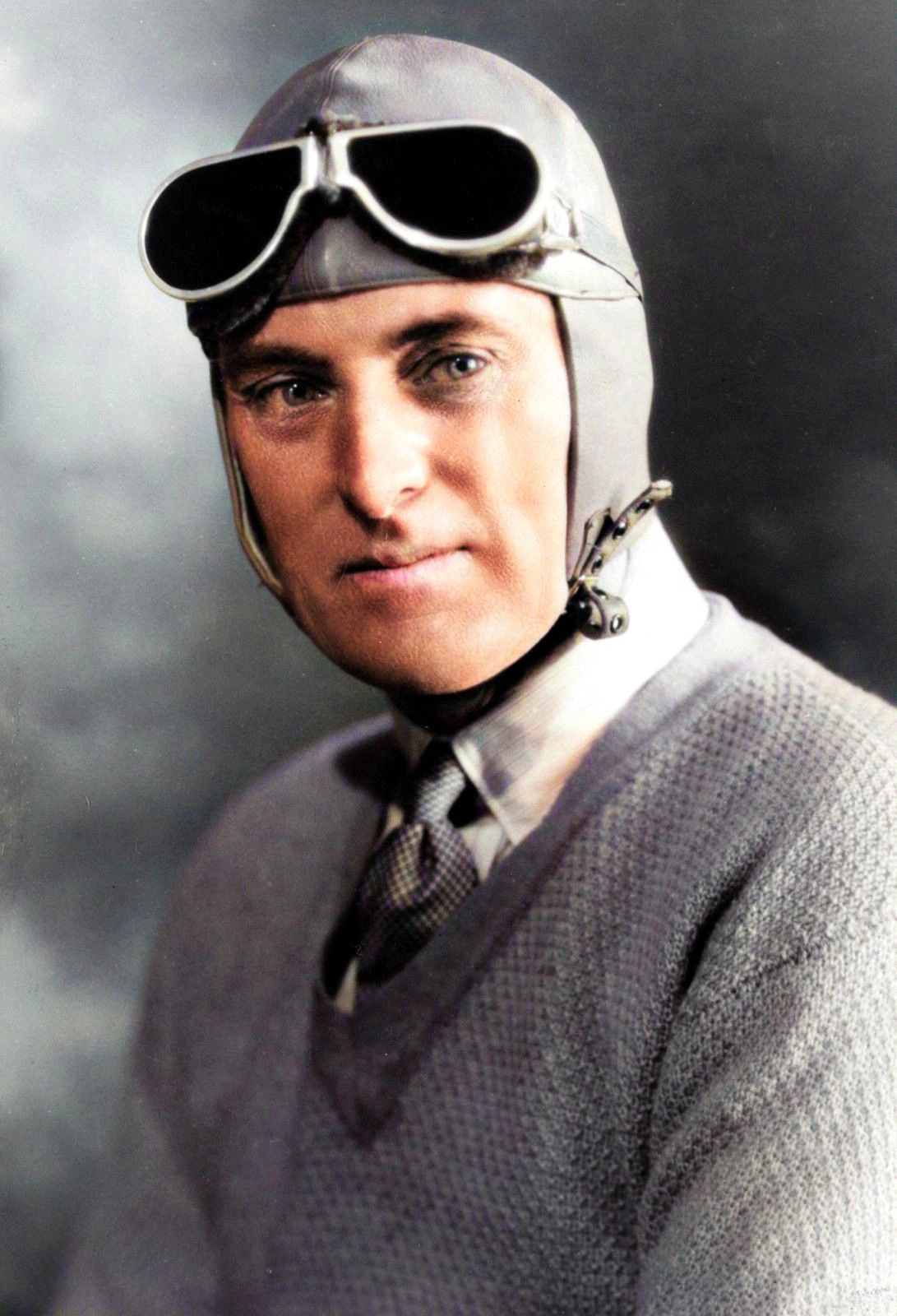
| 3 Quotes | |
| Born as | Sir Malcolm Campbell |
| Occup. | Celebrity |
| From | England |
| Born | March 11, 1885 Chislehurst, Kent, England |
| Died | December 31, 1948 Reigate, Surrey, England |
| Aged | 63 years |
| Cite | |
Citation Formats
APA Style (7th ed.)
Malcolm campbell biography, facts and quotes. (2026, February 11). FixQuotes. https://fixquotes.com/authors/malcolm-campbell/
Chicago Style
"Malcolm Campbell biography, facts and quotes." FixQuotes. February 11, 2026. https://fixquotes.com/authors/malcolm-campbell/.
MLA Style (9th ed.)
"Malcolm Campbell biography, facts and quotes." FixQuotes, 11 Feb. 2026, https://fixquotes.com/authors/malcolm-campbell/. Accessed 7 Mar. 2026.
Early Life
Sir Malcolm Campbell was born on 11 March 1885 in Chislehurst, Kent, England, into a family connected to the City of London diamond trade. He grew up at a time when motorized transport was still novel, and from an early age he gravitated toward machines and speed. Before he ever chased records, he absorbed the culture of club motorsport and the lure of new engineering. He later adopted the name Blue Bird for his machines, inspired by a stage production of The Blue Bird, a title that came to define his public identity.Motorsport Beginnings
Campbell first competed on motorcycles and soon graduated to cars at Brooklands, the great banked circuit in Surrey that served as a crucible for British speed culture. There he learned the craft of tuning and endurance, and he formed relationships with mechanics and engineers who would become indispensable. Among the most important was Leo Villa, the practical, ingenious chief mechanic who stood alongside Campbell at record attempts for years and later supported Campbell's son. These early seasons established Campbell's reputation as a determined and theatrical competitor, comfortable under newsreel cameras and firmly at home in the noisy workshops that kept his cars alive.War Service and Return to Speed
During the First World War, Campbell served in British forces, experience that heightened his familiarity with engines and disciplined preparation. When the conflict ended, he returned to civilian life with renewed focus. The 1920s opened a new frontier: record-breaking on open beaches and salt flats, where surface, weather, and engineering each had to align for mere seconds of measured time.Pursuit of the Land Speed Record
Campbell's first great stages were Pendine Sands in Wales and then Daytona Beach in Florida. At Pendine, in the mid-1920s, he pushed the powerful Sunbeam 350HP and subsequent Blue Bird machines to headline-grabbing marks. The era was charged with camaraderie and rivalry. Sir Henry Segrave, an English-born record-setter like Campbell, raised the bar and embodied the same public fascination with speed; John Parry-Thomas, another pioneer, lost his life at Pendine, a stark reminder of the hazards Campbell never ignored.The technical complexity escalated as speeds rose. Campbell worked with the gifted engineer Reid Railton and the Brooklands firm Thomson & Taylor to evolve Blue Bird into ever more capable forms, using engines such as the Napier Lion and, later, the Rolls-Royce R aero engine. With this blend of design, power, and meticulous preparation by Leo Villa and the team, Campbell carried the record from the beach at Daytona to the vast openness of the Bonneville Salt Flats in Utah. On 3 September 1935, at Bonneville, he became the first person officially to exceed 300 miles per hour on land in his Blue Bird, a symbolic frontier that cemented his celebrity. For his achievements he had already been knighted by King George V, a royal recognition that reflected how his feats had become national events.
Water Speed Records
Having conquered the land, Campbell turned to water, applying the same showmanship and method to hydroplanes. In the late 1930s he set world water speed records in Blue Bird K3 and later K4, on lakes including Lake Maggiore and Coniston Water. The work demanded a new vocabulary of hull dynamics, propellers, and cavitation, but the familiar cast remained: Campbell at the helm, engineers refining designs ashore, and Leo Villa managing the precise choreography that allowed a short, searing run to be both fast and survivable. Segrave's earlier death while seeking the water record underscored the stakes; Campbell's successes were therefore both technical and personal milestones.Public Figure and Media Presence
Campbell was a consummate public figure. Newsreels, photographs, and newspaper columns turned his record attempts into communal spectacles. He wrote and spoke about speed and engineering, promoting British industry and the virtues of disciplined experimentation. Sponsors and manufacturers found in him a confident advocate who could translate complex engineering into a compelling national story. His public image was not accidental; it was crafted with care, supported by a circle of engineers, mechanics, and friends who understood that spectacle and substance must travel together.Later Years, War, and Death
As war loomed again, Campbell's professional focus shifted. He contributed experience and energy in support of national needs, while the all-out record programs paused. After the war, his health declined. He died on 31 December 1948 in Reigate, Surrey. He was survived by his family, including his son Donald Campbell and his daughter Jean. Donald would carry the Blue Bird name forward, pursuing both land and water records with Leo Villa again at his side, a direct continuation of the team culture and ambition Malcolm had cultivated.Legacy and Relationships
Campbell's legacy lies as much in the networks he built as in the numbers he posted. Reid Railton's engineering genius shaped the Blue Bird machines and later influenced the work of other record figures such as John Cobb. Thomson & Taylor provided the workshop crucible where advanced ideas became running vehicles. Leo Villa connected the generations, preserving a deep practical memory of what it took to break a world mark. The roll call of contemporaries, including Segrave and Cobb, situates Campbell within a golden age when Britain made speed a national art. The 300 mph breakthrough at Bonneville remains an emblem of that era, but so too does the image of a collaborative enterprise: a driver at the wheel, an engineer at the drawing board, a mechanic at the spanner, each sharing both risk and triumph.Campbell's life stitched together Brooklands banking, Welsh sands, American beaches, and Utah salt into one coherent narrative of modern speed. He helped define the role of the driver as both technician and celebrity, anchoring British pride in ingenuity and daring. Through Donald Campbell's later exploits and the enduring fame of the Blue Bird name, the story he began continued well beyond his own lifetime, ensuring that his achievements, and those of the people around him, would remain fixed in the long arc of motorsport history.
Our collection contains 3 quotes written by Malcolm, under the main topics: Witty One-Liners - Time - Contentment.
Source / external links