
Malcolm Muggeridge Biography Quotes 24 Report mistakes
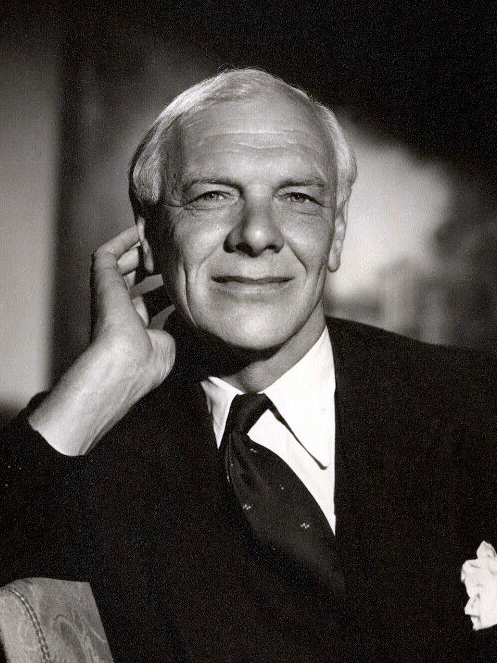
| 24 Quotes | |
| Born as | Thomas Malcolm Muggeridge |
| Occup. | Journalist |
| From | United Kingdom |
| Born | March 24, 1903 Sanderstead, Surrey, England |
| Died | November 14, 1990 |
| Aged | 87 years |
| Cite | |
Citation Formats
APA Style (7th ed.)
Malcolm muggeridge biography, facts and quotes. (2026, February 11). FixQuotes. https://fixquotes.com/authors/malcolm-muggeridge/
Chicago Style
"Malcolm Muggeridge biography, facts and quotes." FixQuotes. February 11, 2026. https://fixquotes.com/authors/malcolm-muggeridge/.
MLA Style (9th ed.)
"Malcolm Muggeridge biography, facts and quotes." FixQuotes, 11 Feb. 2026, https://fixquotes.com/authors/malcolm-muggeridge/. Accessed 5 Mar. 2026.
Early Life and Background
Thomas Malcolm Muggeridge was born on March 24, 1903, in Croydon, Surrey, into the dissenting, argumentative culture of British socialism. His father, H. T. Muggeridge, was a committed Labour organizer and later a Member of Parliament, and the household combined moral earnestness with political combativeness. That mixture - conscience sharpened into controversy - became Malcolm's native element. He grew up watching words used as weapons and ideals tested against compromise, a formative scene for a future satirist who would spend decades puncturing cant on the left, the right, and in himself.The Edwardian promise of progress soon dissolved into the aftershock of the First World War and the brittle optimism of the 1920s. Muggeridge came of age amid the collapse of old certainties, when Marxism, psychoanalysis, and mass entertainment offered new explanations of human motives. His early temperament ran toward restless contrarianism and a suspicion that public virtue often masked private appetite - a suspicion that would harden after he saw how totalizing ideologies could command loyalty while quietly requiring lies.
Education and Formative Influences
He was educated at Selhurst Grammar School and then at Selwyn College, Cambridge, where he edited the student paper Granta and apprenticed himself to the moral tradition of English satire from Swift onward. Cambridge also exposed him to the glamour of radical politics and the literary set, but his more enduring education came from disappointment: the sense that fashionable opinions were often rehearsed performances, and that the modern cult of pleasure and novelty could be as coercive as Victorian respectability. By the late 1920s he was already writing with the detachable irony of a man unwilling to be absorbed by any club, even the club he liked.Career, Major Works, and Turning Points
Muggeridge worked as a journalist and foreign correspondent in the interwar years, including time in India and then the Soviet Union in the early 1930s, where the famine in Ukraine and the regime's propaganda machine decisively altered him. Reporting for the Manchester Guardian and other outlets, he became one of the earliest Western journalists to describe the catastrophe of collectivization, even as fellow travelers minimized it; the experience vaccinated him against utopian certainties and made him alert to the ways editors, governments, and readers collude in convenient falsehoods. After the Second World War he became a prominent British media presence - notably as editor of Punch (1953-1957) and later through television as a sharp, unsettling interviewer - while producing an abundant body of books and essays, including satirical fiction and moral critique. In later life his long spiritual search culminated in a public embrace of Christianity and, eventually, reception into the Roman Catholic Church (1982), a turning point that reframed his earlier pessimism as a theological diagnosis rather than mere misanthropy.Philosophy, Style, and Themes
His governing subject was self-deception - not only the state's lies but the soul's desire to be lied to. He wrote as a moral psychologist who distrusted systems because he distrusted the human heart that builds them. That is why his aphorism, “People do not believe lies because they have to, but because they want to”. , fits his lifelong reportage: famine denied, wars prettified, celebrity mythologized, and private vice translated into public principle. For Muggeridge, the scandal was less that power manipulates than that audiences crave manipulation when it flatters their cravings.Over time his satire narrowed onto what he took to be the central modern seduction: erotic liberation and consumer comfort as substitutes for transcendence. “Sex is the mysticism of materialism and the only possible religion in a materialistic society”. was not a prudish slogan but his diagnosis of a vacuum - if nothing higher is believed in, desire becomes sacred by default. The same moral logic animated his suspicion of conformist opinion, summed in his warning, “Never forget that only dead fish swim with the stream”. His style - epigrammatic, barbed, theatrically self-aware - made him a difficult ally because he aimed his skepticism at every camp, including his own earlier enthusiasms. The inner drama beneath the polemic was a man haunted by the gap between what people say they want and what they actually worship, and increasingly convinced that without God the modern self would be condemned to chase appetite under the name of freedom.
Legacy and Influence
Muggeridge endures as a rare English public intellectual who moved from youthful radicalism to a mature, unpopular seriousness without losing wit. His early witness to Soviet terror and famine helped establish a counter-narrative to Western romanticism about communism, while his later television work and essays modeled an older idea of journalism as moral inquiry rather than mere information or branding. He influenced later Christian writers and cultural critics by showing how satire can be penitential - a tool for exposing the idolatries of an age, and the idolatries within oneself. Even readers who reject his conclusions return to him for the same reason his contemporaries bristled: he insisted that the real story is not the headline, but the human appetite that makes the headline believable.Our collection contains 24 quotes written by Malcolm, under the main topics: Witty One-Liners - Ethics & Morality - Wisdom - Truth - Sarcastic.
Other people related to Malcolm: Walter Duranty (Journalist)
Malcolm Muggeridge Famous Works
- 1976 A Third Testament (Book)
- 1973 Chronicles of Wasted Time (Book)
- 1973 The Infernal Grove (Book)
- 1972 The Green Stick (Book)
- 1969 Jesus Rediscovered (Book)
Source / external links