
Mangosuthu Buthelezi Biography Quotes 24 Report mistakes
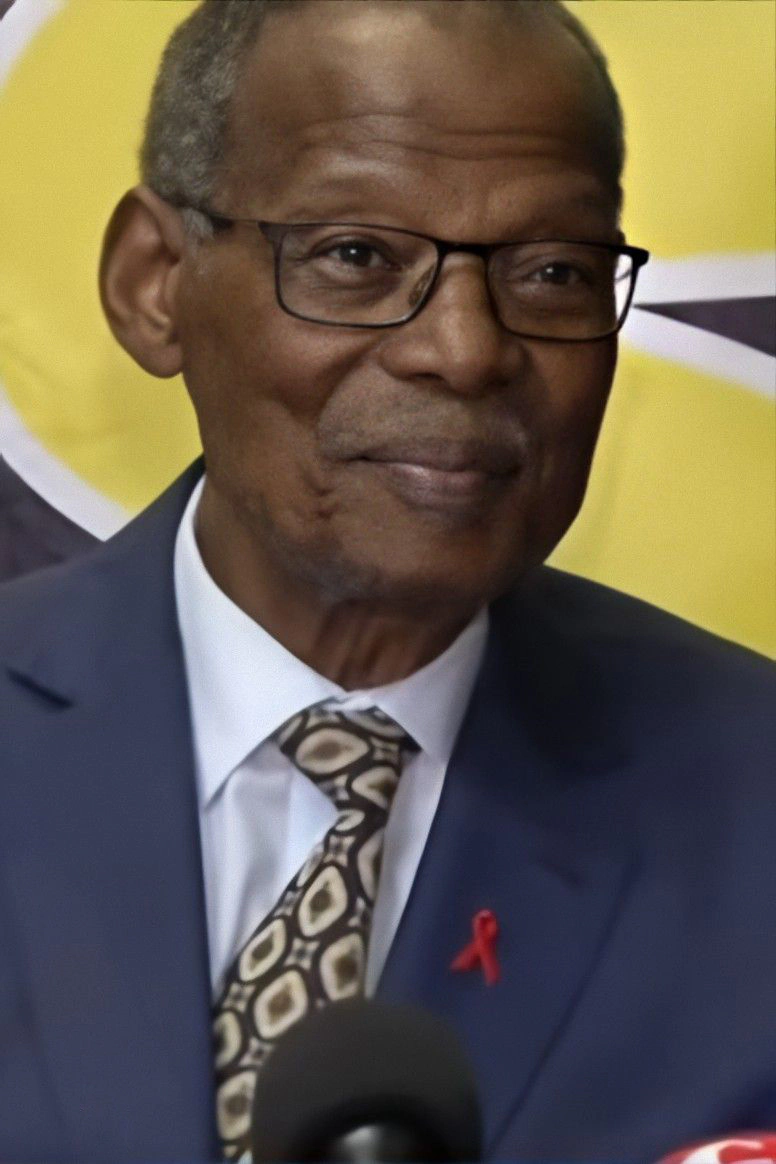
| 24 Quotes | |
| Born as | Mangosuthu Gatsha Buthelezi |
| Known as | Prince Mangosuthu Gatsha Buthelezi |
| Occup. | Leader |
| From | South Africa |
| Spouse | Mazizi Buthelezi |
| Born | August 27, 1928 Mahlabathini, KwaZulu-Natal, South Africa |
| Age | 97 years |
| Cite | |
Citation Formats
APA Style (7th ed.)
Mangosuthu buthelezi biography, facts and quotes. (2026, February 11). FixQuotes. https://fixquotes.com/authors/mangosuthu-buthelezi/
Chicago Style
"Mangosuthu Buthelezi biography, facts and quotes." FixQuotes. February 11, 2026. https://fixquotes.com/authors/mangosuthu-buthelezi/.
MLA Style (9th ed.)
"Mangosuthu Buthelezi biography, facts and quotes." FixQuotes, 11 Feb. 2026, https://fixquotes.com/authors/mangosuthu-buthelezi/. Accessed 2 Apr. 2026.
Early Life and Background
Mangosuthu Gatsha Buthelezi was born on 1928-08-27 in Mahlabathini, Zululand, in what is now KwaZulu-Natal, into a family where political authority and traditional legitimacy overlapped. His mother, Princess Magogo kaDinuzulu, was a noted Zulu composer and custodian of royal cultural memory; his paternal line was linked to the Buthelezi chieftaincy, historically aligned with the Zulu monarchy. From childhood he absorbed the paradox that would define his public life: he stood close to customary power and the Zulu crown, yet came of age under a South Africa accelerating toward apartheid, where African leadership was both constrained and co-opted.The era stamped him early with a practical, sometimes severe, sense of responsibility. The defeat of African political aspirations after 1948, the tightening of pass laws, and the slow conversion of the countryside into labor reservoirs for mines and cities made "leadership" less a title than an unending negotiation with coercive institutions. Buthelezi learned that loyalty to community could not be abstract - it was measured in schools built, permits secured, lives protected, and, later, in the ability to keep political conflict from becoming annihilation.
Education and Formative Influences
Buthelezi studied at Adams College and then the University of Fort Hare, the premier incubator for a generation of African nationalists, where he encountered the African National Congress Youth League milieu and debated the meaning of liberation in a world of closing legal options. His expulsion from Fort Hare after student protests hardened his suspicion of both state repression and political romanticism. The experiences pushed him toward a style of leadership that prized institutions, negotiation, and incremental leverage - even while he remained emotionally anchored in Zulu history and the moral claims of a dispossessed majority.Career, Major Works, and Turning Points
In the 1950s and 1960s he navigated overlapping roles as a traditional leader and an emerging national figure, becoming chief of the Buthelezi clan and, crucially, Chief Executive Councillor of the KwaZulu Territorial Authority in 1970. He opposed Pretoria's "independence" blueprint for homelands, yet used the KwaZulu administration to expand schooling and public services and to build a political machine that became Inkatha yeNkululeko yeSizwe (Inkatha Freedom Party, IFP) in 1975. His high-wire act - resisting apartheid while working inside its imposed structures - made him indispensable to some and suspect to others. The 1980s brought the decisive rupture: conflict between IFP-aligned forces and ANC/UDF networks escalated into township and rural violence, especially in Natal and on the Reef, with massacres and allegations of state "third force" manipulation corroding trust. He entered the constitutional endgame as both participant and spoiler-in-waiting, pressing federalism and Zulu interests, then joined the 1994 elections late, helping avert a potentially catastrophic boycott; afterward he served as Minister of Home Affairs (1994-2004), later returning as an MP and elder statesman until his death in 2023.Philosophy, Style, and Themes
Buthelezi's inner logic was shaped by a double inheritance: cultural guardianship and modern political bargaining. He insisted that identity could be a bridge rather than a bunker, framing Zulu particularity as compatible with a shared state: “We have our own history, our own language, our own culture. But our destiny is also tied up with the destinies of other people - history has made us all South Africans”. Psychologically, this is less slogan than self-description - a man resisting the pull to purist nationalism while refusing to dissolve the authority that gave him standing among his people. His frequent emphasis on negotiation revealed a temperament wary of irreversible choices; he sought rooms where enemies could be turned into interlocutors, not because he underestimated cruelty, but because he feared political victory purchased at the price of social unravelling.That fear surfaced most starkly in his language about the bloodshed that engulfed communities tied to Inkatha and its rivals: “My people have been sucked into the violence because some feel they have to retaliate, and some feel they have to protect themselves”. The phrasing is telling - "sucked" implies a vortex larger than individual intent, a mixture of defensive honor, organizational discipline, and destabilizing state tactics. His self-portrait, too, was pointedly anti-messianic: “I have always believed in dialogue and in nonviolence, and if you look at my background you will see that it has always been my policy to talk to everyone”. Even critics who judged his methods harshly often conceded his stamina and message discipline: he spoke like an administrator of fragile peace, not a prophet of cleansing rupture.
Legacy and Influence
Buthelezi remains one of democratic South Africa's most disputed architects: a leader who helped keep channels open in the negotiated transition, yet whose movement was implicated in a devastating cycle of political violence that still scars communities and historical memory. His tenure at Home Affairs professionalized parts of a difficult portfolio while exposing him to accusations of patronage and hard-edged partisanship; his longer legacy lies in how he forced the country to grapple with federalism, minority cultural rights, and the dangers of liberation politics turning into fratricide. To admirers, he modeled a stubborn belief that adversaries must share a constitutional future; to detractors, he represents the tragedy of ambitions entangled with apartheid's manipulations. Either way, his life maps the central South African dilemma of the 20th century: how to pursue dignity and power without making identity a weapon that outlives the struggle.Our collection contains 24 quotes written by Mangosuthu, under the main topics: Friendship - Leadership - Honesty & Integrity - Kindness - Equality.
Mangosuthu Buthelezi Famous Works
- 1991 Power is Ours (Book)
Source / external links