
Mao Tse-Tung Biography Quotes 29 Report mistakes
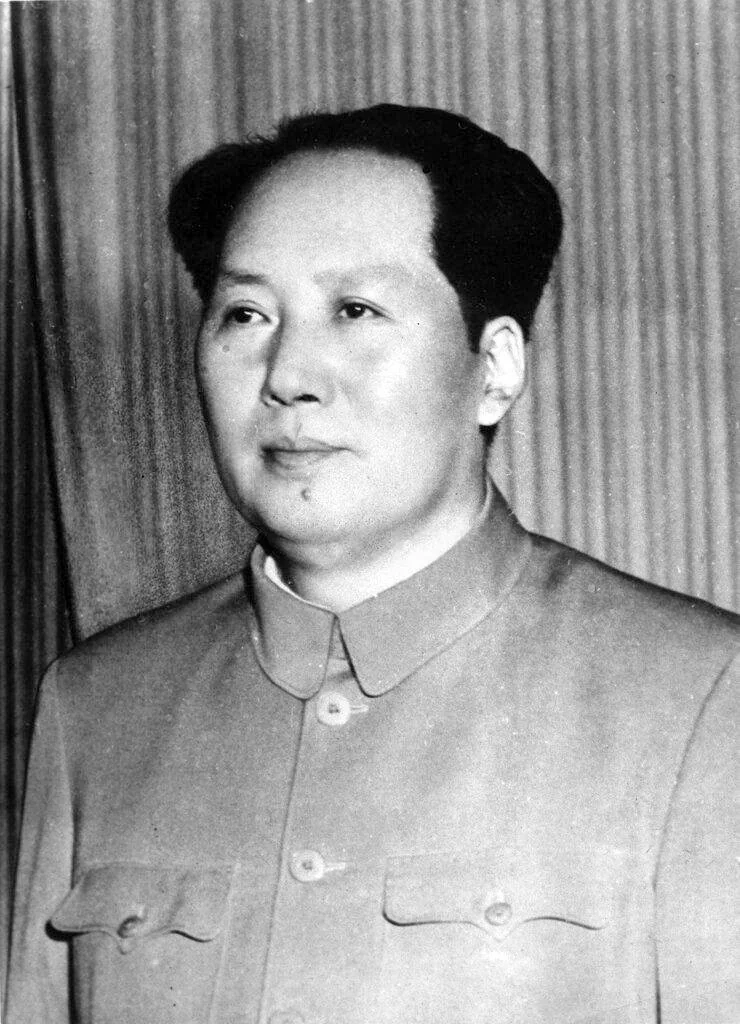
| 29 Quotes | |
| Born as | Mao Zedong |
| Occup. | Leader |
| From | China |
| Born | December 26, 1893 Shaoshan, Hunan, China |
| Died | September 9, 1976 Beijing, China |
| Aged | 82 years |
| Cite | |
Citation Formats
APA Style (7th ed.)
Mao tse-tung biography, facts and quotes. (2026, February 11). FixQuotes. https://fixquotes.com/authors/mao-tse-tung/
Chicago Style
"Mao Tse-Tung biography, facts and quotes." FixQuotes. February 11, 2026. https://fixquotes.com/authors/mao-tse-tung/.
MLA Style (9th ed.)
"Mao Tse-Tung biography, facts and quotes." FixQuotes, 11 Feb. 2026, https://fixquotes.com/authors/mao-tse-tung/. Accessed 12 Feb. 2026.
Early Life and Background
Mao Zedong was born on 1893-12-26 in Shaoshan, Hunan, a rural county of late-Qing China where lineage, land, and seasonal labor structured life more firmly than imperial edicts. His father, Mao Yichang, rose from poverty into a hard-driving grain dealer and smallholder; his mother, Wen Qimei, was devoutly Buddhist and emotionally steady. The household taught Mao two lasting lessons he later converted into politics - the coercive force of patriarchal authority and the latent power of peasants when organized. Early frictions with his father, recorded in later reminiscence, sharpened Mao's instinct to treat conflict not as moral failure but as a tool for leverage.Mao came of age as China cracked open: foreign encroachment, the collapse of the exam system, and the 1911 Revolution that ended the Qing. Hunan was a corridor for reformist newspapers, secret societies, and military men; for an ambitious village youth, the world suddenly had exits. Mao briefly served in a revolutionary unit in 1911, then drifted through jobs and schools, reading voraciously, absorbing both classical texts and the new vernacular press. The combination of provincial grit and a newly national horizon would become his signature - a leader who spoke in peasant metaphors while aiming at imperial-scale transformation.
Education and Formative Influences
He studied at the First Normal School of Hunan (graduated 1918), where teacher Yang Changji encouraged disciplined self-cultivation and exposure to Western political thought; Mao also read Chinese Legalist statecraft alongside Rousseau and Darwinian social evolution filtered through Chinese reformers. Moving to Beijing in 1918, he worked as an assistant in Peking University Library under Li Dazhao, encountering Marxism in a milieu electrified by the May Fourth Movement (1919). The humiliation of Versailles, warlord fragmentation, and a new generation's worship of "science and democracy" pushed Mao toward an answer that fused intellectual certainty with organizational power: a party, a doctrine, and a revolutionary method.Career, Major Works, and Turning Points
Mao helped found the Chinese Communist Party in 1921, organized labor and peasant movements in Hunan, and entered the First United Front with the Nationalists before Chiang Kai-shek's 1927 purge turned alliance into civil war. From the ruins of failed urban insurrections, Mao built a rural base in Jiangxi and reframed revolution around peasant mobilization; the ensuing encirclement campaigns forced the Long March (1934-1935), which, despite catastrophic losses, elevated him to paramount authority at Zunyi. During the Yan'an years he systematized "Mao Zedong Thought" in texts like "On Practice" and "On Contradiction" (1937), and later "On New Democracy" (1940), marrying Marxism to China's conditions. After Japan's defeat, civil war resumed; in 1949 Mao proclaimed the People's Republic of China in Beijing. His rule encompassed land reform, the Korean War decision, collectivization, and the Great Leap Forward (1958-1962), a campaign of mass mobilization and inflated production that culminated in famine and a partial retreat of his day-to-day control. Determined to prevent bureaucratic ossification and to reassert ideological supremacy, he launched the Cultural Revolution (1966-1976), unleashing Red Guard violence, purges, and institutional paralysis even as China opened a strategic channel to the United States in 1972. He died on 1976-09-09, leaving a state both unified and deeply scarred.Philosophy, Style, and Themes
Mao's inner life was marked by a tension between the teacher's urge to remake minds and the warrior's readiness to break opponents. He treated politics as continuous struggle, not a temporary emergency, and he moralized conflict as historical necessity. His famous insistence that "Political power grows out of the barrel of a gun". was not mere bravado; it revealed a psychology shaped by warlord China and the party's near-annihilation in 1927 - survival required coercive capacity. At the same time he could be strategically patient, warning cadres to "Despise the enemy strategically, but take him seriously tactically". This blend of audacity and calculation ran through his command style: ruthless toward rivals, improvisational in campaigns, and intensely sensitive to shifts in mass mood.His themes were mass line politics, voluntarism, and the perpetual purification of the revolution. Mao believed ideas were forged in collective action, then refined by leadership and returned as doctrine; the people were both instrument and judge. That is why he elevated guerrilla legitimacy and social embeddedness with the dictum "The guerrilla must move amongst the people as a fish swims in the sea". Psychologically, this was also a theory of control - intimacy with the masses as both shelter and weapon. His prose and speech favored parables, rural images, and sharp binaries, turning Marxist abstraction into memorable slogans. Yet the same faith in mobilized will that helped defeat stronger enemies also fueled catastrophic overreach when applied to economic reality and human limits.
Legacy and Influence
Mao's legacy is inseparable from paradox: he forged a modern Chinese state from semi-colonial fragmentation, expanded literacy and public health, and made China a decisive geopolitical actor, while presiding over campaigns that inflicted enormous suffering, destroyed cultural and institutional continuity, and normalized political fear. Internationally, Maoism reshaped revolutionary movements from Southeast Asia to Latin America, emphasizing protracted people's war and peasant-based insurgency; domestically, the Communist Party has alternated between repudiating his excesses and enshrining his founding role. The enduring influence lies less in any single policy than in the template he left behind - a politics of mobilization, discipline, and ideological struggle that continues to haunt, and to animate, the Chinese state's relationship with its own people.Our collection contains 29 quotes written by Mao, under the main topics: Justice - Friendship - Leadership - Freedom - Overcoming Obstacles.
Other people related to Mao: Zhou Enlai (Statesman), Jiang Qing (Revolutionary), Theodore White (Journalist), Jung Chang (Writer), Lin Biao (Politician), George C. Marshall (Soldier), Leonid I. Brezhnev (Statesman), George Jackson (Activist)
Mao Tse-Tung Famous Works
- 1957 On the Correct Handling of Contradictions Among the People (Essay)
- 1949 On the People's Democratic Dictatorship (Essay)
- 1944 Serve the People (Essay)
- 1942 Talks at the Yan'an Forum on Literature and Art (Essay)
- 1940 On New Democracy (Essay)
- 1938 On Protracted War (Book)
- 1937 On Practice (Essay)
- 1937 On Contradiction (Essay)
- 1937 On Guerrilla Warfare (Book)
- 1936 Snow (To the Tune of Qin Yuan Chun) (Poetry)
- 1935 The Long March (Poetry)
- 1930 A Single Spark Can Start a Prairie Fire (Essay)
- 1928 Why Is It That Red Political Power Can Exist in China? (Essay)
- 1927 Report on an Investigation of the Peasant Movement in Hunan (Essay)
- 1925 To the Tune of Qin Yuan Chun: Changsha (Poetry)
Source / external links