
Marc Bloch Biography Quotes 5 Report mistakes
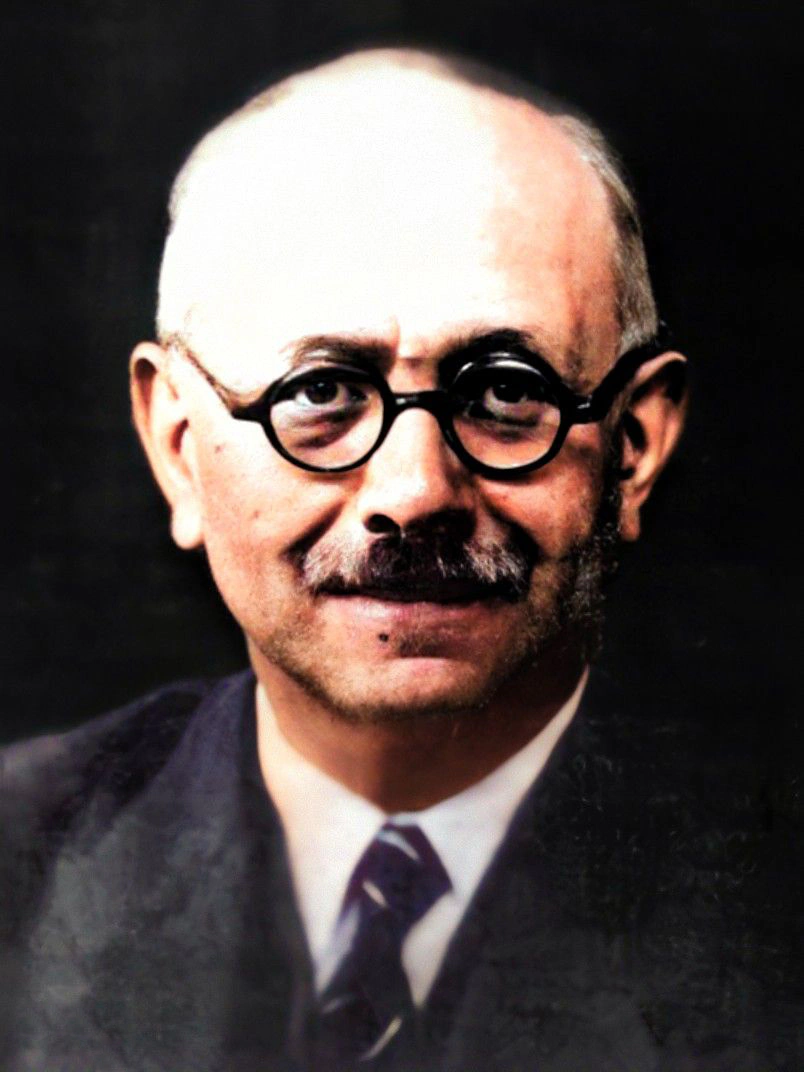
| 5 Quotes | |
| Occup. | Historian |
| From | France |
| Born | July 6, 1886 Lyon, France |
| Died | June 16, 1944 Lyon, France |
| Cause | Executed by the Nazis |
| Aged | 57 years |
| Cite | |
Citation Formats
APA Style (7th ed.)
Marc bloch biography, facts and quotes. (2026, February 11). FixQuotes. https://fixquotes.com/authors/marc-bloch/
Chicago Style
"Marc Bloch biography, facts and quotes." FixQuotes. February 11, 2026. https://fixquotes.com/authors/marc-bloch/.
MLA Style (9th ed.)
"Marc Bloch biography, facts and quotes." FixQuotes, 11 Feb. 2026, https://fixquotes.com/authors/marc-bloch/. Accessed 12 Feb. 2026.
Early Life and Background
Marc Leopold Benjamin Bloch was born on July 6, 1886, in Lyon, in the early decades of France's Third Republic - a society still negotiating the wounds of 1870, the shock of industrial modernity, and the moral aftershocks of the Dreyfus Affair. He grew up in a Jewish family thoroughly integrated into republican intellectual life. His father, Gustave Bloch, was a respected historian of antiquity, and the household treated scholarship not as ornament but as vocation - a disciplined way of seeing the world. From the beginning, Bloch absorbed a double inheritance: the rigors of archival learning and the outsider's alertness to how nations invent belonging.The young Bloch came of age as French universities professionalized and as new social sciences pressed historians to widen their lens beyond kings and battles. That atmosphere suited his temperament - curious, skeptical of easy generalizations, and attentive to ordinary practices. Yet his inner life was also shaped by rupture. The First World War did not simply interrupt a career; it remade his sense of what historical explanation owed to lived experience. War taught him, brutally, how institutions fail and how collective beliefs persist under stress - lessons that would later sharpen both his method and his moral seriousness.
Education and Formative Influences
Bloch studied at the Ecole Normale Superieure in Paris, the elite training ground for France's academic cadre, and then pursued further work in Germany, where historical scholarship and philology were at a peak of methodological self-confidence. He learned to admire German rigor without surrendering to it, and he gravitated toward comparative questions - why similar societies develop different institutions, and how mentalities outlast regimes. In 1914 he entered the French army; he served with distinction, rose to captain, and received the Croix de Guerre. The trenches gave him a lifelong distrust of armchair certainties and a conviction that historians must understand how people think and misperceive in real time.Career, Major Works, and Turning Points
After the war Bloch taught at the University of Strasbourg, a symbolically charged borderland returned from Germany to France, and there his collaboration with Lucien Febvre helped crystallize what became the Annales school. In 1929 they founded the journal Annales d'histoire economique et sociale, insisting that history must converse with geography, sociology, economics, and anthropology. Bloch's major books made that program concrete: Les rois thaumaturges (1924) analyzed the long-lived belief that French and English kings could heal by touch; La societe feodale (1939-40) offered a comparative, pan-European account of feudal society as a system of ties, obligations, and representations; and his late, unfinished Apologie pour l'histoire ou Metier d'historien (published posthumously in 1949) became a methodological classic. The decisive turning point came in 1940: mobilized again, he witnessed France's defeat and, in the immediate aftermath, wrote the searing memoir-analysis L'Etrange defaite (composed 1940, published 1946), indicting not only military leadership but a broader failure of imagination and responsibility. Under Vichy anti-Jewish statutes he was pushed out of official academic life; he entered the Resistance, was arrested by the Gestapo in Lyon in 1944, tortured, and executed by firing squad near Saint-Didier-de-Formans on June 16, 1944.Philosophy, Style, and Themes
Bloch's historical philosophy began with a human target. He hunted not anecdotes but the living logic inside them: "The good historian is like the giant of the fairy tale. He knows that wherever he catches the scent of human flesh, there his quarry lies". This was not rhetorical bravado; it was a psychological pledge to resist abstraction as moral evasion. Kings mattered to him less as sovereigns than as nodes where fears, hopes, and rituals converged - which is why a study of miracle-working monarchy could become, in his hands, an anatomy of belief, authority, and collective need. The insistence on concrete people also served a civic purpose: in an age of ideologies, he wanted explanations that returned responsibility to human choices rather than to faceless forces.At the same time, Bloch was clear-eyed about the limits of historical knowing. "The historian is, by definition, absolutely incapable of observing the facts which he examines". Rather than despair, he built method: criticism of sources, comparison across regions and periods, and a habit of asking how testimony was produced - by institutions, language, interest, and memory. His prose, taut and humane, treats time as a field of differences rather than a parade of repeats: "History is, in its essentials, the science of change. It knows and it teaches that it is impossible to find two events that are ever exactly alike, because the conditions from which they spring are never identical". The inner tension
Our collection contains 5 quotes written by Marc, under the main topics: Truth - Knowledge - Change.
Other people related to Marc: Fernand Braudel (Historian), Henri Pirenne (Historian)
Source / external links