
Marc Chagall Biography Quotes 11 Report mistakes
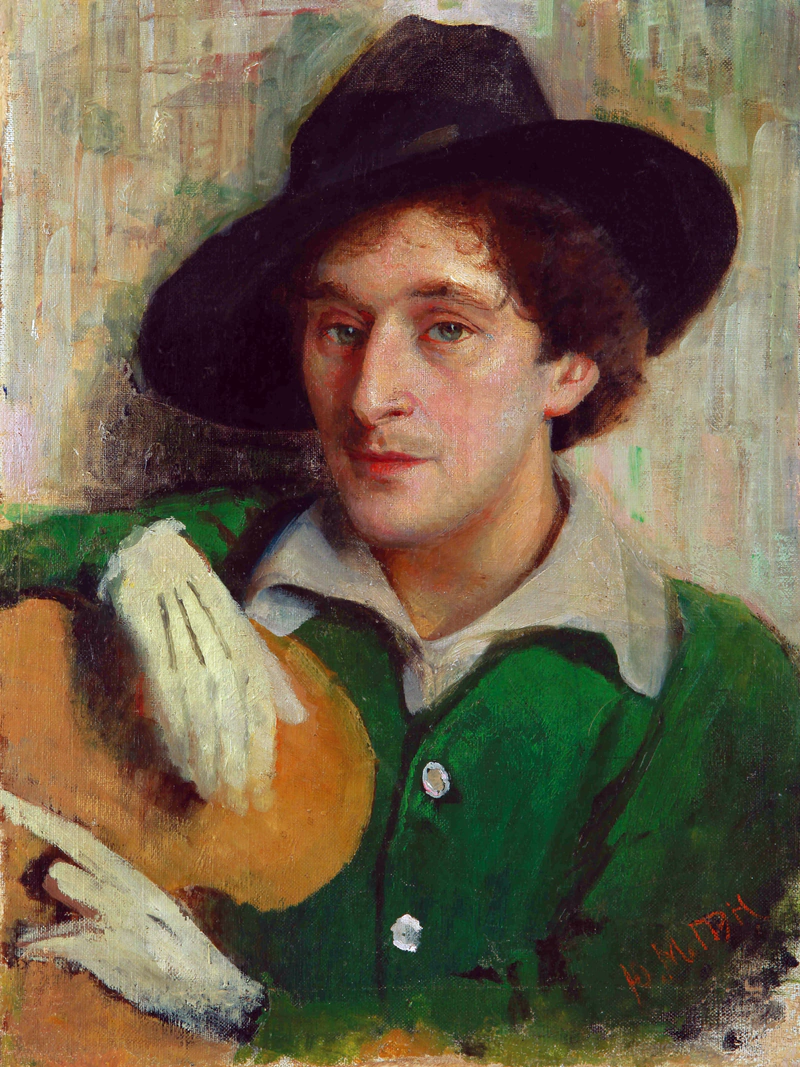
| 11 Quotes | |
| Occup. | Artist |
| From | France |
| Born | July 7, 1887 Vitebsk, Russian Empire |
| Died | March 28, 1985 Saint-Paul-de-Vence, France |
| Aged | 97 years |
| Cite | |
Citation Formats
APA Style (7th ed.)
Marc chagall biography, facts and quotes. (2026, February 12). FixQuotes. https://fixquotes.com/authors/marc-chagall/
Chicago Style
"Marc Chagall biography, facts and quotes." FixQuotes. February 12, 2026. https://fixquotes.com/authors/marc-chagall/.
MLA Style (9th ed.)
"Marc Chagall biography, facts and quotes." FixQuotes, 12 Feb. 2026, https://fixquotes.com/authors/marc-chagall/. Accessed 12 Feb. 2026.
Early Life and Background
Marc Chagall was born Moishe Shagal on 1887-07-07 in Liozna near Vitebsk, then in the Russian Empire, into a Hasidic Jewish family shaped by poverty, ritual, and a dense communal life. His father worked in a herring warehouse; his mother ran a small shop. The sensory pressure of the shtetl - fiddlers at weddings, market animals, Sabbath candles, the tight weave of Yiddish speech and synagogue melody - became his lifelong iconography, but also a psychological refuge: memory as a portable homeland.
From the beginning, Chagall lived between worlds that did not easily reconcile: Jewish tradition and the modern city, village gravity and the mind's flight. Anti-Jewish restrictions and periodic violence shadowed his youth, and the sense of being both inside and outside society sharpened his later empathy for exiles and lovers. The result was not realism but transfiguration - people and houses lifted by longing, time bent by recollection, and the ordinary rendered miraculous.
Education and Formative Influences
After early training with Yehuda Pen in Vitebsk, Chagall moved to Saint Petersburg in 1906, navigating residency limits on Jews while absorbing the ferment of Russian modernism. He studied at the Zvantseva School under Leon Bakst, whose theatrical color and decorative daring mattered as much as any academic discipline. In 1910 he reached Paris, entered the orbit of Montparnasse and La Ruche, and encountered Fauvism, Cubism, and the poetry of Apollinaire - influences he metabolized without surrendering his personal mythology.
Career, Major Works, and Turning Points
Chagall's first Paris period produced breakthrough canvases such as "I and the Village" (1911) and "The Birthday" (1915), where folk memory meets avant-garde structure. A 1914 visit home stranded him in Russia during World War I; he married Bella Rosenfeld in 1915, and in 1917-1918 briefly served the Revolution as a cultural administrator in Vitebsk, founding an art school before clashing with Kasimir Malevich and leaving for Moscow. Disillusioned, he departed the Soviet Union in 1922, resettled in France, and expanded into illustration ("Dead Souls" for Gogol, La Fontaine's "Fables", and a celebrated "Bible" series). During World War II he fled Nazi-occupied France for the United States (1941), where Bella's death in 1944 marked a profound emotional rupture. Returning to France in 1948, he entered a late phase of public, monumental work: sets and costumes for ballets and opera, stained glass for cathedrals and synagogues (notably at Hadassah in Jerusalem and at Reims and Metz), and the ceiling of the Paris Opera (completed 1964). He died on 1985-03-28 in Saint-Paul-de-Vence, France, having made exile itself a studio.
Philosophy, Style, and Themes
Chagall's art is often described as dreamlike, but its engine is ethical and emotional rather than purely oneiric: the insistence that tenderness and sanctity survive history. His lovers float not because gravity is denied, but because love is treated as a physical law stronger than politics. "Only love interests me, and I am only in contact with things that revolve around love". That credo helps explain why his work can absorb catastrophe - pogrom memory, the Holocaust, displacement - without collapsing into despair; even his grieving images keep searching for a human center.
Formally, he built a language of luminous contradiction: saturated blues and reds, fractured perspective, figures that ignore anatomy so they can obey feeling. "All colors are the friends of their neighbors and the lovers of their opposites". Color, for Chagall, is not decoration but relationship - harmony and tension as models for human attachment. His method was also porous across media, drawn to the total artwork of stage and sacred space, where painting could become environment and ritual. "I adore the theater and I am a painter. I think the two are made for a marriage of love. I will give all my soul to prove this once more". In that vow is his inner life: a maker who wanted images to act, sing, and console.
Legacy and Influence
Chagall endures as a singular bridge between Eastern European Jewish memory and the cosmopolitan modernism of Paris, proving that avant-garde form could carry personal myth without irony. His stained glass and public commissions helped re-legitimize lyricism in an age that often mistrusted it, while his paintings offered later artists a template for autobiographical symbolism unbound from strict realism. More broadly, he became a universal emblem of the exile-artist: faithful to origins yet reinventing them, turning private remembrance into a public vocabulary of wonder, grief, and, above all, love.
Our collection contains 11 quotes written by Marc, under the main topics: Art - Love - Meaning of Life - Learning.