
Marc Garneau Biography Quotes 18 Report mistakes
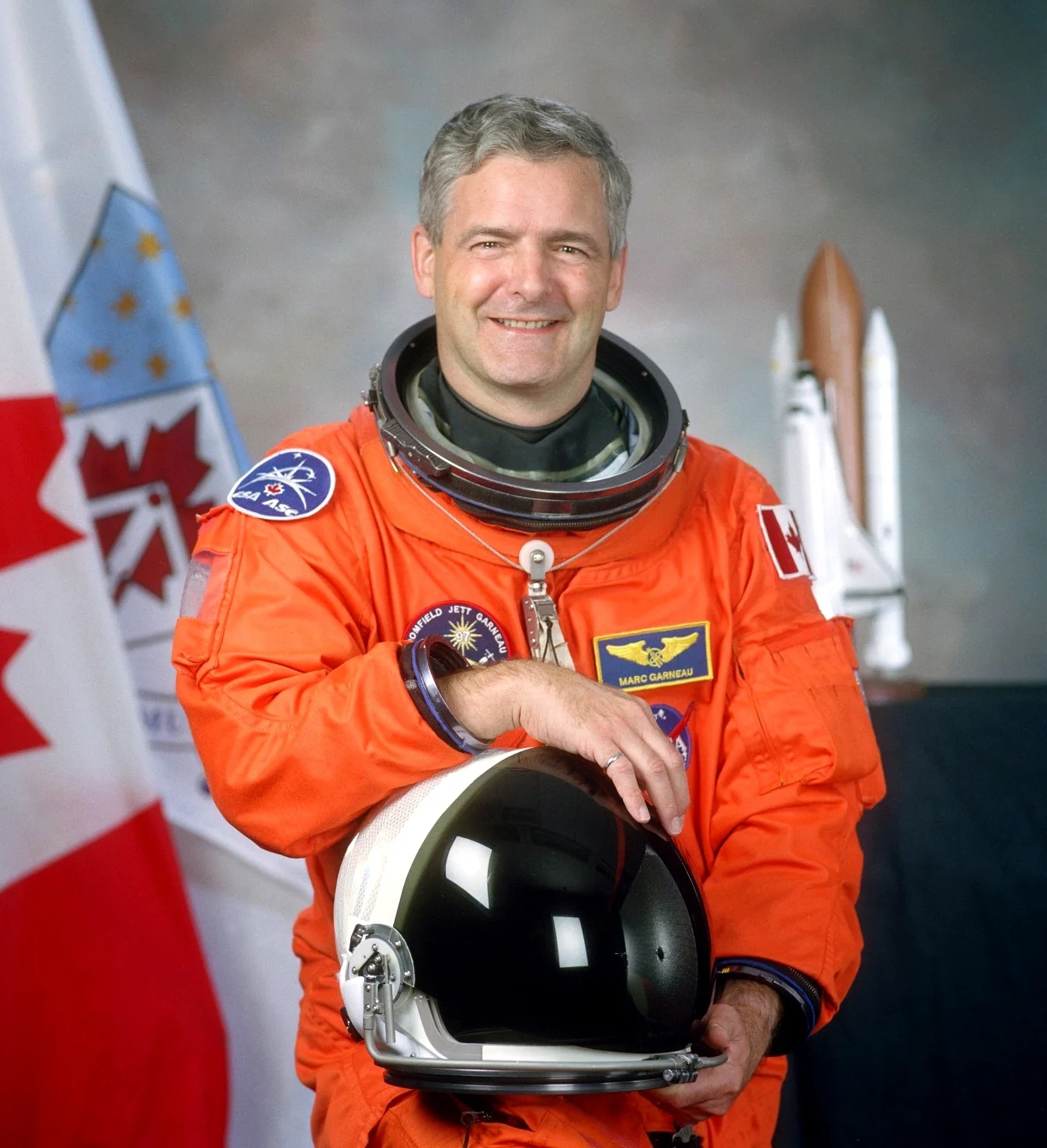
| 18 Quotes | |
| Born as | Joseph Jean-Pierre Marc Garneau |
| Occup. | Astronaut |
| From | Canada |
| Spouse | Helene Campbell |
| Born | February 23, 1949 Quebec City, Quebec, Canada |
| Age | 76 years |
| Cite | |
Citation Formats
APA Style (7th ed.)
Marc garneau biography, facts and quotes. (2026, February 2). FixQuotes. https://fixquotes.com/authors/marc-garneau/
Chicago Style
"Marc Garneau biography, facts and quotes." FixQuotes. February 2, 2026. https://fixquotes.com/authors/marc-garneau/.
MLA Style (9th ed.)
"Marc Garneau biography, facts and quotes." FixQuotes, 2 Feb. 2026, https://fixquotes.com/authors/marc-garneau/. Accessed 12 Feb. 2026.
Early Life and Background
Joseph Jean-Pierre Marc Garneau was born February 23, 1949, in Quebec City, Quebec, into a Canada that was modernizing fast yet still carried the stamp of postwar institutions and Cold War assumptions. His father served in the Canadian Army, and the family moved frequently, a childhood rhythm that trained him early in adaptation, observation, and the quiet social skills of arriving, fitting in, and leaving again. The mobility also enlarged his map of the country he would later represent from orbit and, eventually, from the House of Commons.Those early dislocations did not produce restlessness so much as purpose. He gravitated toward service and systems - the disciplined worlds where risk is managed through procedure, teamwork, and precision. In later reflections on his youth he made the causal chain explicit: "Well, my father was in the Army and we traveled quite a bit when I was growing up, and I thought that I would like to have a military career, although I was drawn more towards the Navy". The choice mattered: the Navy would place him in an engineering culture and in the long tradition of navigation, both of which would translate almost seamlessly into astronautics.
Education and Formative Influences
Garneau pursued engineering at the Royal Military College of Canada in Kingston, Ontario, graduating in 1970, then deepened his technical specialization with a doctorate in electrical engineering at Imperial College London in 1973. Those years coincided with the apex and aftermath of Apollo, when spaceflight shifted from heroic sprint to institutional program, and when Canada was beginning to carve out a niche through robotics and satellites rather than launch vehicles. London sharpened his analytical instincts; the Canadian military academies reinforced his habit of command responsibility and his comfort with complex machinery under uncertainty.Career, Major Works, and Turning Points
Commissioned in the Royal Canadian Navy, Garneau served as a naval combat systems engineer and later became a test pilot, accumulating the operational credibility that space agencies prize but rarely advertise. In 1983 he was selected in the first class of Canadian astronauts, a turning point made possible by a distinctly Canadian contribution: "In 1983, NASA invited Canada to fly three payload specialists, in part because we had contributed the robotic arm that is used on the shuttle". He flew three Space Shuttle missions - STS-41G (1984), STS-77 (1996), and STS-97 (2000) - moving from early-era scientific payload work to the assembly phase of the International Space Station, where STS-97 helped deliver and install major solar arrays. After his final flight he became president of the Canadian Space Agency (2001-2005), then entered federal politics, serving as a Member of Parliament (2008-2023) and later as minister in major portfolios including Transport, Foreign Affairs, and International Trade, repeatedly translating technical credibility into public stewardship.Philosophy, Style, and Themes
Garneau's inner life reads as a blend of appetite for risk and devotion to method. The adventurous impulse is openly owned - "I like adventure". - but in his career it is almost always paired with institutional patience: qualification, simulation, checklists, and a willingness to be one expert among many. That combination made him effective in flight crews and later in Cabinet rooms, where temperament can matter as much as intellect. He tended to present himself not as a solitary pioneer but as a professional whose identity is completed by the team.A second, persistent theme is his insistence that space is not escapism but a civic instrument, especially for a country defined by distance. "Canada's a huge country, so to be able to unite the country through communication satellite technology or to be able to observe it through remote sensing technology from space is a natural fit for a country like Canada". This is more than policy language: it reveals a psychology oriented toward connection - turning vastness from isolation into shared infrastructure. The same outlook shaped his public messaging about research, safety, and practical returns from spaceflight, and it helps explain why his later political work often emphasized governance, regulation, and international cooperation over spectacle.
Legacy and Influence
Garneau endures as one of the clearest symbols of Canada's pragmatic space identity: a nation that reaches orbit through specialized excellence, alliances, and tools that make exploration usable. As an astronaut he helped normalize the idea that Canadians were not guests in space but contributors to its working architecture; as CSA president he defended continuity through an era of shifting budgets and priorities; as a minister he carried an engineer's concern for standards, risk, and systems into transportation and diplomacy. His larger influence is cultural - a model of how technical rigor, public service, and quiet ambition can coexist, and how the view from orbit can be translated into obligations on the ground.Our collection contains 18 quotes written by Marc, under the main topics: Overcoming Obstacles - Science - Military & Soldier - Vision & Strategy - Technology.
Other people related to Marc: Robert Crippen (Astronaut)
Source / external links