
Marcel Proust Biography Quotes 48 Report mistakes
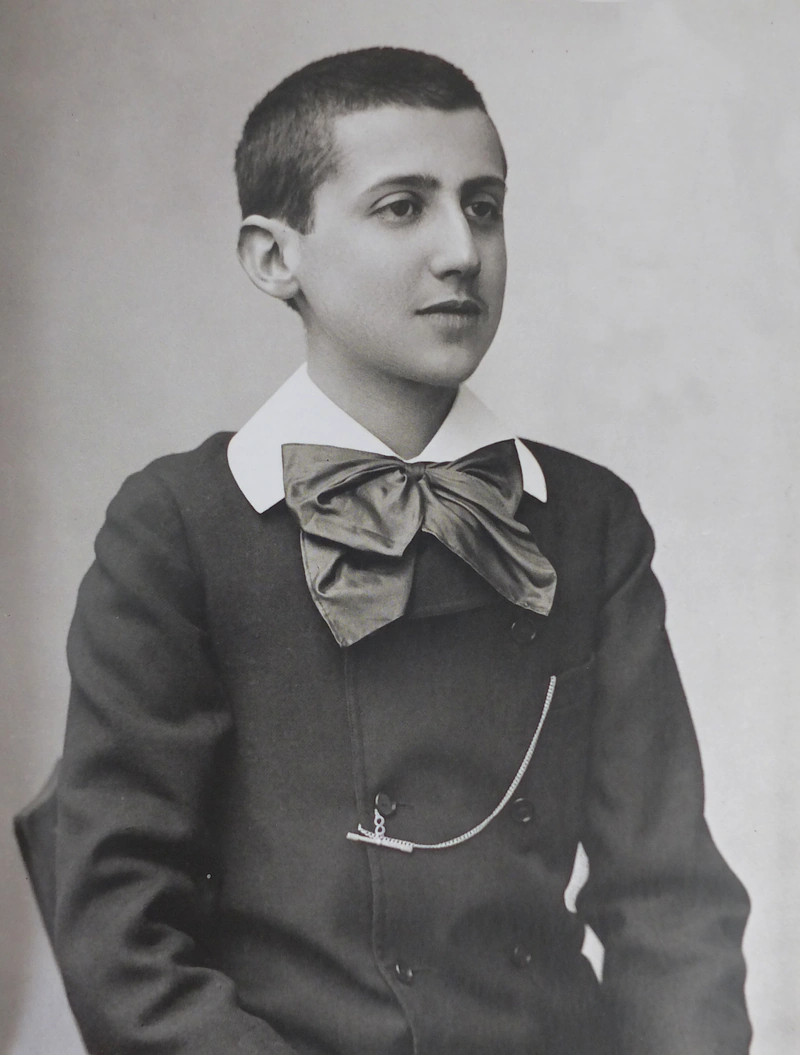
| 48 Quotes | |
| Born as | Valentin Louis Georges Eugene Marcel Proust |
| Occup. | Author |
| From | France |
| Born | July 10, 1871 Paris, France |
| Died | November 18, 1922 Paris, France |
| Cause | pneumonia |
| Aged | 51 years |
| Cite | |
Citation Formats
APA Style (7th ed.)
Marcel proust biography, facts and quotes. (2026, February 11). FixQuotes. https://fixquotes.com/authors/marcel-proust/
Chicago Style
"Marcel Proust biography, facts and quotes." FixQuotes. February 11, 2026. https://fixquotes.com/authors/marcel-proust/.
MLA Style (9th ed.)
"Marcel Proust biography, facts and quotes." FixQuotes, 11 Feb. 2026, https://fixquotes.com/authors/marcel-proust/. Accessed 26 Mar. 2026.
Early Life and Background
Marcel Proust was born on 10 July 1871 in Auteuil, then on the western edge of Paris, to Adrien Proust, a prominent physician and public health authority, and Jeanne Weil, from a cultivated Alsatian Jewish family. His double inheritance - the rational, medical gaze of his father and the literary, emotionally intense world of his mother - became the fault line of his inner life: a temperament that craved society yet retreated into hypersensitive observation.From childhood he lived under the sign of illness. Severe asthma attacks, beginning early and recurring throughout his life, trained him in vigilance - toward weather, rooms, odors, sleep, and the minute shifts of sensation that later became his narrative engine. The Third Republic around him celebrated progress, expertise, and social mobility; Proust grew up watching how status was performed in salons and drawing rooms, while privately learning how fragile the body could make a brilliant mind feel.
Education and Formative Influences
He studied at the Lycee Condorcet, where he excelled in literature and formed friendships that opened doors to Parisian society, then served a year of military service at Orleans (1889-1890). At the Sorbonne he attended lectures in philosophy and literature, and at the Ecole Libre des Sciences Politiques he absorbed the codes of administration and class - useful, later, for anatomizing the aristocracy and the bourgeoisie with the precision of an insider-outsider. Fin-de-siecle Paris offered him models: the psychological novel, French moralists, and the new prestige of scientific language, all filtered through the trauma of the Dreyfus Affair, during which he sided with Dreyfus and watched reputations curdle into ideology.Career, Major Works, and Turning Points
Proust began as a society writer and aspiring critic, publishing Pleasures and Days (1896) and translating John Ruskin (The Bible of Amiens, 1904; Sesame and Lilies, 1906), projects that trained his eye on art as an education in perception. The decisive turning point was loss: the death of his father (1903) and, far more shattering, his mother (1905), after which he drifted into nocturnal isolation, moving in 1919 to 44 rue Hamelin and writing from a cork-lined bedroom to protect his lungs and his concentration. Out of drafts first attempted as Jean Santeuil and the unfinished essay Against Sainte-Beuve, he forged In Search of Lost Time: Swann's Way appeared in 1913 (initially at his expense with Grasset), Within a Budding Grove won the Prix Goncourt in 1919, and the later volumes - including The Guermantes Way, Sodom and Gomorrah, The Prisoner, The Fugitive, and Time Regained - were completed in extremis and published through 1927 after his death on 18 November 1922, amid the aftershocks of World War I.Philosophy, Style, and Themes
Proust wrote as if perception were destiny. The famous madeleine scene is not a trick of nostalgia but a theory: involuntary memory breaks the tyranny of the present and proves that the self is layered, not linear. “The real voyage of discovery consists not in seeking new landscapes, but in having new eyes”. That sentence captures his psychological wager - that salvation is not escape but re-seeing, and that art is the method by which experience becomes intelligible.His long, spiraling sentences mimic consciousness under pressure, especially the pressure of desire and illness. “It is in moments of illness that we are compelled to recognize that we live not alone but chained to a creature of a different kingdom... our body”. For Proust, the body is both jailer and instrument: asthma narrows life into rooms and routines, yet it sharpens attention until a social gesture, a change of light, or a name becomes a whole moral drama. Hence his cruelty and tenderness toward memory's humiliations - “There is no man, however wise, who has not at some period of his youth said things... he would gladly... expunge... from his memory”. - a recognition that social life is built from performances we later cannot bear, and that the novelist must look anyway.
Legacy and Influence
Proust remade the modern novel by turning plot into psychology and time into a medium to be sculpted, influencing writers from James Joyce and Virginia Woolf to Samuel Beckett, Nathalie Sarraute, and contemporary autofiction. His social world - aristocratic decline, bourgeois ascent, the coded life of homosexuality, and the moral weather of the Dreyfus era and World War I - remains a historical archive rendered as lived experience. More enduring is his method: an ethics of attention that treats perception as the deepest form of knowledge, and art as the only durable counterweight to loss.Our collection contains 48 quotes written by Marcel, under the main topics: Witty One-Liners - Ethics & Morality - Wisdom - Art - Love.
Other people related to Marcel: Leon Blum (Politician), Edmund White (Novelist)
Marcel Proust Famous Works
- 1954 Against Sainte-Beuve (Essay)
- 1952 Jean Santeuil (Novel)
- 1927 Time Regained (Novel)
- 1925 The Fugitive (Albertine Disappeared) (Novel)
- 1923 The Prisoner (Novel)
- 1922 Sodom and Gomorrah (Novel)
- 1920 The Guermantes Way (Novel)
- 1919 Within a Budding Grove (Novel)
- 1919 Pastiches and Mixes (Collection)
- 1913 Swann's Way (Novel)
- 1896 The Pleasures and the Days (Collection)