
Marcus Valerius Martial Biography Quotes 9 Report mistakes
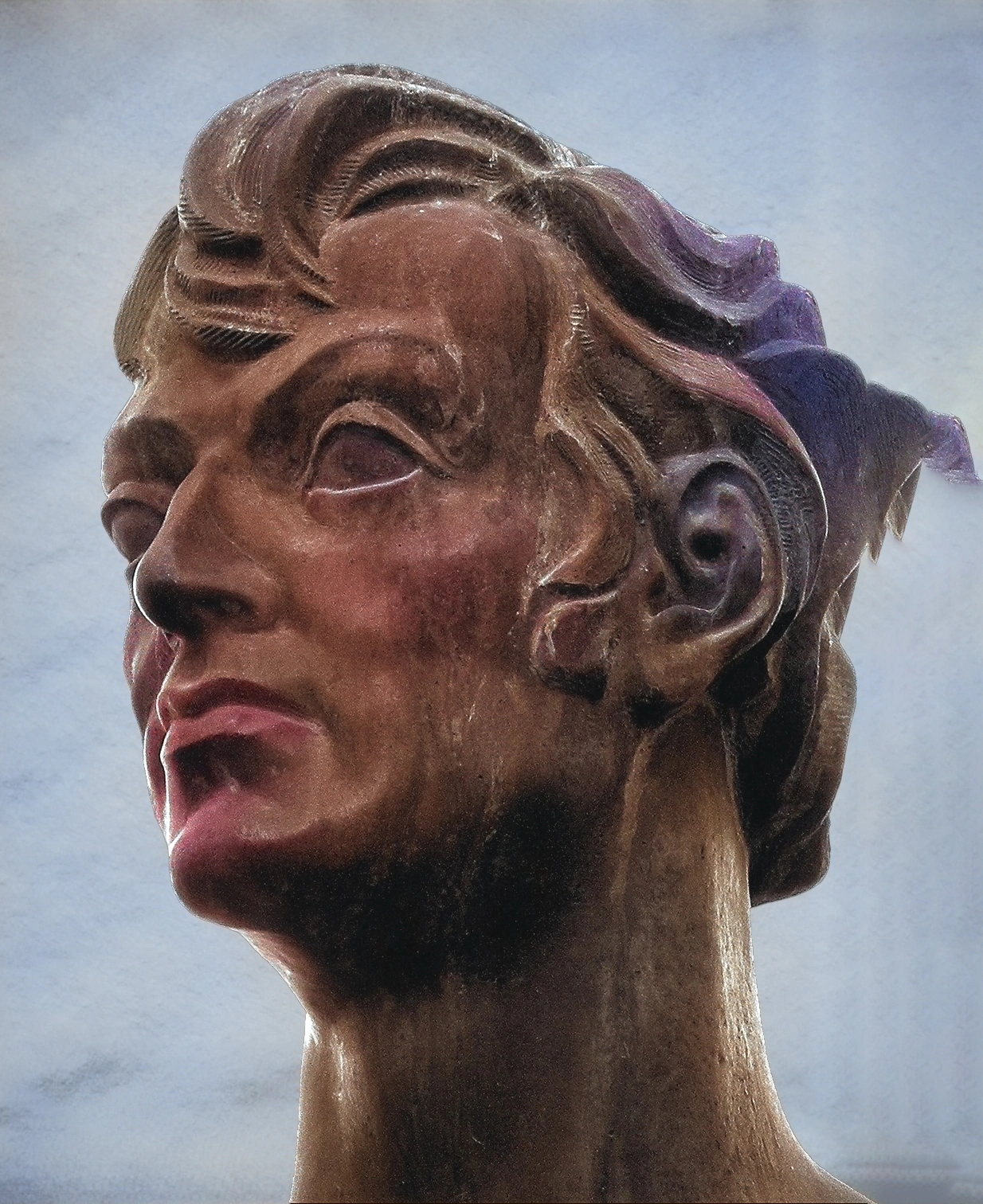
| 9 Quotes | |
| Born as | Marcus Valerius Martialis |
| Occup. | Poet |
| From | Rome |
| Born | January 1, 41 Bilbilis, Hispania Tarraconensis, Roman Empire (today Spain) |
| Died | January 1, 104 Bilbilis, Hispania Tarraconensis, Roman Empire |
| Cite | |
Citation Formats
APA Style (7th ed.)
Marcus valerius martial biography, facts and quotes. (2026, February 11). FixQuotes. https://fixquotes.com/authors/marcus-valerius-martial/
Chicago Style
"Marcus Valerius Martial biography, facts and quotes." FixQuotes. February 11, 2026. https://fixquotes.com/authors/marcus-valerius-martial/.
MLA Style (9th ed.)
"Marcus Valerius Martial biography, facts and quotes." FixQuotes, 11 Feb. 2026, https://fixquotes.com/authors/marcus-valerius-martial/. Accessed 26 Mar. 2026.
Early Life and Background
Marcus Valerius Martialis - known in English as Martial - was born in 41 CE at Bilbilis Augusta in Hispania Tarraconensis (near modern Calatayud, Spain), not in Rome. He liked to style himself a provincial who mastered the capital, and that double identity never left his work: the sharp-eyed outsider who learns the rules of patronage while keeping a nostalgic claim on Iberian frankness. His lifetime spanned the nervous aftermath of Nero, the brief convulsions of 69, and the long institutional hardening of Flavian and early Antonine Rome.Bilbilis gave him a landscape of iron mines, cold rivers, and tough municipal pride; Rome gave him crowds, noise, hunger, and opportunity. In the Epigrams he repeatedly returns to the economics of daily life - rent, dinner invitations, secondhand togas, morning salutations - as if money were the hidden meter behind every line. That fixation is biographical: a poet without a stable independent fortune had to turn observation into currency, and turn wit into access.
Education and Formative Influences
Martial likely received the standard municipal education in grammar and rhetoric, enough to read and mimic Catullus, Ovid, and the Greek epigrammatists; his later virtuosity suggests disciplined schooling rather than mere street talent. He came to Rome around 64 CE, where the city offered both models and warnings: Senecan eloquence, Neronian spectacle, and the fragile social safety of patronage. The epigram - short, barbed, and saleable - became his instrument for surviving a metropolis where attention was scarce and dependence ubiquitous.Career, Major Works, and Turning Points
After years of precariousness, he found traction under the Flavians, attaching himself to the circuits of patrons and literati while praising imperial projects with a courtier's calculated clarity. His early books include the Liber de Spectaculis (on the opening of the Colosseum under Titus) and the paired gift-books Xenia and Apophoreta (tiny poems for Saturnalia presents), but his central achievement is the fifteen books of Epigrammata, published in stages from the 80s into the early 100s. He benefited from Domitianic favor enough to receive the ius trium liberorum and some property, then navigated the regime change after Domitian's assassination in 96 with careful recalibration: flatteries were quietly repurposed, friendships reshuffled, and the poems leaned harder into social anatomy rather than imperial hymn. Around 98-101 he left Rome and returned to Bilbilis, aided by Pliny the Younger, where he lived as a celebrated expatriate who nonetheless missed the capital's electricity, dying around 104.Philosophy, Style, and Themes
Martial's inner life is best read as a contest between craving and self-protection. He desired recognition, dinners, and secure patronage, yet distrusted the very mechanisms that dispensed them. The epigram let him say what longer forms could not: he could praise a patron, then in the next breath expose the humiliations that praise required. His psychology is fundamentally urban - vigilant, comparative, alert to slights - and the poems often feel like defensive laughter sharpened into a tool. He understood that reputation in Rome was a public hallucination, nourished by gossip, and he exploited that with ruthless economy: “Conceal a flaw, and the world will imagine the worst”. The line is not moral advice so much as reportage from a society where concealment itself becomes evidence.His style is a compressed social realism: quick scene-setting, a name and a vice, a punchline that doubles as judgment. He can be tender in friendship and vicious in mockery, and the oscillation is part of his honesty about dependence. One strain in the Epigrams is a longing for rootedness against the centrifugal pull of Roman networking - “A man who lives everywhere lives nowhere”. That thought animates his late return to Bilbilis: not pastoral escapism, but fatigue with an existence spent performing availability. Yet he never fully endorses philosophical withdrawal; he wants comfort and applause while knowing both are unstable. Even his reflections on fame are shot through with impatience at postponed payment: “If fame is to come only after death, I am in no hurry for it”. It is the voice of someone who has watched living poets beg while statues are erected for the safely dead.
Legacy and Influence
Martial fixed the Roman epigram as a durable literary technology: a small form capable of carrying big social data - the textures of class, patronage, sexuality, dining, housing, and the daily humiliations of status. His influence runs from Late Antique anthologists through Renaissance humanists to modern satirists who value speed, bite, and documentary specificity; he also remains a primary witness to Flavian Rome in a way official histories cannot match. Read closely, he offers more than jokes: he records how an intelligent man manages dignity under dependence, how a city turns people into audiences and clients, and how art can be both a weapon and a wage.Our collection contains 9 quotes written by Marcus, under the main topics: Wisdom - Sarcastic - Latin Phrases - Legacy & Remembrance - Romantic.
Marcus Valerius Martial Famous Works
- 86 Epigrams (Book)
- 84 Apophoreta (Book)
- 84 Xenia (Book)
Source / external links