
Margaret Fuller Biography Quotes 27 Report mistakes
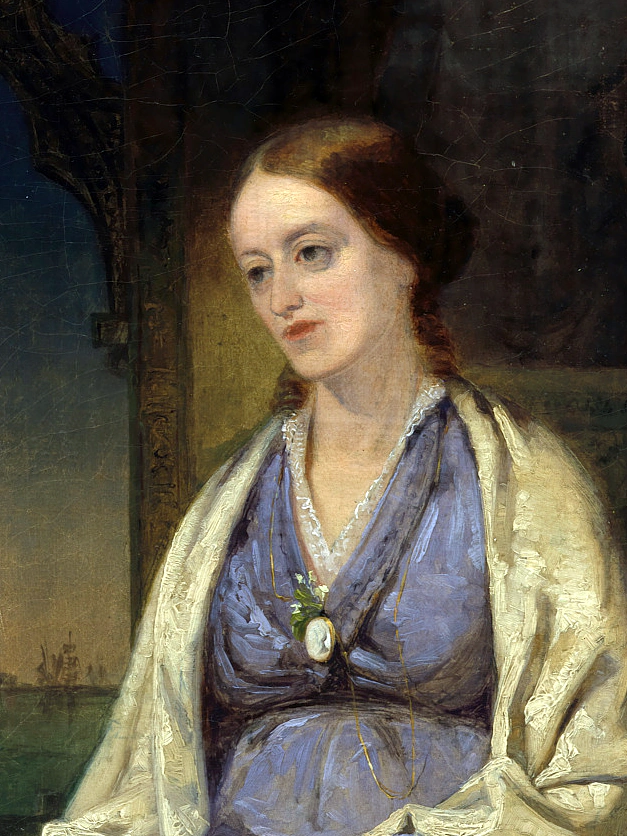
| 27 Quotes | |
| Born as | Sarah Margaret Fuller |
| Known as | Margaret Fuller Ossoli |
| Occup. | Critic |
| From | USA |
| Born | May 23, 1810 Cambridgeport, Massachusetts, USA |
| Died | June 19, 1850 off Fire Island, New York, USA |
| Cause | drowning |
| Aged | 40 years |
| Cite | |
Citation Formats
APA Style (7th ed.)
Margaret fuller biography, facts and quotes. (2026, February 11). FixQuotes. https://fixquotes.com/authors/margaret-fuller/
Chicago Style
"Margaret Fuller biography, facts and quotes." FixQuotes. February 11, 2026. https://fixquotes.com/authors/margaret-fuller/.
MLA Style (9th ed.)
"Margaret Fuller biography, facts and quotes." FixQuotes, 11 Feb. 2026, https://fixquotes.com/authors/margaret-fuller/. Accessed 5 Mar. 2026.
Early Life and Background
Sarah Margaret Fuller was born on May 23, 1810, in Cambridgeport, Massachusetts, into a young republic that still argued over the meaning of liberty while expanding its markets and boundaries. Her father, Timothy Fuller, a Harvard-trained lawyer and U.S. congressman aligned with Jeffersonian politics, treated his first child as a prodigy-in-training, drilling her in Latin and rhetoric with a rigor more typical of sons. The regimen gave her intellectual velocity and, just as importantly, a sense that mind could be a refuge and a weapon in a world that expected women to be pleasing rather than authoritative.That early intensity carried a cost. Family moves and financial anxieties made the household alternately cultivated and precarious, and Fuller grew up with a sharpened sensitivity to power, dependence, and self-command. The death of her father in 1835 forced her into paid work to support her mother and siblings, turning an inward, ambitious reader into a public professional. Grief, obligation, and the social narrowness offered to educated women became the emotional engine of her later criticism: the feeling that talent without a social door becomes a kind of imprisonment.
Education and Formative Influences
Fuller received no formal college education, but her home instruction was unusually advanced: classical languages, European literature, philosophy, and history, followed by voracious self-directed reading in German Romanticism, British moralists, and the emerging American literary scene. In Boston and Concord she entered the circle later called Transcendentalist - Ralph Waldo Emerson, Bronson Alcott, Elizabeth Peabody, and others - absorbing their faith in the soul while testing it against lived inequality. Her famous "Conversations" for women (begun in 1839) were both a classroom and a laboratory, training her to translate abstraction into argument, and private longing into civic claim.Career, Major Works, and Turning Points
By the early 1840s Fuller had become a central critic of the movement she also helped define: she edited The Dial (1840-1842), shaping its standards while suffering its financial strain, and published "Summer on the Lakes, in 1843" (1844), a travel narrative that braided landscape with moral and political observation, including the dispossession of Native peoples. Her decisive breakthrough came with "Woman in the Nineteenth Century" (1845), an expansion of her Dial essay that argued for women's spiritual and civil equality in language at once metaphysical and practical. Horace Greeley then recruited her as literary critic and columnist for the New-York Tribune, making her one of the first prominent female journalists in America; in 1846 she sailed to Europe as foreign correspondent, reported the Roman Republic of 1849, fell in love with the Italian nobleman Giovanni Angelo Ossoli, and bore a son. In 1850, returning to the United States with manuscripts and hopes of a new life, she died at sea off Fire Island, New York, on June 19, in a shipwreck that sealed her biography in the public imagination as both triumph and unfinished promise.Philosophy, Style, and Themes
Fuller's inner life was a continual negotiation between armor and exposure: the desire to be invulnerably brilliant, and the counter-desire to be fully human. She could be imperious in private judgments, but her best writing turns severity into a discipline of truth-telling. “It is astonishing what force, purity, and wisdom it requires for a human being to keep clear of falsehoods”. The sentence reads like self-instruction as much as cultural critique: a woman entering male intellectual arenas had to resist flattering roles, easy optimism, and the falsifying politeness that kept inequality intact.Her style fused aphoristic edge with essayistic spaciousness, moving from the single arresting line to the panoramic moral frame. She distrusted systems that pretended to be universal while excluding whole classes of people, insisting on the anomalous, the uncounted, the inconvenient: “Nature provides exceptions to every rule”. In her feminism, that meant rejecting fixed "female" destinies; in her politics, it meant sympathy for revolutionaries without romantic blindness about human weakness. Yet she remained a teacher at heart, convinced that mind is transmissible and that culture should be a shared flame: “If you have knowledge, let others light their candles in it”. The line captures the social ethic beneath her criticism - that literature and philosophy were not ornaments but instruments for remaking character and, through character, the republic.
Legacy and Influence
Fuller helped professionalize American criticism while expanding its moral scope, and she became a foundational figure for U.S. feminism by arguing, before suffrage became a mass cause, that women's emancipation was a spiritual, intellectual, and legal necessity. Her blend of Transcendentalist idealism with journalistic immediacy shaped later essayists and reformers, from postbellum women's-rights advocates to modern literary critics who treat culture as a field of power. The shipwreck that ended her life also preserved her as a symbol of interrupted modernity, but her real endurance lies in the muscular clarity of her questions: who gets to develop a full self, who gets to speak for the nation, and what forms of truth we demand from public life and from our own hearts.Our collection contains 27 quotes written by Margaret, under the main topics: Motivational - Wisdom - Truth - Art - Love.
Other people related to Margaret: Henry David Thoreau (Author), Louisa May Alcott (Novelist), Amos Bronson Alcott (Educator), Katharine Anthony (Writer), Jones Very (Poet), Frederick Henry Hedge (Clergyman), Francis Herbert Hedge (Philosopher)