
Margaret Mahy Biography Quotes 29 Report mistakes
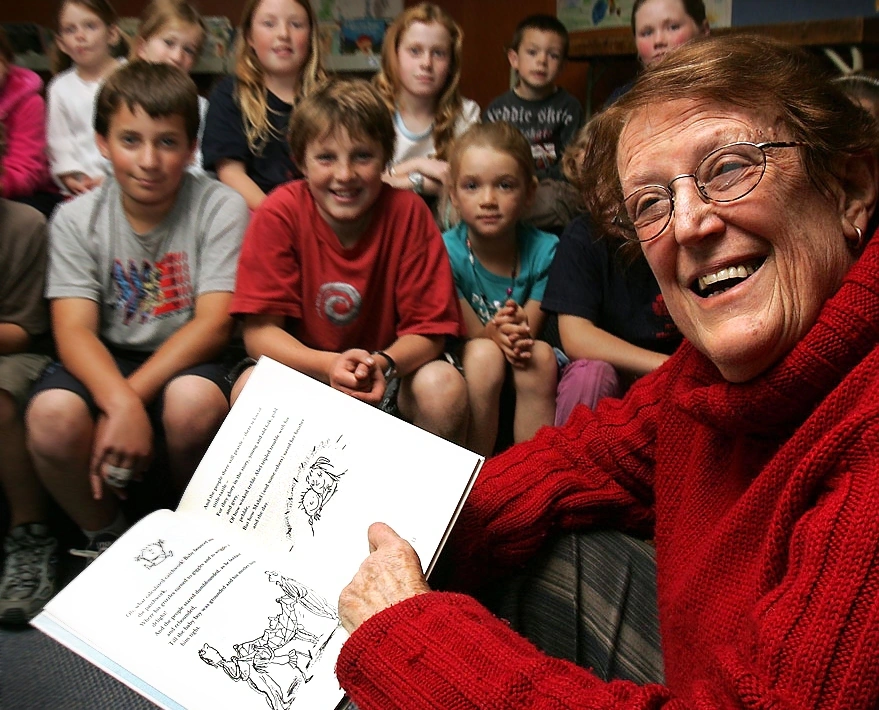
| 29 Quotes | |
| Occup. | Author |
| From | New Zealand |
| Born | March 21, 1936 Whakatane, New Zealand |
| Died | July 23, 2012 Christchurch, New Zealand |
| Aged | 76 years |
| Cite | |
Citation Formats
APA Style (7th ed.)
Margaret mahy biography, facts and quotes. (2026, February 11). FixQuotes. https://fixquotes.com/authors/margaret-mahy/
Chicago Style
"Margaret Mahy biography, facts and quotes." FixQuotes. February 11, 2026. https://fixquotes.com/authors/margaret-mahy/.
MLA Style (9th ed.)
"Margaret Mahy biography, facts and quotes." FixQuotes, 11 Feb. 2026, https://fixquotes.com/authors/margaret-mahy/. Accessed 26 Mar. 2026.
Early Life and Background
Margaret Mahy was born on March 21, 1936, in Whakatane on New Zealands Bay of Plenty, and grew up in a country still defining itself between British inheritance and Pacific realities. Her childhood coincided with the long tail of the Depression and the Second World War years, when thrift, churchgoing respectability, and strong local communities shaped daily life. Books offered both refuge and provocation - a private room of the mind in a small town, and a way to make sense of the adult worlds of duty, secrecy, and emotion that children constantly observe but are rarely invited to explain.From early on she carried an insiders knowledge of how family stories work - how they are told to protect people as much as to reveal them. That tension between what is spoken and what is felt later became central to her fiction, where children and adolescents navigate households full of love and strain, and where the supernatural often functions as a truthful metaphor for ordinary anxieties. New Zealand landscapes in her work are not decorative; they are the lived spaces of her own era, rendered with the intimacy of someone who remembers how weather, distance, and the sea can shape a childs sense of fate.
Education and Formative Influences
Mahy studied at the University of Canterbury in Christchurch, training for work that kept her near language, classification, and the broad sweep of literary tradition. The postwar decades in New Zealand were marked by expanding public services and rising literacy, and for a young woman with a talent for story, libraries were both practical employment and an education in readers desires. In that environment she learned to respect genre and age level as craft challenges rather than hierarchies, and she absorbed the rhythms of oral storytelling, nursery verse, and the larger architectures of the novel.Career, Major Works, and Turning Points
She worked as a librarian - most notably in Christchurch - writing for many years in stolen hours, then emerged as one of the defining voices of New Zealand childrens literature, eventually producing more than a hundred books across picture books, middle-grade fiction, and young adult novels. Her breakthrough and consolidation came through a run of daring, psychologically rich YA fantasies and realistic novels, including The Haunting, The Changeover (which won major international recognition), and later The Tricksters, as well as beloved picture books such as A Lion in the Meadow. Over time she moved from being a gifted local author to an international figure, honored with top field distinctions including the Hans Christian Andersen Award, while remaining deeply identified with New Zealand speech, weather, and social texture. She died on July 23, 2012, leaving an oeuvre that helped define what antipodean childrens literature could be: playful, linguistically musical, and unafraid of darkness.Philosophy, Style, and Themes
Mahys writing is powered by a specific psychological stance: she treats imagination not as escape but as a method for seeing what ordinary life conceals. She insisted that her invented people were never merely puppets, noting, “They are imaginary characters. But perhaps not solely the products of my imagination, since there are some aspects of the characters that relate to my own experience of a wide variety of people”. That remark reveals a biographers clue to her inner life - a writer tuned to social observation, storing voices and gestures, then recombining them into figures who feel both heightened and recognizably human. Her protagonists often discover that maturity is less about acquiring power than about accurately perceiving others, a moral education that aligns adventure with empathy rather than conquest.At the level of craft, she wrote with the pleasure of someone who loved the physicality of words - their sound, speed, and capacity for surprise - and she resisted the notion that writing for the young required simplification of thought. She described the almost uncanny momentum of composition: “In a way, the characters often do take over”. That surrender is central to her best books, where plot turns seem to arise from personality under stress, not authorial manipulation. Yet her buoyant verbal wit is balanced by an enduring preoccupation with mortality and loss, expressed without sentimentality: “I hope I am not too repetitive. However, coming to terms with death is part of the general human situation”. In Mahy, ghosts, time slips, and transformations are not gimmicks; they are narrative instruments for asking how love persists, how families change, and how a young person metabolizes fear into knowledge.
Legacy and Influence
Mahy became a touchstone for writers who wanted childrens and young adult literature to be artistically ambitious - structurally inventive, linguistically exacting, and emotionally honest. In New Zealand she helped normalize the idea that local settings and local idioms could carry mythic weight, and internationally she demonstrated that books for young readers could accommodate humor, sensuality, dread, and moral complexity without condescension. Her influence is visible in later generations of Australasian and Commonwealth writers who blend the everyday with the uncanny, trust young readers with grief and ambiguity, and treat language itself as a kind of magic - not ornamental, but transformative.Our collection contains 29 quotes written by Margaret, under the main topics: Witty One-Liners - Mortality - Writing - Book - Grandparents.
Margaret Mahy Famous Works
- 2009 Bubble Trouble (Children's book)
- 2003 Alchemy (Novella)
- 1984 The Changeover (Novel)
- 1982 The Haunting (Novel)
- 1969 The Lion in the Meadow (Children's book)
Source / external links