
Margaret Mead Biography Quotes 39 Report mistakes
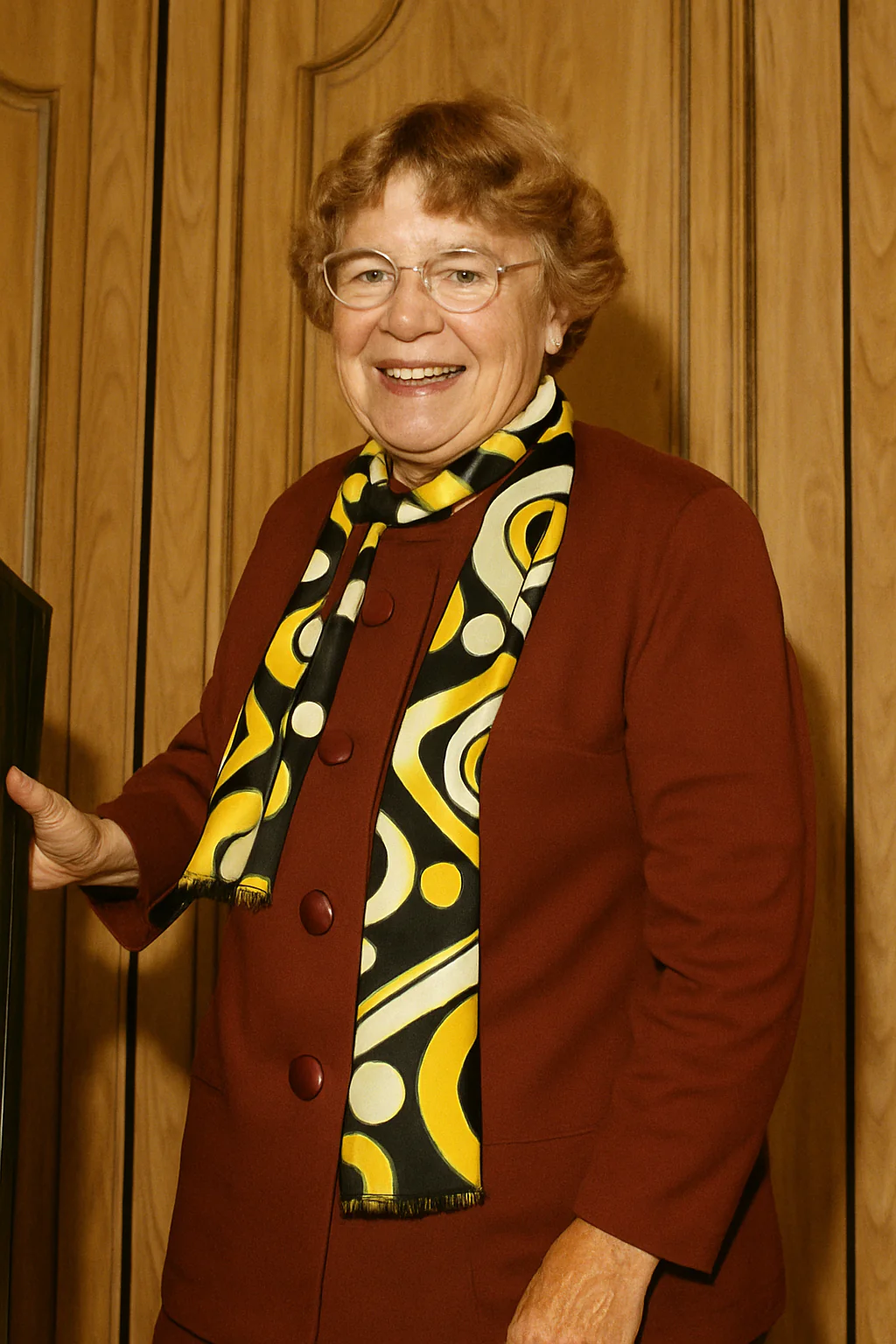
| 39 Quotes | |
| Occup. | Scientist |
| From | USA |
| Born | December 16, 1901 Philadelphia, Pennsylvania, USA |
| Died | November 15, 1978 New York City, New York, USA |
| Cause | Pancreatic cancer |
| Aged | 76 years |
| Cite | |
Citation Formats
APA Style (7th ed.)
Margaret mead biography, facts and quotes. (2026, February 2). FixQuotes. https://fixquotes.com/authors/margaret-mead/
Chicago Style
"Margaret Mead biography, facts and quotes." FixQuotes. February 2, 2026. https://fixquotes.com/authors/margaret-mead/.
MLA Style (9th ed.)
"Margaret Mead biography, facts and quotes." FixQuotes, 2 Feb. 2026, https://fixquotes.com/authors/margaret-mead/. Accessed 24 Mar. 2026.
Early Life and Background
Margaret Mead was born on December 16, 1901, in Philadelphia, Pennsylvania, into a progressive, academically minded family that treated ideas as daily bread. Her father, Edward Sherwood Mead, taught economics, and her mother, Emily Fogg Mead, was a sociologist and reformer whose fieldwork among Italian immigrants modeled research as a moral practice. From childhood, Mead absorbed the premise that private life and public policy were connected - that family patterns, schooling, religion, and work were all legitimate subjects for disciplined observation.The early twentieth-century United States she came of age in was a nation simultaneously confident and unsettled: urbanization, women s suffrage, mass immigration, and the aftermath of World War I were reorganizing social expectations. Mead s own temperament - curious, fast, and intensely verbal - met an era hungry for explanations of difference. She learned early to watch how people behaved in kitchens, churches, and classrooms, and to ask which parts of "normal" were culture rather than nature, a question that would become her lifelong instrument.
Education and Formative Influences
Mead studied at DePauw University and then transferred to Barnard College, graduating in 1923, where she encountered Franz Boas and Ruth Benedict, the decisive mentors of her intellectual formation. Boas s cultural relativism and insistence on careful fieldwork gave Mead a scientific posture toward human variation, while Benedict s psychological sensitivity offered a language for patterns of personality in culture. Mead continued at Columbia University, completing her PhD in 1929, and by her mid-twenties had committed herself to anthropology as both empirical inquiry and public argument.Career, Major Works, and Turning Points
In 1925 Mead traveled to American Samoa to study adolescence, producing Coming of Age in Samoa (1928), a bestseller that made her the most visible anthropologist in the United States and a lightning rod for debates about sexuality, parenting, and the malleability of human behavior. She conducted further major fieldwork in New Guinea, including research that fed Sex and Temperament in Three Primitive Societies (1935), and over decades built a parallel career as curator at the American Museum of Natural History in New York, lecturer, editor, and tireless commentator. Her public authority grew during World War II and the Cold War, when "national character" studies, child-rearing research, and questions of propaganda, conformity, and social change pressed anthropology into policy and media; later, her Samoan conclusions were fiercely contested, especially after Derek Freeman s critique in the 1980s, ensuring that her methods and interpretations remained central to the discipline s self-scrutiny.Philosophy, Style, and Themes
Mead s inner life fused moral urgency with methodological skepticism. She believed that the anthropologist must doubt first impressions and distrust self-report, because culture teaches people to narrate themselves as they wish to be seen. That stance is condensed in her reminder that “What people say, what people do, and what they say they do are entirely different things”. The sentence is not cynicism so much as a working rule for fieldwork - watch hands and habits, not just speeches - and it also exposes her psychological realism about the gaps between ideals, desire, and conduct.Her prose and public speaking were designed to make scholarship portable: vivid examples, sharp contrasts, and a constant return to the political consequences of research. Mead argued that change is possible because social arrangements are learned, and she coupled that with a democratic theory of agency: “Never doubt that a small group of thoughtful, committed citizens can change the world; indeed, it's the only thing that ever has”. For Mead, this was both a civic hope and a personal credo, explaining her relentless committee work, advocacy for women s equality and child welfare, and her willingness to enter television studios as readily as seminar rooms. Late in life, she spoke increasingly in ecological terms, warning that culture could not be studied as if it floated above the material world: “We won't have a society if we destroy the environment”. That line captures her widening frame - from village kinship and adolescence to planetary limits - and her conviction that anthropology belonged to the future, not just the archive.
Legacy and Influence
Mead died on November 15, 1978, in New York City, having helped define what a public scientist could be in twentieth-century America: a fieldworker, museum scholar, teacher, and national narrator of cultural difference. Her work reshaped debates about gender roles, sexuality, adolescence, and the relation between biology and culture; it also helped institutionalize anthropology in museums, universities, and policy conversations. Even where her conclusions are disputed, Mead endures as a catalyst - a writer who made cultural relativism legible to general readers and forced both scholars and citizens to ask which parts of their lives are inherited, which are taught, and which can be changed.Our collection contains 39 quotes written by Margaret, under the main topics: Witty One-Liners - Motivational - Ethics & Morality - Truth - Wisdom.
Other people related to Margaret: Mary Catherine Bateson (Scientist), Gregory Bateson (Scientist), Franz Boas (Scientist), Jane Howard (Journalist), Marvin Harris (Scientist)
Frequently Asked Questions
- Who was she? Margaret Mead was an influential American cultural anthropologist known for her studies and publications on cultural societies and human development.
- What did Margaret Mead discover: She discovered that adolescence can be a period of relative stress or calm depending on the cultural setting, particularly noting differences between American and Samoan youths.
- Margaret Mead parents: Her parents were Edward Sherwood Mead, a financier, and Emily Fogg Mead, a sociologist.
- How did Margaret Mead die: Margaret Mead died of pancreatic cancer on November 15, 1978.
- Margaret Mead contribution to Sociology: She explored how societies are constructed and how cultural contexts impact socialization and gender roles.
- What did Margaret Mead contribution to anthropology: Margaret Mead's groundbreaking fieldwork in Samoa and New Guinea contributed to understanding how culture influences personality and societal structure.
- Margaret Mead theory of culture: She suggested that culture plays a significant role in shaping individual behavior and societal norms.
- Margaret Mead theory: Margaret Mead proposed that cultural patterns and practices are learned rather than genetically inherited.
- How old was Margaret Mead? She became 76 years old
Margaret Mead Famous Works
- 1972 Blackberry Winter: My Earlier Years (Autobiography)
- 1970 Culture and Commitment (Book)
- 1949 Male and Female (Book)
- 1935 Sex and Temperament in Three Primitive Societies (Book)
- 1930 Growing Up in New Guinea (Book)
- 1928 Coming of Age in Samoa (Book)
Source / external links