
Margaret Thatcher Biography Quotes 51 Report mistakes
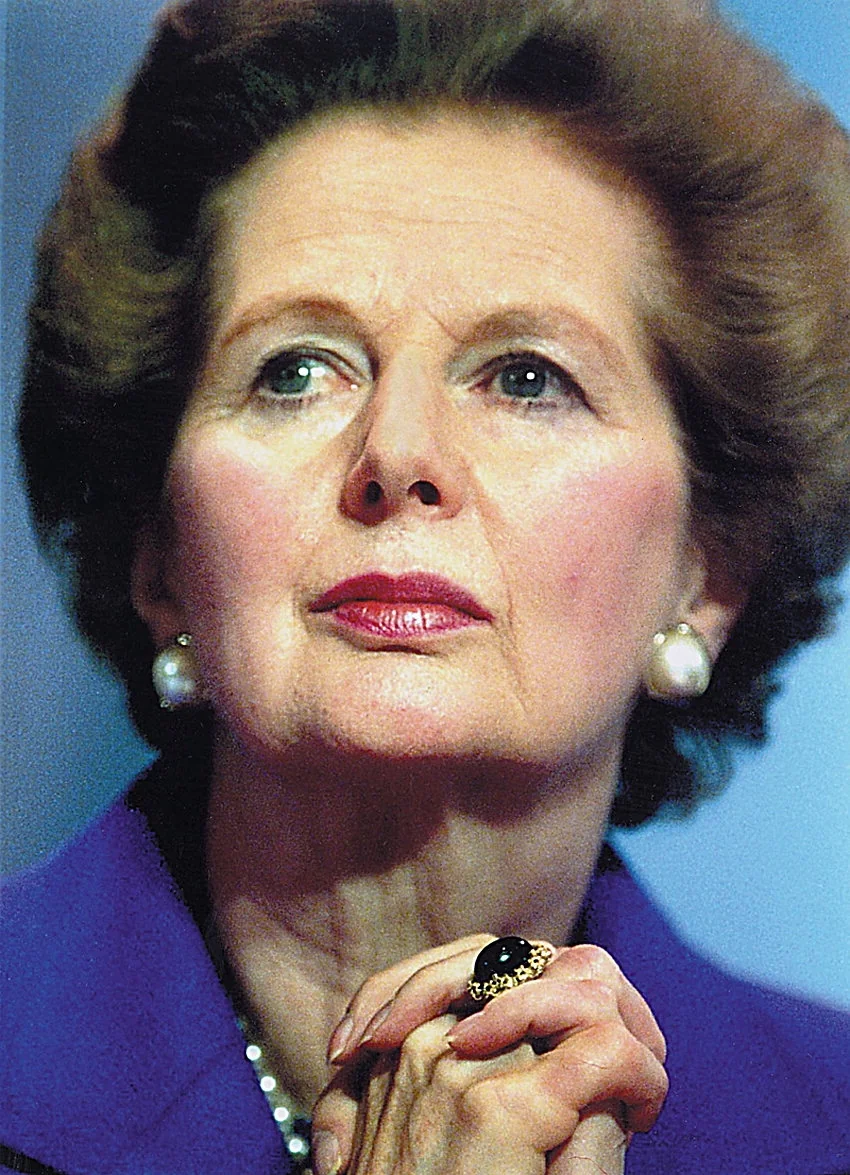
| 51 Quotes | |
| Born as | Margaret Hilda Roberts |
| Occup. | Leader |
| From | United Kingdom |
| Spouse | Denis Thatcher |
| Born | October 13, 1925 Grantham, Lincolnshire, United Kingdom |
| Died | April 8, 2013 London, England |
| Cause | Stroke |
| Aged | 87 years |
| Cite | |
Citation Formats
APA Style (7th ed.)
Margaret thatcher biography, facts and quotes. (2026, February 2). FixQuotes. https://fixquotes.com/authors/margaret-thatcher/
Chicago Style
"Margaret Thatcher biography, facts and quotes." FixQuotes. February 2, 2026. https://fixquotes.com/authors/margaret-thatcher/.
MLA Style (9th ed.)
"Margaret Thatcher biography, facts and quotes." FixQuotes, 2 Feb. 2026, https://fixquotes.com/authors/margaret-thatcher/. Accessed 21 Mar. 2026.
Early Life and Background
Margaret Hilda Roberts was born on October 13, 1925, in Grantham, Lincolnshire, above the grocery shop her parents ran on North Parade. Her father, Alfred Roberts, was a shopkeeper, Methodist lay preacher, and local alderman whose civic routine - council meetings, chapel, reading - formed a household catechism of duty and self-command. The Britain of her childhood was a society of rationing, hierarchy, and lingering Victorian moral language, and she absorbed both its restraints and its possibilities: discipline could be a ladder.The Second World War arrived as a defining weather system. Grantham saw military traffic and the strain of shortages; she watched national survival become a matter of administration and will. The war also sharpened her sense that politics was not an abstraction but a set of decisions that reached kitchens, pay packets, and morale. That early mixture of provincial practicality and wartime urgency would later harden into a conviction that the state must be strong where it must, and restrained where it can.
Education and Formative Influences
Roberts won a scholarship to Somerville College, Oxford, reading chemistry (graduating in 1947) and studying under Dorothy Hodgkin, whose laboratory exactitude reinforced Roberts's belief in method and evidence even as she turned toward politics. At Oxford she joined the Conservative Association, chaired it in 1946, and found in postwar Conservatism a vehicle for both anti-socialist argument and personal advancement in a still male political culture. Early work as a research chemist, then as a barrister after qualifying at the bar (1954), trained her to assemble cases, interrogate assumptions, and speak in compressed, prosecutorial cadences.Career, Major Works, and Turning Points
After unsuccessful candidacies at Dartford (1950, 1951), she entered Parliament as Conservative MP for Finchley in 1959, rising through the party as a combative debater on finance and education. As Secretary of State for Education (1970-1974) she earned notoriety for ending free milk for some schoolchildren, a decision that branded her as tough-minded and unsentimental. She won the Conservative leadership in 1975, then became prime minister in 1979 amid inflation, labor unrest, and a crisis of confidence; the Falklands War (1982) fortified her authority, while her economic program of monetarism, privatization, and trade-union reform reordered British political economy. Later years brought the miners' strike (1984-1985), the "Big Bang" financial deregulation (1986), and deepening rifts over Europe and the poll tax, culminating in her resignation in 1990. Her major political statement, The Downing Street Years (1993), framed her premiership as a moral battle over state power and individual agency.Philosophy, Style, and Themes
Thatcher's inner life was organized around self-mastery and a suspicion of softness - in herself first, and then in institutions. She treated politics as character put under stress, often narrating adversity as a test of will rather than a prompt for accommodation. Her own maxim captured the psychological motor: “Disciplining yourself to do what you know is right and important, although difficult, is the highroad to pride, self-esteem, and personal satisfaction”. The line is less self-help than self-portrait: she believed identity is forged by choosing the hard option repeatedly, and she extended that ethic to government, expecting the nation to tolerate pain for future independence.Her rhetorical style combined moral certainty with the courtroom instinct to force choices, rejecting the comfort of ambiguity. “Standing in the middle of the road is very dangerous; you get knocked down by the traffic from both sides”. That was not merely strategic advice; it disclosed a temperament that equated compromise with exposure and judged centrism as a failure of nerve. On the world stage, her anti-Soviet stance and insistence on credible deterrence expressed a fear of wishful thinking: “I seem to smell the stench of appeasement in the air”. Behind the famous handbagging was a consistent theme - order without drift, sovereignty without sentimentality, and an insistence that economics was a moral language about responsibility rather than a technical argument alone.
Legacy and Influence
Thatcher died on April 8, 2013, having become the most consequential British prime minister of the postwar era and a permanent reference point in national argument. "Thatcherism" reshaped the state, weakened the post-1945 consensus, elevated markets and home ownership, and permanently altered the balance between unions, industry, and government; it also widened social fractures and regional inequalities whose aftershocks remain politically potent. Internationally she helped define late Cold War Western resolve and influenced conservative movements from Washington to Eastern Europe. Admired as a liberator of enterprise and condemned as an architect of insecurity, she endures because she made politics about first principles and forced Britain to decide what it was willing to pay - and to protect - to remain itself.Our collection contains 51 quotes written by Margaret, under the main topics: Witty One-Liners - Motivational - Ethics & Morality - Truth - Wisdom.
Other people related to Margaret: Chris Patten (Politician), Denis Thatcher (Businessman), Douglas Hurd (Politician), Alan Clark (Politician), Roy Hattersley (Statesman), Barbara Walters (Journalist), Gillian Anderson (Actress), Kenneth Baker (Politician), Norman Tebbit (Statesman), Ian Gilmour (Politician)
Margaret Thatcher Famous Works
- 2002 Statecraft: Strategies for a Changing World (Book)
- 1995 The Path to Power (Book)
- 1993 The Downing Street Years (Book)