
Marie Curie Biography Quotes 13 Report mistakes
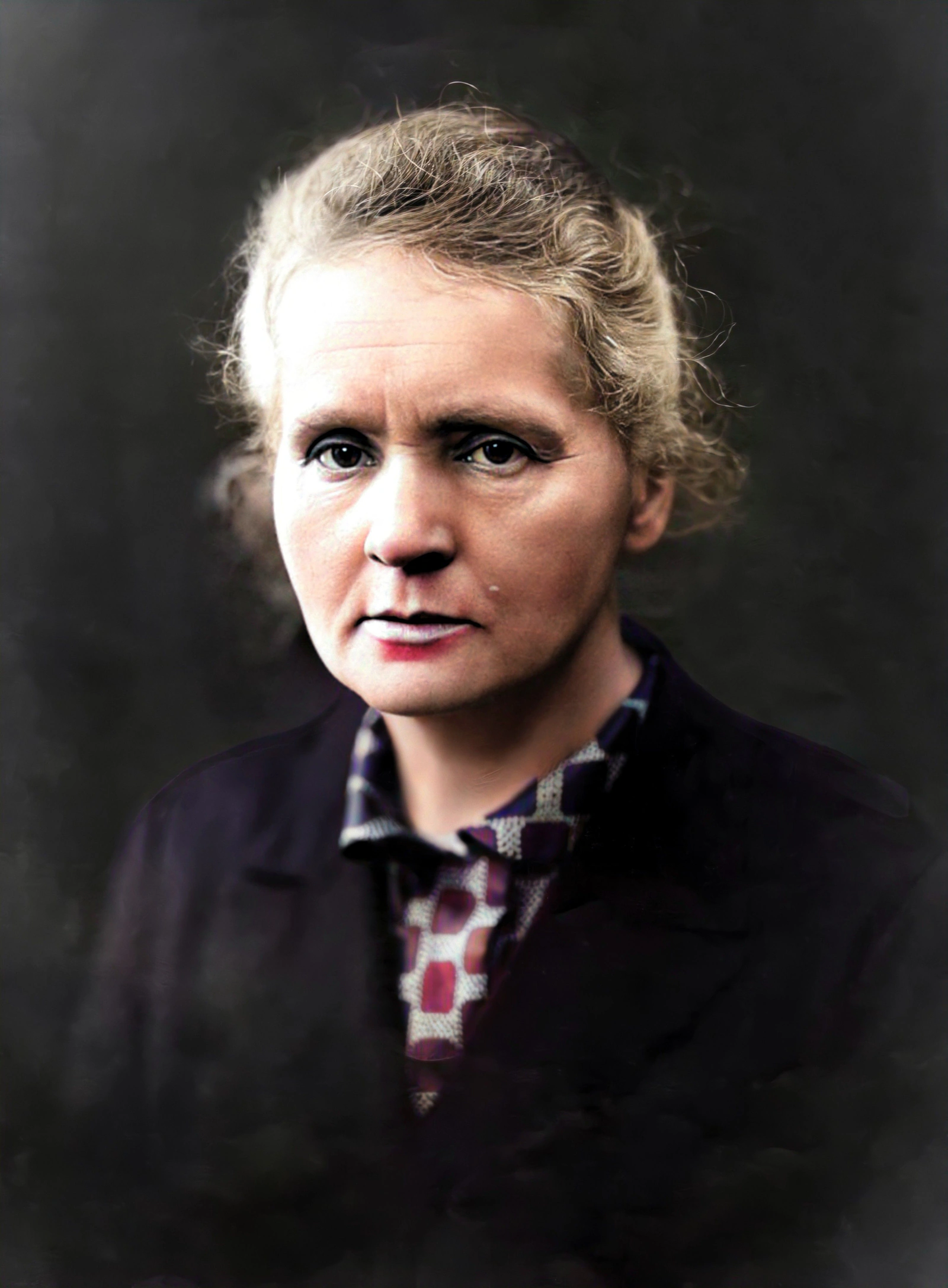
| 13 Quotes | |
| Born as | Marie Skłodowska |
| Occup. | Scientist |
| From | Poland |
| Born | November 7, 1867 Warsaw, Poland |
| Died | July 4, 1934 Sancellemoz, France |
| Cause | Aplastic anemia |
| Aged | 66 years |
| Cite | |
Citation Formats
APA Style (7th ed.)
Marie curie biography, facts and quotes. (2026, February 11). FixQuotes. https://fixquotes.com/authors/marie-curie/
Chicago Style
"Marie Curie biography, facts and quotes." FixQuotes. February 11, 2026. https://fixquotes.com/authors/marie-curie/.
MLA Style (9th ed.)
"Marie Curie biography, facts and quotes." FixQuotes, 11 Feb. 2026, https://fixquotes.com/authors/marie-curie/. Accessed 5 Mar. 2026.
Early Life and Background
Maria Salomea Sklodowska was born on 1867-11-07 in Warsaw, in the Russian-ruled Vistula Land where Polish language and institutions were under pressure and where education could be a quiet form of resistance. Her father, Wladyslaw, taught mathematics and physics; her mother, Bronislawa, ran a girls school. The household carried both intellectual ambition and political vulnerability: demotions and financial strain followed from Russification policies that targeted Polish educators.Loss and duty marked her inner climate early. Her eldest sister Zofia died of typhus, and her mother died of tuberculosis in 1878, leaving Maria - "Manya" at home - with a stoic seriousness that coexisted with intense private tenderness. As a teenager she excelled at school but, as a woman without access to a Polish university, she turned outward into work: tutoring, saving, and planning a future that required both sacrifice and patience.
Education and Formative Influences
Denied formal higher education in Warsaw, she studied in the clandestine "Flying University", absorbing positivist ideals that treated science as a tool for national renewal and personal emancipation. From 1885 to 1891 she worked as a governess, notably for the Zorawski family in Szczuki, sending money to support her sister Bronya in Paris while continuing self-study in physics and mathematics. In 1891 she followed, enrolling at the Sorbonne as Marie Sklodowska; she lived on sparse means, earned degrees in physics (1893) and mathematics (1894), and entered a Parisian scientific culture that prized measurement, rigor, and the new physics of electricity and radiation.Career, Major Works, and Turning Points
In 1895 she married the physicist Pierre Curie, forming a partnership of rare equality and single-mindedness. Seeking a thesis topic, she seized on Henri Becquerel's discovery of uranium rays and, with an electrometer refined by Pierre and his brother Jacques, coined "radioactivity" and proved it an atomic property rather than a molecular trick. In 1898 the Curies announced polonium (named for Poland) and radium; with Gustave Bemont she pursued chemical proof, culminating in the arduous isolation of radium salts from tons of pitchblende and the 1902 determination of radium's atomic weight. The 1903 Nobel Prize in Physics (shared with Becquerel and Pierre) made her internationally visible; Pierre's sudden death in 1906 forced her into solitary leadership as the Sorbonne's first female professor. She then built institutions as well as knowledge: the Radium Institute in Paris (opened 1914) and later the Warsaw Radium Institute (opened 1932). During World War I she organized mobile X-ray units ("Little Curies") and trained technicians, turning laboratory expertise into frontline triage. She won a second Nobel, in Chemistry (1911), for isolating pure radium and defining its properties, even as scandal-driven scrutiny of her private life revealed how quickly a woman scientist could be tried in the court of public morality.Philosophy, Style, and Themes
Curie's inner life was governed by a disciplined awe: she treated nature as both measurable and inexhaustibly strange, and she protected that strangeness from social distraction. Her notebooks and work habits show an ethic of attention - long, repetitive measurements, careful fractionations, and a willingness to live with uncertainty until data hardened into fact. She distrusted celebrity because it pulled the mind from problems to personalities; her admonition, “Be less curious about people and more curious about ideas”. , reads like a self-defense mechanism as much as advice, a way to keep grief, gossip, and nationalism from colonizing her concentration.Her writing and public statements consistently cast fear as an epistemic failure, not a moral one. “Nothing in life is to be feared, it is only to be understood. Now is the time to understand more, so that we may fear less”. This was not abstract optimism: she handled substances that burned the skin, damaged the marrow, and illuminated the dark, and she did so before the dangers were fully known. Yet her courage was methodical rather than theatrical, rooted in an unfinished horizon of work: “One never notices what has been done; one can only see what remains to be done”. That relentless forward lean shaped her style as a scientist-builder - prizes and firsts mattered less than instruments, trained hands, purified samples, and institutions durable enough to outlive her.
Legacy and Influence
Curie died on 1934-07-04 in Passy, Haute-Savoie, of aplastic anemia, widely linked to prolonged radiation exposure, and her lab notes remain so radioactive they are stored in lead-lined boxes. Her legacy is both conceptual and civic: she helped establish radioactivity as a fundamental property of matter, opened paths to nuclear physics and radiochemistry, and made radiation a medical tool through radiotherapy and wartime radiology. Just as enduring is the biographical template she unwillingly created - the modern image of the woman scientist who is at once collaborator and leader, immigrant and institution-maker, mother and experimentalist. By insisting that discovery required patience, internationalism, and an almost ascetic fidelity to evidence, she turned a personal ethic into a public standard that still governs how scientific seriousness is recognized.Our collection contains 13 quotes written by Marie, under the main topics: Nature - Work Ethic - Science - Knowledge - Perseverance.
Marie Curie Famous Works
- 1925 L'Isotopie Et Les Éléments Isotopes (Book)
- 1923 Pierre Curie (Book)
- 1910 Traité de Radioactivité (Book)
- 1903 Recherches Sur Les Substances Radioactives (Doctoral Thesis)
Source / external links