
Marilyn French Biography Quotes 17 Report mistakes
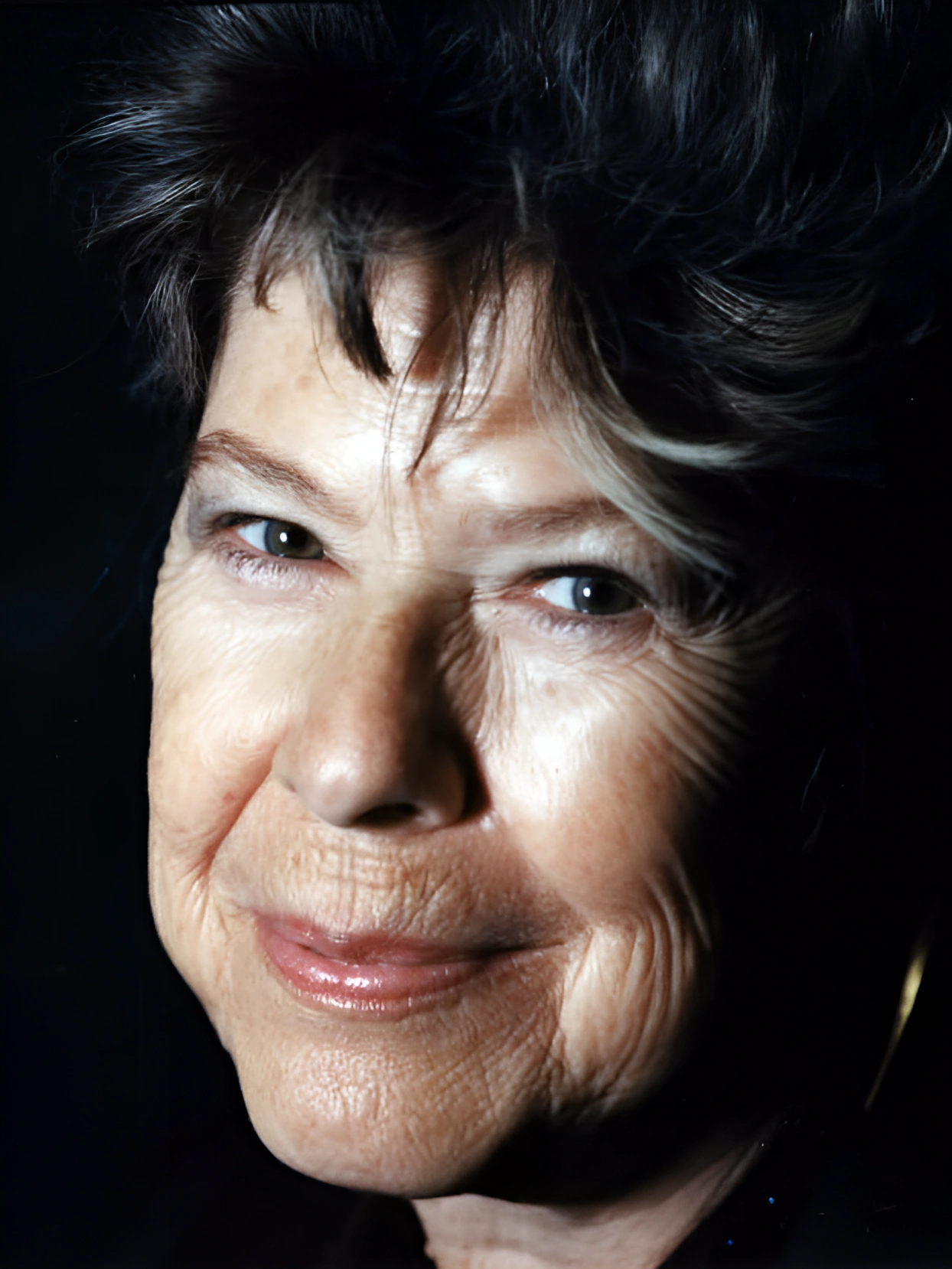
Attr: Store norske leksikon
| 17 Quotes | |
| Occup. | Author |
| From | USA |
| Born | November 21, 1929 |
| Died | May 2, 2009 |
| Aged | 79 years |
| Cite | |
Citation Formats
APA Style (7th ed.)
Marilyn french biography, facts and quotes. (2026, February 11). FixQuotes. https://fixquotes.com/authors/marilyn-french/
Chicago Style
"Marilyn French biography, facts and quotes." FixQuotes. February 11, 2026. https://fixquotes.com/authors/marilyn-french/.
MLA Style (9th ed.)
"Marilyn French biography, facts and quotes." FixQuotes, 11 Feb. 2026, https://fixquotes.com/authors/marilyn-french/. Accessed 26 Mar. 2026.
Early Life and Background
Marilyn French was born on November 21, 1929, in the United States, into the long shadow of the Great Depression and the mobilized promise of wartime America. She came of age as the country remade itself through World War II and then disciplined itself into postwar domestic ideals - the very ideals that would later become, for her, a central object of critique. The mid-century insistence that a woman could be fulfilled by containment in home, marriage, and genteel aspiration created the atmosphere in which her later anger and analytic clarity would sharpen.Her early adulthood unfolded at the hinge between old prohibitions and new openings: higher education was increasingly available, but intellectual authority was still coded male, and professional paths for women were frequently rerouted into supportive roles. French learned, early, how to read the unspoken rules in rooms where women were present but not central. That habit - of noticing structures rather than taking them for nature - became the seed of her later fiction and polemic, which treated private life not as refuge but as the most political terrain of all.
Education and Formative Influences
French studied at Harvard University, an experience that gave her both elite training and an intimate view of an institution whose traditions were not built for women. She pursued literature with the seriousness of a scholar, ultimately earning a doctorate and later working in academia. The canon she mastered and the exclusions she observed fed one another: she absorbed the tools of close reading, argument, and historical context, and then turned them outward on contemporary life, where gendered power often hid behind manners, romance narratives, and supposedly neutral professional standards.Career, Major Works, and Turning Points
She emerged as a major public voice with the novel The Women's Room (1977), a widely read work of feminist realism that tracked the psychic costs of postwar domesticity and the radicalizing force of consciousness-raising. Its success made French a household name in a period when second-wave feminism was shifting from movement meetings to mass-market publishing. She extended her argument beyond fiction in The War Against Women (1992), a sweeping indictment of patriarchal systems across law, culture, and everyday life, and continued to publish novels and cultural criticism that insisted that misogyny was not an accident of individual bad behavior but a durable social organization.Philosophy, Style, and Themes
French wrote with the plain force of someone who believed euphemism was part of the problem. Her work treated the family as a training ground for hierarchy and romance as a story that often disguised coercion. Even when she used humor or the observational texture of realist fiction, the governing aim was exposure: to make visible what many readers had learned to normalize. She was drawn to the way institutions colonize inner life - how aspiration, sexuality, motherhood, and even taste can be shaped by social permission and threat. That emphasis gave her a diagnostic style: scenes and arguments function as case studies in power, not merely personal drama.Psychologically, French was preoccupied with the costs of denial - the way women are asked to misname their own experience to preserve peace. Her most incendiary formulations were meant to shock readers out of false neutrality, as in: “All men are rapists and that's all they are. They rape us with their eyes, their laws, and their codes”. In context, the point was not a police report but a theory of pervasive violation - a claim that domination is built into gaze, statute, and custom, and therefore into what feels like ordinary life. At the same time, she distrusted the romantic script that told women to interpret self-erasure as destiny: “Well, love is insanity. The ancient Greeks knew that. It is the taking over of a rational and lucid mind by delusion and self-destruction. You lose yourself, you have no power over yourself, you can't even think straight”. That sentence captures her recurring fear that intimacy becomes a trap when it demands female disappearance. Yet her work also carried a competing tenderness: she insisted that care labor is civilization's overlooked foundation, arguing, “To nourish children and raise them against odds is in any time, any place, is more valuable than to fix bolts in cars or design nuclear weapons”. The rage and the valuation belong together - an ethic that tries to restore worth to what patriarchy renders invisible.
Legacy and Influence
French died on May 2, 2009, after decades as both best-selling novelist and combative public intellectual. Her influence persists less as a single doctrine than as a template for refusing the split between private suffering and public structure: she made the marriage plot a political document and the workplace a site of intimate coercion. Critics have challenged her for overgeneralization and for a sometimes prosecutorial tone, but her enduring contribution is the insistence that women's everyday lives are evidence - and that describing them without apology can be a form of power.Our collection contains 17 quotes written by Marilyn, under the main topics: Wisdom - Art - Love - Writing - Live in the Moment.
Marilyn French Famous Works
- 1993 Beyond Power: On Women, Men, and Morals (Non-fiction)
- 1984 Her Mother's Daughter (Novel)
- 1977 The Women's Room (Novel)