
Marilyn vos Savant Biography Quotes 70 Report mistakes
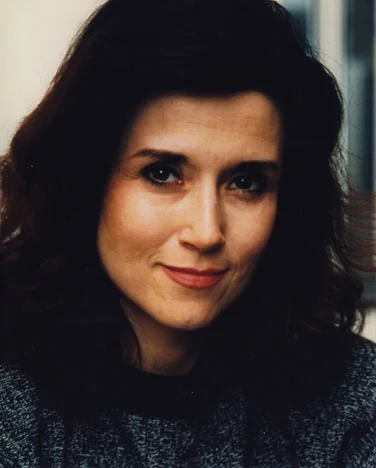
| 70 Quotes | |
| Born as | Marilyn Mach |
| Occup. | Author |
| From | USA |
| Spouse | Robert Jarvik (1987) |
| Born | August 11, 1946 St. Louis, Missouri, USA |
| Age | 79 years |
| Cite | |
Citation Formats
APA Style (7th ed.)
Marilyn vos savant biography, facts and quotes. (2026, February 11). FixQuotes. https://fixquotes.com/authors/marilyn-vos-savant/
Chicago Style
"Marilyn vos Savant biography, facts and quotes." FixQuotes. February 11, 2026. https://fixquotes.com/authors/marilyn-vos-savant/.
MLA Style (9th ed.)
"Marilyn vos Savant biography, facts and quotes." FixQuotes, 11 Feb. 2026, https://fixquotes.com/authors/marilyn-vos-savant/. Accessed 26 Mar. 2026.
Early Life and Background
Marilyn vos Savant was born Marilyn Mach on August 11, 1946, in St. Louis, Missouri, in a mid-century America that prized upward mobility, mass education, and the idea that talent could be measured. She grew up amid the practical rhythms of Midwestern life, where school achievement and social manners were treated as a kind of civic currency. That early environment left her with a characteristic blend of plainspoken directness and a fascination with the hidden rules that govern how people reason, argue, and live together.Public attention later fixed on her as an emblem of intelligence, but her private story often read as a quieter struggle for autonomy: how to be taken seriously as a thinker without being reduced to a novelty. The name change to "vos Savant" signaled not only adulthood and marriage but also a chosen public identity - one that would carry the burden of being constantly interpreted through the lens of brains, gender, and performance in an era that loved headlines about "genius".
Education and Formative Influences
She studied philosophy at Washington University in St. Louis, an education that sharpened her interest in logic, language, and the difference between persuasion and proof, even as she stepped away before completing a degree. That partial academic path became formative rather than limiting: she learned to think in the argumentative mode of philosophy while cultivating a columnist's sensitivity to how real people actually misunderstand rules, misuse words, and talk themselves into errors.Career, Major Works, and Turning Points
Vos Savant built a career in writing that fused popular explanation with a taste for hard questions, but her defining platform arrived with her long-running Parade magazine column, "Ask Marilyn", where readers brought puzzles, ethical dilemmas, probability problems, and everyday disputes. The column turned her into a national referee for reasoning: she did not merely supply answers, she modeled how to justify them, often against the grain of confident common sense. Her books extended that mission, including collections drawn from the column and works that framed clear thinking as a practical art. A major turning point came with the notorious debate over the Monty Hall problem, when her correct solution provoked a wave of public and professional backlash - a case study in how status, intuition, and pride can overwhelm mathematics, and how a public intellectual learns to withstand the social cost of being right.Philosophy, Style, and Themes
Her philosophy treats intelligence as less a badge than a discipline: the willingness to test assumptions, track definitions, and accept conclusions even when they feel wrong. She insists that arguments must cash out in reasons, not attitude, a stance captured in her admonition, “Be able to defend your arguments in a rational way. Otherwise, all you have is an opinion”. Psychologically, that line reveals both her impatience with posturing and her deeper anxiety about the fragility of truth in a noisy culture - she writes as if clarity is always one social gust away from collapse.Style-wise, she favors crisp declarative sentences, humor that punctures vanity, and examples drawn from ordinary life, because the audience she cares about is not the specialist but the person trying to think straight at the kitchen table. Yet she is not anti-intellectual; she is anti-mystification. Language itself becomes a moral issue in her work, as in: “Although spoken English doesn't obey the rules of written language, a person who doesn't know the rules thoroughly is at a great disadvantage”. The subtext is self-protective: knowing rules is a way to prevent being manipulated, misread, or dismissed.
A recurring theme is the conversion of raw knowledge into lived judgment. She separates the accumulation of facts from the cultivation of attention, compressing the idea into a quiet maxim: “To acquire knowledge, one must study; but to acquire wisdom, one must observe”. That pairing - study and observation - mirrors her own career: part armchair logic, part street-level anthropology of how people actually think. Across her essays and answers, the inner narrative is consistent: reason is not coldness; it is care, because it treats reality as something we owe our decisions.
Legacy and Influence
Vos Savant endures as a rare figure who made formal reasoning feel like a public service. At her best, she broadened the audience for probability, logic, and careful prose without pretending that expertise alone fixes human stubbornness. The Monty Hall episode, in particular, became a modern parable used in classrooms and popular science writing to illustrate cognitive bias, social pressure, and the emotional difficulty of updating beliefs. For readers, she remains less a myth of IQ than a model of intellectual posture: curious, corrective, and willing to risk unpopularity in defense of a clearer argument.Our collection contains 70 quotes written by Marilyn, under the main topics: Witty One-Liners - Motivational - Truth - Wisdom - Justice.
Marilyn vos Savant Famous Works
- 2005 Growing Up: A Classic American Childhood (Book)
- 2000 The Art of Spelling: The Madness and the Method (Book)
- 1997 The Power of Logical Thinking: Easy Lessons in the Art of Reasoning...and Hard Facts About its Absence in Our Lives (Book)
- 1994 More Marilyn: Some Like It Bright! (Book)
- 1993 Of Course I'm for Monogamy: I'm Also for Everlasting Peace and an End to Taxes (Book)
- 1992 Ask Marilyn: Answers to America's Most Frequently Asked Questions (Book)
- 1991 Brain Building: Exercising Yourself Smarter (Book)
- 1989 I've Forgotten Everything I Learned in School!: A Refresher Course to Help You Reclaim Your Education (Book)
Source / external links