
Mario Cuomo Biography Quotes 12 Report mistakes
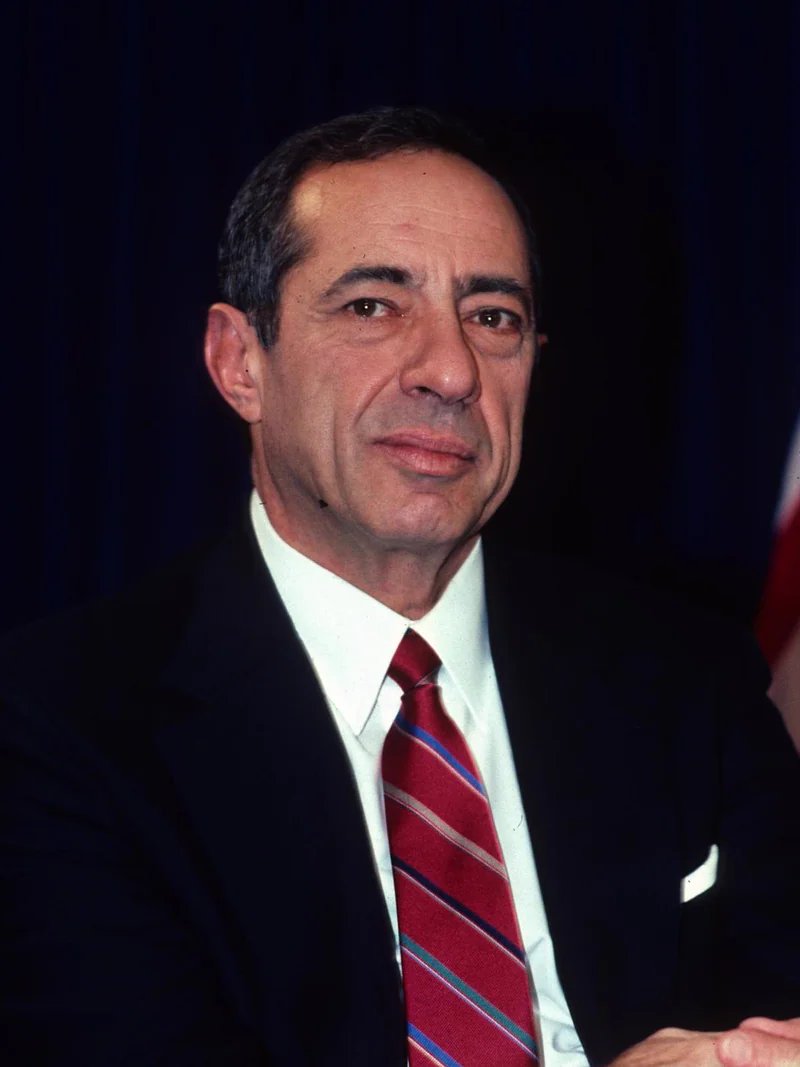
| 12 Quotes | |
| Born as | Mario Matthew Cuomo |
| Known as | Mario M. Cuomo |
| Occup. | Politician |
| From | USA |
| Born | June 15, 1932 Queens, New York City, U.S. |
| Died | January 1, 2015 Manhattan, New York City, U.S. |
| Cause | Heart failure |
| Aged | 82 years |
| Cite | |
Citation Formats
APA Style (7th ed.)
Mario cuomo biography, facts and quotes. (2026, February 4). FixQuotes. https://fixquotes.com/authors/mario-cuomo/
Chicago Style
"Mario Cuomo biography, facts and quotes." FixQuotes. February 4, 2026. https://fixquotes.com/authors/mario-cuomo/.
MLA Style (9th ed.)
"Mario Cuomo biography, facts and quotes." FixQuotes, 4 Feb. 2026, https://fixquotes.com/authors/mario-cuomo/. Accessed 5 Mar. 2026.
Early Life and Background
Mario Matthew Cuomo was born on June 15, 1932, in Queens, New York City, the son of Andrea and Immacolata Cuomo, Italian immigrants rooted in the tight-knit, Catholic, working-class neighborhoods that turned New York politics into a kind of street-level civics. He grew up in South Jamaica in the hard years after the Depression, when ethnic identity, parish life, and the daily arithmetic of rent and groceries shaped ambitions as much as any abstract ideology. The family ran a small grocery, and Cuomo absorbed the dignity and strain of small business, along with a sense that government could either steady a life or tip it.His early experience was not the romantic bootstrap myth so much as the practical apprenticeship of an outer-borough kid watching adults negotiate authority - landlords, police, local party figures, priests, and bosses - without surrendering pride. That combination of deference and combativeness became his lifelong temperament: respectful of institutions, unsentimental about power, and intensely protective of ordinary people who felt unseen by elites. The cadence that later made him a national voice began as neighborhood argument and family talk, sharpened by an immigrant household where aspiration carried obligation.
Education and Formative Influences
Cuomo studied at St. Johns University, earned his law degree at St. Johns University School of Law, and clerked for a New York judge before building a private practice. The courtroom trained him to treat politics as persuasion under rules, and his Catholic education and Italian-American milieu gave him a moral vocabulary that he used carefully in public: as an instrument for empathy, not a weapon for coercion. He married Matilda Raffa in 1958, and their large family anchored him in domestic routine even as his public life grew; the household was both refuge and proving ground for his belief that policy was, at root, about families trying to stay whole.Career, Major Works, and Turning Points
Cuomos rise came through law and public service: he became known statewide in the mid-1970s as a mediator in the bitter Queens dispute over public housing in Forest Hills, a role that displayed his instinct to translate moral conflict into workable compromise. Elected lieutenant governor of New York in 1978 under Hugh Carey, he won the governorship in 1982 and served three terms from 1983 to 1994, steering the state through recession, fiscal pressure, crime fears, AIDS-era public health anxieties, and the national rightward drift of the Reagan years. He defended New Yorks social safety net, fought with Washington over federal cuts, pushed major infrastructure and economic-development initiatives, and became a national Democratic conscience after his 1984 Democratic National Convention keynote address, which framed inequality as a test of American character through the famous image of "two cities". His most fateful turning points were refusals: he repeatedly declined to run for president, choices that turned him into both a symbol of principle and a magnet for what-ifs.Philosophy, Style, and Themes
Cuomo governed as a moral realist. His defining tension was between lyrical persuasion and bureaucratic constraint, a split he acknowledged with the aphorism “You campaign in poetry. You govern in prose”. In practice, that meant he could summon biblical rhythm to name injustice, then spend years grinding through budgets, bond issues, and legislative deals that satisfied almost no one completely. He treated the state as a shield for the vulnerable, but he also understood that compassion without arithmetic collapses into theatre. His best speeches did not pretend to erase conflict; they asked audiences to tolerate complexity without giving up decency.The same trial-lawyer sensibility made him wary of moral crusades that bypassed pluralism. He argued that democratic life depends on restraint, warning, “The price of seeking to force our beliefs on others is that someday they might force their beliefs on us”. That line captures his inner life: a devout man wary of sanctimony, a liberal suspicious of purity tests, a politician who feared that certainty could become coercion. Even his self-critique carried the stamp of an immigrant ethic, as when he admitted, “I talk and talk and talk, and I haven't taught people in fifty years what my father taught me by example in one week”. Beneath the oratory was a son trying to reconcile eloquence with the simpler authority of work, family, and example.
Legacy and Influence
Cuomo died on January 1, 2015, in Manhattan, leaving a legacy less as a list of statutes than as a template for urban, pluralist liberalism in an age increasingly hostile to nuance. He made the case that government could be both practical and humane, that faith and liberal democracy could coexist without domination, and that rhetoric had a civic purpose when tethered to policy. His three-term governorship shaped modern New Yorks self-understanding as a diverse, argumentative commonwealth, and his speeches remain touchstones for Democrats seeking language equal to inequality. The Cuomo name also became a dynastic marker - his son Andrew Cuomo later served as governor - but Mario Cuomos enduring influence rests on a rarer inheritance: an insistence that politics is not performance alone, but a moral craft practiced under pressure, where the prose must eventually answer for the poetry.Our collection contains 12 quotes written by Mario, under the main topics: Witty One-Liners - Justice - Leadership - Freedom - Father.
Other people related to Mario: Andrew Cuomo (Politician), Sol Wachtler (Judge), Murray Kempton (Journalist), Ed Koch (Politician)