
Mark David Chapman Biography Quotes 12 Report mistakes
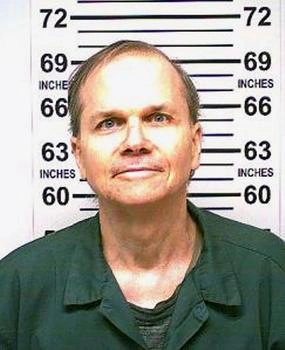
| 12 Quotes | |
| Occup. | Criminal |
| From | USA |
| Born | March 10, 1955 Fort Worth, Texas, USA |
| Age | 70 years |
| Cite | |
Citation Formats
APA Style (7th ed.)
Mark david chapman biography, facts and quotes. (2026, February 11). FixQuotes. https://fixquotes.com/authors/mark-david-chapman/
Chicago Style
"Mark David Chapman biography, facts and quotes." FixQuotes. February 11, 2026. https://fixquotes.com/authors/mark-david-chapman/.
MLA Style (9th ed.)
"Mark David Chapman biography, facts and quotes." FixQuotes, 11 Feb. 2026, https://fixquotes.com/authors/mark-david-chapman/. Accessed 7 Mar. 2026.
Early Life and Background
Mark David Chapman was born on March 10, 1955, in Fort Worth, Texas, into a mid-century America saturated with television celebrity and postwar anxieties. He later described a childhood marked by insecurity and a home life he experienced as tense and emotionally complicated, with an early understanding that power could be loud, unpredictable, and humiliating.In adolescence he gravitated toward identity through belonging - first through conventional youth culture and then through more intense private worlds. Chapman reported fantasies of control and escape, and by his own account learned to present a manageable exterior while nursing inner volatility. Those early habits of concealment and rehearsal - trying on selves, suppressing anger, and seeking a decisive role - would become a through-line in the tragedy that later made his name infamous.
Education and Formative Influences
Chapman attended school in Georgia after the family relocated to the Atlanta area, but his education was remembered less for academic distinction than for social drift and a search for certainty. He became active in Christian youth circles and later worked for organizations connected to that milieu, at times finding structure and purpose, at other times cycling into disorientation. Like many young Americans in the 1970s, he moved through a culture where pop icons were moral touchstones, mass media made intimacy with strangers feel real, and personal crisis could be framed as destiny.Career, Major Works, and Turning Points
Chapman had no major works in the conventional sense; his "career" was a series of jobs and relocations, including periods remembered as unstable and inwardly turbulent. The turning point that defined his life and the era came on December 8, 1980, outside the Dakota apartment building in New York City, when he shot and killed John Lennon. Arrested at the scene, he pleaded guilty to second-degree murder in 1981 and was sentenced to 20 years to life; he has remained incarcerated, repeatedly denied parole, while the crime became a permanent scar on late-20th-century cultural memory.Philosophy, Style, and Themes
Chapman's inner life, as it emerges from interviews, statements, and the long afterlife of the case, is built around dissociation: the self as observer, the self as performer, and the self as judge. He tried to narrate the murder as something done without heat, as if the act were a grim logic rather than an eruption. “I wasn't angry the night I shot him”. That claim, whether fully reliable or self-protective, points to a psychology in which emotional numbness can masquerade as control, and control can become a substitute for meaning.A second motif is celebrity as a moral hallucination - not simply envy, but the flattening of a real person into a symbol that can be used to resolve an inner conflict. “I feel that I see John Lennon now as not a celebrity. I did then. I saw him as a cardboard cutout on an album cover”. Here Chapman gestures toward the mechanics of dehumanization that modern fame can enable: the famous become screens for projection, and projection can become permission. His later self-condemnation also functions as a kind of counter-myth, an attempt to impose order after chaos: “Once you take a life, that's it. I don't even deserve to be here”. Taken together, these statements map a mind swinging between grandiosity and abasement, between the craving to be consequential and the insistence that he is unworthy of consequence.
Legacy and Influence
Chapman's legacy is inseparable from the loss of John Lennon and from the broader shift in how the public understood celebrity vulnerability: the end of an era of relative openness and the beginning of a more fortified relationship between stars and the crowds that loved them. His name survives less as an individual biography than as a cautionary reference point in conversations about fixation, mental illness, and the violent edge of fame culture, while the persistent public attention he sought and repudiated continues to raise the same grim question - how modern notoriety can turn a private collapse into a historical wound.Our collection contains 12 quotes written by Mark, under the main topics: Ethics & Morality - Music - Dark Humor - Freedom - Movie.
Frequently Asked Questions
- Mark David Chapman, wife: Gloria Abe (married 1979).
- Is Mark David Chapman still married: Yes, he remains married to Gloria (Abe) Chapman.
- Where is Mark David Chapman today: Incarcerated at Wende Correctional Facility, New York.
- Mark David Chapman Catcher in the Rye: He was obsessed with the novel and carried a copy during the 1980 Lennon shooting.
- Mark David Chapman 2025: Alive and still incarcerated in New York.
- Is Mark David Chapman still alive: Yes, he is alive.
- How old is Mark David Chapman? He is 70 years old
Source / external links