
Mark E. Hyman Biography Quotes 4 Report mistakes
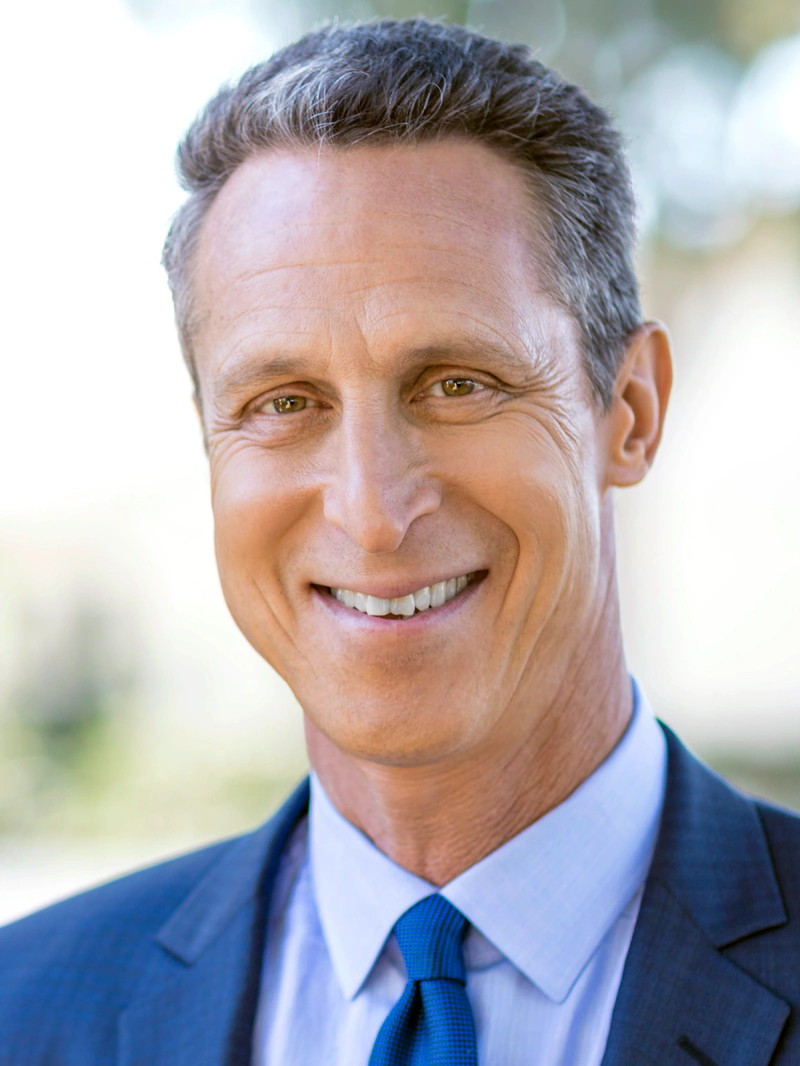
| 4 Quotes | |
| Occup. | Celebrity |
| From | USA |
| Born | January 6, 1958 |
| Age | 68 years |
| Cite | |
Citation Formats
APA Style (7th ed.)
Mark e. hyman biography, facts and quotes. (2026, February 11). FixQuotes. https://fixquotes.com/authors/mark-e-hyman/
Chicago Style
"Mark E. Hyman biography, facts and quotes." FixQuotes. February 11, 2026. https://fixquotes.com/authors/mark-e-hyman/.
MLA Style (9th ed.)
"Mark E. Hyman biography, facts and quotes." FixQuotes, 11 Feb. 2026, https://fixquotes.com/authors/mark-e-hyman/. Accessed 26 Mar. 2026.
Profile
Mark E. Hyman is an American broadcast executive and political commentator best known for his years at Sinclair Broadcast Group, where he emerged as a prominent corporate voice and on-air personality in the early 2000s. He became widely recognized for brief, opinion-driven segments carried across Sinclair-owned stations and for serving as a chief defender of the company's decisions during a period when consolidation, local news autonomy, and media partisanship were flash points in U.S. public life. His biography is tightly interwoven with the evolution of Sinclair from a regional broadcaster into a national force headquartered in Hunt Valley, Maryland.Rise at Sinclair Broadcast Group
Within Sinclair, Hyman worked in corporate leadership focused on external relations and public messaging. In that role he engaged with journalists, regulators, and civic groups while helping to articulate the company's stance on programming, public policy, and newsroom practices. His proximity to Sinclair's leadership, notably executive chairman David D. Smith, placed him at the center of debates about how a consolidated broadcaster should exercise editorial discretion. The broader corporate environment also involved legal and regulatory strategists such as Barry Faber, whose portfolio on compliance and ownership rules intersected with the narratives Hyman presented to the public.The Point and the must-run model
Hyman became a familiar face to viewers through The Point, a series of short commentaries distributed as "must-run" segments. Station managers were instructed to insert these pieces into local newscasts, ensuring a uniform reach across dozens of markets. The segments offered a direct, often conservative perspective on national and local issues. Supporters argued that The Point supplied a consistent editorial voice and broadened the range of viewpoints on local airwaves. Critics countered that must-run content blurred the boundary between corporate opinion and community-focused reporting by overriding local newsroom judgment.Controversies and public defense
Hyman's public profile crested during several headline-making programming decisions. In April 2004, Sinclair stations preempted an episode of ABC's Nightline during which Ted Koppel read the names of U.S. service members killed in Iraq; Hyman became the company's most visible spokesperson, asserting the decision reflected concerns about political intent and editorial balance. Later that year, Sinclair moved to air portions of Stolen Honor, a documentary critical of then-presidential candidate John Kerry's Vietnam-era activism. Again, Hyman was the principal public advocate for the company's approach, giving interviews, publishing statements, and debating watchdogs who questioned the propriety of airing the film during the election season. These episodes cemented his reputation as a corporate communicator willing to defend contentious decisions in real time.People and institutions around him
The landscape around Hyman included Sinclair's founding Smith family, especially David D. Smith, who set strategic direction that shaped both programming and public posture. Inside the company, legal counsel Barry Faber was a key figure handling regulatory and transactional issues that frequently ran parallel to Hyman's messaging. Beyond Sinclair, his orbit included newsroom leaders at local stations who navigated the insertion of corporate commentary into their broadcasts, as well as outside critics such as Media Matters for America and the advocacy group Free Press, which regularly challenged must-run practices. During the 2004 disputes, national figures like Ted Koppel and John Kerry emerged as focal points in the public conversation in which Hyman was a constant participant. Years later, when Sinclair appointed Boris Epshteyn as chief political analyst, observers noted the continuity with the earlier editorial template that Hyman had helped to normalize.Work beyond the nightly commentaries
While The Point defined his public persona, Hyman's portfolio extended to op-eds, speeches, and appearances on radio and television programs where he argued for his views on media responsibility, national security, and the role of corporate ownership in local news. He frequently framed his commentary as a corrective to what he regarded as omissions or imbalances in mainstream coverage. His advocacy emphasized that commentary, clearly labeled and brief, was a legitimate part of a station's service to viewers. That argument resonated with some audiences who wanted forthright opinion on national issues, but it also galvanized journalists and media scholars who argued for clearer separation between independent local reporting and centrally produced editorial content.Approach, style, and themes
Hyman favored concise monologues that foregrounded declarative claims, statistics, and sharp contrasts. The segments typically invoked a set of recurring themes: skepticism toward what he depicted as elite media narratives, emphasis on national security and public order, and support for deregulatory approaches to communications policy. His consistent tone and the ubiquity of the must-run distribution made his voice unusually familiar to viewers in far-flung local markets who otherwise might not have encountered national political commentary in their evening news.Impact and legacy
By pairing corporate communications with on-air punctuations of opinion, Hyman helped codify a model that other large station groups would study: centralized, branded commentary that travels through local newscasts. In the short term, his work crystallized public debates about consolidation and editorial leverage. In the longer view, it previewed later chapters in U.S. media in which national talking points increasingly flowed through local outlets. For supporters, his legacy lies in widening the spectrum of commentary within local news time slots and in standing firmly for company decisions under intense scrutiny. For detractors, it marks a turning point in which corporate mandates encroached on community-centered journalism.Public record and identity
Public sources consistently identify Mark E. Hyman as an American media executive and commentator whose career is primarily associated with Sinclair Broadcast Group. Although his work made him a recognizable figure, detailed personal information has remained largely outside the spotlight, with professional activities and public debates defining his profile. He is not to be confused with physician-author Mark Hyman, a prominent figure in functional medicine, nor with the journalist and author Mark Hyman who has written extensively on sports and youth athletics. In the media sphere, the "E". distinguishes his byline and on-air identity, a marker that became widely known during the years when his brief segments punctuated local newscasts across the United States.Our collection contains 4 quotes written by Mark, under the main topics: Justice - Writing - Freedom - Movie.