
Mark Sanchez Biography Quotes 10 Report mistakes
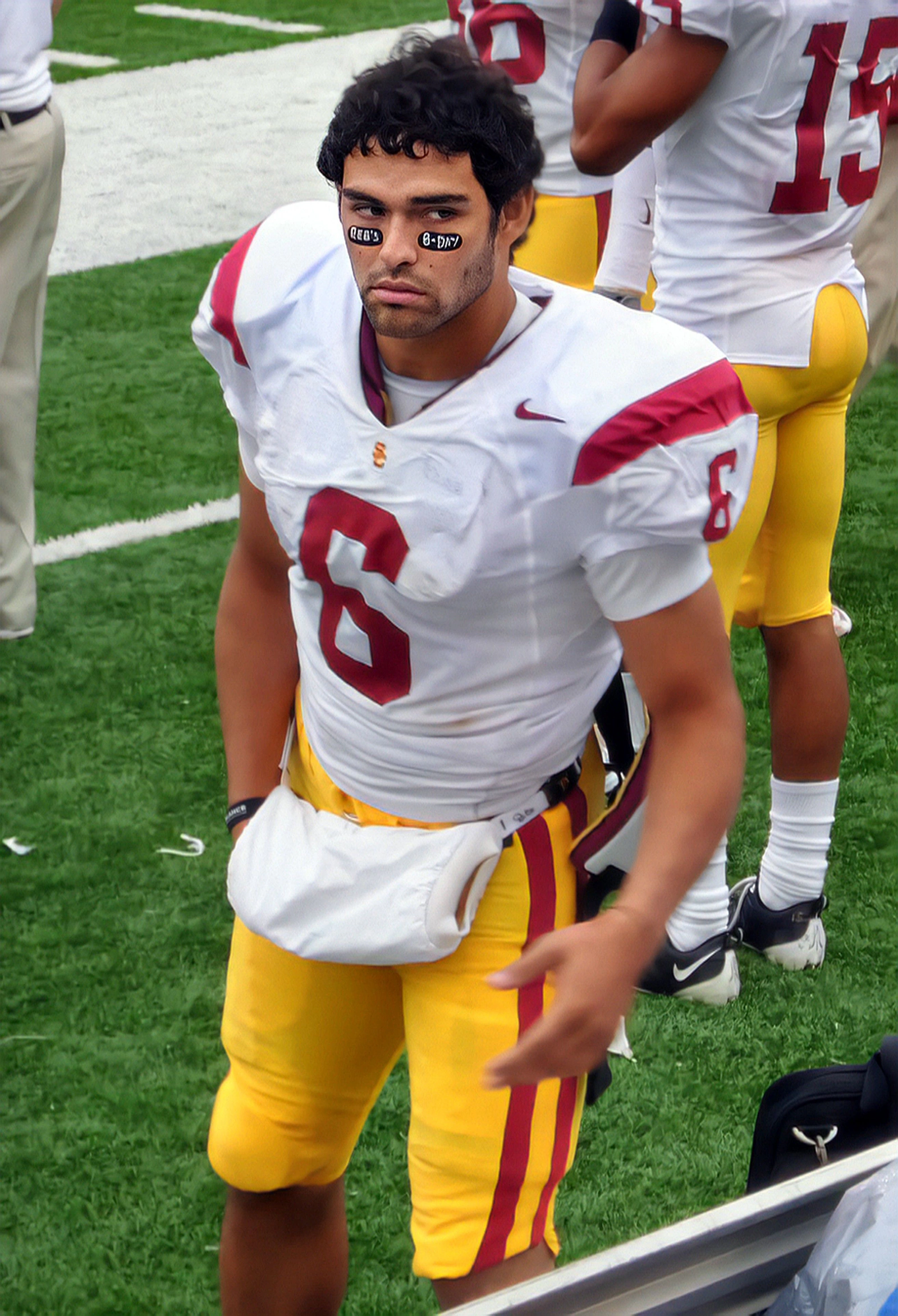
Attr: Bobak Ha'Eri, CC BY 3.0
| 10 Quotes | |
| Born as | Mark Travis John Sanchez |
| Occup. | Athlete |
| From | USA |
| Born | November 11, 1986 Long Beach, California, USA |
| Age | 39 years |
| Cite | |
Citation Formats
APA Style (7th ed.)
Mark sanchez biography, facts and quotes. (2026, February 11). FixQuotes. https://fixquotes.com/authors/mark-sanchez/
Chicago Style
"Mark Sanchez biography, facts and quotes." FixQuotes. February 11, 2026. https://fixquotes.com/authors/mark-sanchez/.
MLA Style (9th ed.)
"Mark Sanchez biography, facts and quotes." FixQuotes, 11 Feb. 2026, https://fixquotes.com/authors/mark-sanchez/. Accessed 12 Feb. 2026.
Early Life and Background
Mark Travis John Sanchez was born on November 11, 1986, in Long Beach, California, and grew up in Southern California in a family that emphasized discipline, education, and hard work. Of Mexican-American heritage, he became a prominent figure for many Latino fans who were eager to see representation at quarterback, a position long dominated by a narrow profile in the sport. Surrounded by supportive parents and siblings, he gravitated early to leadership roles in team settings and found that football rewarded both his competitive streak and his ability to thrive under pressure. He played quarterback for a powerhouse high school program in Orange County, earning attention for his size, arm strength, and poise, which drew intense interest from top college programs across the country.USC and the Formation of a Quarterback
Sanchez chose the University of Southern California, a destination that had become synonymous with elite quarterback development. Under head coach Pete Carroll and offensive coordinator and quarterbacks coach Steve Sarkisian, he learned the intricacies of a pro-style system, from full-field progression reads to protection calls and situational football. He spent time developing behind other starters, getting spot duty and facing the crucible of expectations that come with the Trojans brand. In his season as the full-time starter, USC fielded a formidable roster and Sanchez delivered one of the signature performances of his college career in a Rose Bowl victory, earning widespread recognition for his command, accuracy, and mobility in the pocket. The success cemented his decision to declare early for the NFL Draft.Draft Day and the New York Jets
In 2009 the New York Jets traded up to select Sanchez fifth overall, instantly linking him to a franchise eager for a long-term answer at quarterback. Head coach Rex Ryan set a tone of swagger and defensive dominance, while offensive coordinator Brian Schottenheimer built a physical, run-heavy attack designed to ease the stress on a young passer. Sanchez inherited a strong supporting cast that included center Nick Mangold and left tackle D Brickashaw Ferguson up front, tight end Dustin Keller as a reliable target over the middle, and receivers such as Braylon Edwards and later Santonio Holmes to stretch the field. In the backfield, Thomas Jones and Shonn Greene powered the ground game, and in 2010 the addition of LaDainian Tomlinson deepened the unit. On defense, stars like Darrelle Revis and Bart Scott gave the Jets a margin for error few young quarterbacks enjoy.Breakthrough Playoff Runs
Sanchez's first two seasons were defined by playoff poise rare for a newcomer. As a rookie, he helped guide the Jets to the AFC Championship Game, winning road playoff games and managing hostile environments with composure. A year later, the Jets returned to the conference title game after a memorable postseason that included a road win over New England, a victory that briefly reframed perceptions of the franchise and of Sanchez's ceiling as a big-game performer. His ability to handle audibles, control the huddle, and hit key throws off play-action fit the Jets formula, which relied on complementary football and situational mastery.Adversity and the New York Spotlight
The years that followed illuminated the thin line between promise and volatility at quarterback. With roster changes, injuries, and shifting expectations, the offense asked more of Sanchez, and inconsistency crept in. The famous Thanksgiving miscue in 2012 against New England, often referred to as the "butt fumble", became a pop-culture shorthand for the Jets' struggles, overshadowing the playoff success of his early years. The pressure of New York media and fan scrutiny compounded the challenge. A preseason shoulder injury in 2013 complicated his tenure further, and when the Jets turned to Geno Smith, the franchise moved in a new direction.Journeyman Years and Reinvention
Sanchez's second act unfolded across several teams, each with its own demands and personalities. With the Philadelphia Eagles under head coach Chip Kelly, he stepped in for injured starter Nick Foles and executed a tempo-driven system that emphasized quick decisions and rhythm throws. Later, he competed for the starting job with the Denver Broncos but did not enter the season as the starter. He then provided veteran depth for the Dallas Cowboys during Dak Prescott's breakout season, a role that required steady preparation behind the scenes and mentoring in the quarterback room. Shorter stints with the Chicago Bears and Washington followed, where injuries to others pressed him into duty. In each stop, he worked with different coordinators and position coaches, adapting terminology, footwork, and reads to fit varied playbooks and personnel.Leadership, Teammates, and Coaches
Across his NFL career, Sanchez's relationships with coaches and teammates shaped both his development and reputation. Rex Ryan's confidence galvanized the locker room and emboldened Sanchez as a young starter. Brian Schottenheimer's structured approach helped him master protections and situational calls. Receivers like Santonio Holmes and Braylon Edwards offered explosive playmaking; tight end Dustin Keller gave him a trusted option in pivotal downs. On defense, figures such as Darrelle Revis and Bart Scott helped create the complementary conditions that allowed Sanchez to learn without carrying the entire offensive load. Later, Chip Kelly's system in Philadelphia reinforced quick processing, while the presence of veterans such as Nick Foles and, in Dallas, Tony Romo and rising star Dak Prescott, provided a window into different leadership styles in the quarterback room.Transition to Broadcasting
After his playing days wound down, Sanchez moved into broadcasting, bringing a quarterback's vantage point to national audiences. He leveraged firsthand experience in multiple offensive systems to explain coverage rotations, route adjustments, and the mechanics of quarterback footwork. The transition allowed him to reshape public perception, emphasizing preparation, communication, and the nuances of game planning. His on-air work also provided a platform to speak about the pressures young quarterbacks face, the value of coaching continuity, and the often-unseen labor of role players and assistants who make game-day execution possible.Legacy and Impact
Sanchez's legacy is a study in contrasts: a top-five draft pick who delivered immediate postseason success, a high-profile figure who weathered one of the sport's most replayed mishaps, and a professional who reinvented himself through adaptability and communication. For many fans of Mexican-American heritage, his visibility at quarterback carried symbolic weight, and his early playoff runs with the Jets remain touchstones in franchise history. He is often cited in discussions about how organizational infrastructure, defense, and coaching stability can accelerate or stall a young quarterback's growth. Beyond wins and losses, his story highlights the importance of teammates and mentors at every stage: the guiding influence of Pete Carroll and Steve Sarkisian at USC; the early scaffolding provided by Rex Ryan, Brian Schottenheimer, Nick Mangold, D Brickashaw Ferguson, LaDainian Tomlinson, Santonio Holmes, and others in New York; and the later insights gleaned alongside figures like Nick Foles and Dak Prescott.Personal Character and Public Role
Throughout, Sanchez was known for an approachable demeanor with media and fans, a willingness to shoulder criticism, and a habit of crediting linemen, backs, and coaches for shared successes. He participated in community initiatives and youth outreach common among NFL veterans, often connecting with aspiring athletes about resilience and preparation. In broadcasting, he has continued to make the game more accessible, translating the jargon of quarterback rooms into clear explanations for viewers. Taken together, his path from Southern California prospect to NFL playoff starter and national analyst demonstrates both the volatility of professional sports and the enduring value of leadership, adaptability, and relationships in shaping a career.Our collection contains 10 quotes written by Mark, under the main topics: Sports - Training & Practice - Teamwork - Coaching - Career.
Other people related to Mark: Tim Tebow (Athlete)
Source / external links