
Marquis de Sade Biography Quotes 37 Report mistakes
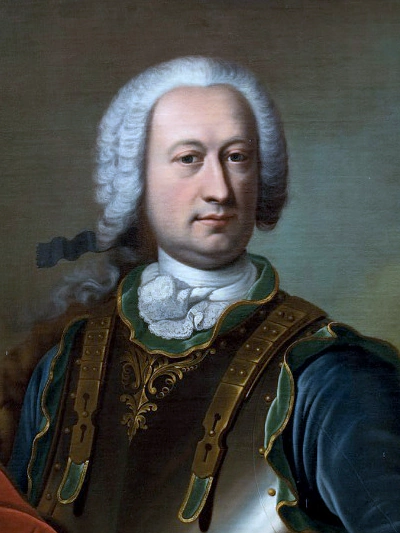
| 37 Quotes | |
| Born as | Donatien Alphonse Francois |
| Occup. | Novelist |
| From | France |
| Born | June 2, 1740 Paris, Kingdom of France |
| Died | December 2, 1814 Charenton, France |
| Aged | 74 years |
| Cite | |
Citation Formats
APA Style (7th ed.)
Marquis de sade biography, facts and quotes. (2026, February 11). FixQuotes. https://fixquotes.com/authors/marquis-de-sade/
Chicago Style
"Marquis de Sade biography, facts and quotes." FixQuotes. February 11, 2026. https://fixquotes.com/authors/marquis-de-sade/.
MLA Style (9th ed.)
"Marquis de Sade biography, facts and quotes." FixQuotes, 11 Feb. 2026, https://fixquotes.com/authors/marquis-de-sade/. Accessed 25 Mar. 2026.
Early Life and Background
Donatien Alphonse Francois, later known as the Marquis de Sade, was born in Paris on June 2, 1740, into the minor nobility of Bourbon France, a world in which privilege was real but precarious and reputation functioned like currency. His father, Jean-Baptiste Francois Joseph de Sade, moved in diplomatic and courtly circles; his mother, Marie-Elinore de Maillé de Carman, came from an old family tied to aristocratic networks. Sade grew up amid the polished surfaces of the Ancien Regime - salons, patronage, and rigid hierarchies - yet he also absorbed the era's underlying violence: the state could imprison without trial, the Church policed desire, and public morality was enforced as spectacle.From early adulthood his name became synonymous with scandal, partly because he seemed to test the limits not only of sexual conduct but of power itself. He lived in a France where libertine bravado could be a pose, but where a nobleman could still be ruined by rumor, debt, and the machinery of lettres de cachet. That collision between private impulse and public punishment shaped his inner life: he learned to treat confinement as both trauma and laboratory, turning grievance and appetite into a philosophy that would outlast the regime that tried to silence him.
Education and Formative Influences
Sade was educated at the Jesuit College Louis-le-Grand in Paris, receiving the classical training that sharpened his rhetoric and gave him a dramatist's sense of scene and argument; he also read Enlightenment material that contested theological certainty and challenged inherited authority. After schooling he entered the army and served during the Seven Years' War, an experience that placed him inside organized violence rather than merely imagining it. In 1763 he married Renee-Pelagie de Montreuil, linking himself to a powerful legal family - and, when scandal followed, to a family that would help orchestrate his long incarcerations, making domestic life another theater of surveillance and control.Career, Major Works, and Turning Points
Sade wrote amid repeated arrests, trials, and imprisonments: after libertine episodes and the 1772 Marseille affair, he was condemned in absentia; later he was held in Vincennes and then the Bastille, and after the Revolution he endured further detention, including years in the asylum at Charenton. Confinement became the condition of his production. In the Bastille he drafted the notorious "120 Days of Sodom" (1785), a work engineered like a machine for transgression; soon after, he expanded his fictional and philosophical range with "Justine" (1791) and its darker counterweight "Juliette" (1797), staging the persecution of virtue and the triumph of vice as competing worldviews. He also wrote plays and political pieces and briefly benefited from revolutionary openings, but the post-Terror climate and Napoleon's regime again treated him as a moral contagion, culminating in confinement at Charenton until his death on December 2, 1814.Philosophy, Style, and Themes
Sade's central drama is not pornography but metaphysics under pressure: what remains when God, tradition, and law are exposed as instruments of coercion? His libertines speak in syllogisms, turning desire into doctrine and cruelty into proof, as if the body could replace scripture. “Your body is the church where Nature asks to be reverenced”. In that sentence, devotion shifts from heaven to nerves and flesh, and the psychological motive is clear - he sought a sanctuary immune to priests, judges, and family councils. Yet his insistence on "Nature" is also defensive: it frames domination as inevitability, converting personal obsession into cosmic permission.His narratives are built like tribunals. Characters prosecute each other with speeches that mimic legal briefs, and the reader becomes both witness and accomplice, forced to watch how arguments can anesthetize conscience. “Lust's passion will be served; it demands, it militates, it tyrannizes”. The line reveals Sade's bleak self-knowledge: appetite is not romanticized but militarized, an inner autocracy that mirrors the outer one of kings and prisons. He repeatedly inverts moral pedagogy, insisting that corruption educates more honestly than sermonizing - “In order to know virtue, we must first acquaint ourselves with vice”. That inversion is less a celebration of evil than a wager that hypocrisy is the true social crime, and that exposing extremity will strip polite society of its comforting lies.
Legacy and Influence
Sade's books were long suppressed, circulating clandestinely and then erupting into modernity as both scandal and theory. The very word "sadism" reduced him to a symptom, but his actual influence is broader: he became a test case for censorship, a resource for debates about atheism, punishment, and sexual politics, and a provocation for writers and thinkers from nineteenth-century decadents to twentieth-century Surrealists and philosophers who studied how power scripts desire. He endures because he forces an uncomfortable question that outlived the Ancien Regime and the Revolution alike: whether civilization refines human nature, or merely disguises the forms of tyranny it is willing to tolerate.Our collection contains 37 quotes written by Marquis, under the main topics: Ethics & Morality - Wisdom - Justice - Love - Freedom.
Other people related to Marquis: Geoffrey Rush (Actor), Philip Kaufman (Director)
Marquis de Sade Famous Works
- 1797 La Nouvelle Justine (The New Justine) (Novel)
- 1797 Juliette, or Vice Rewarded (Novel)
- 1795 Aline and Valcour, or the Philosophical Novel (Novel)
- 1795 Philosophy in the Bedroom (Play)
- 1791 Justine, or The Misfortunes of Virtue (Novel)
- 1785 The 120 Days of Sodom (Novel)