
Marshall McLuhan Biography Quotes 54 Report mistakes
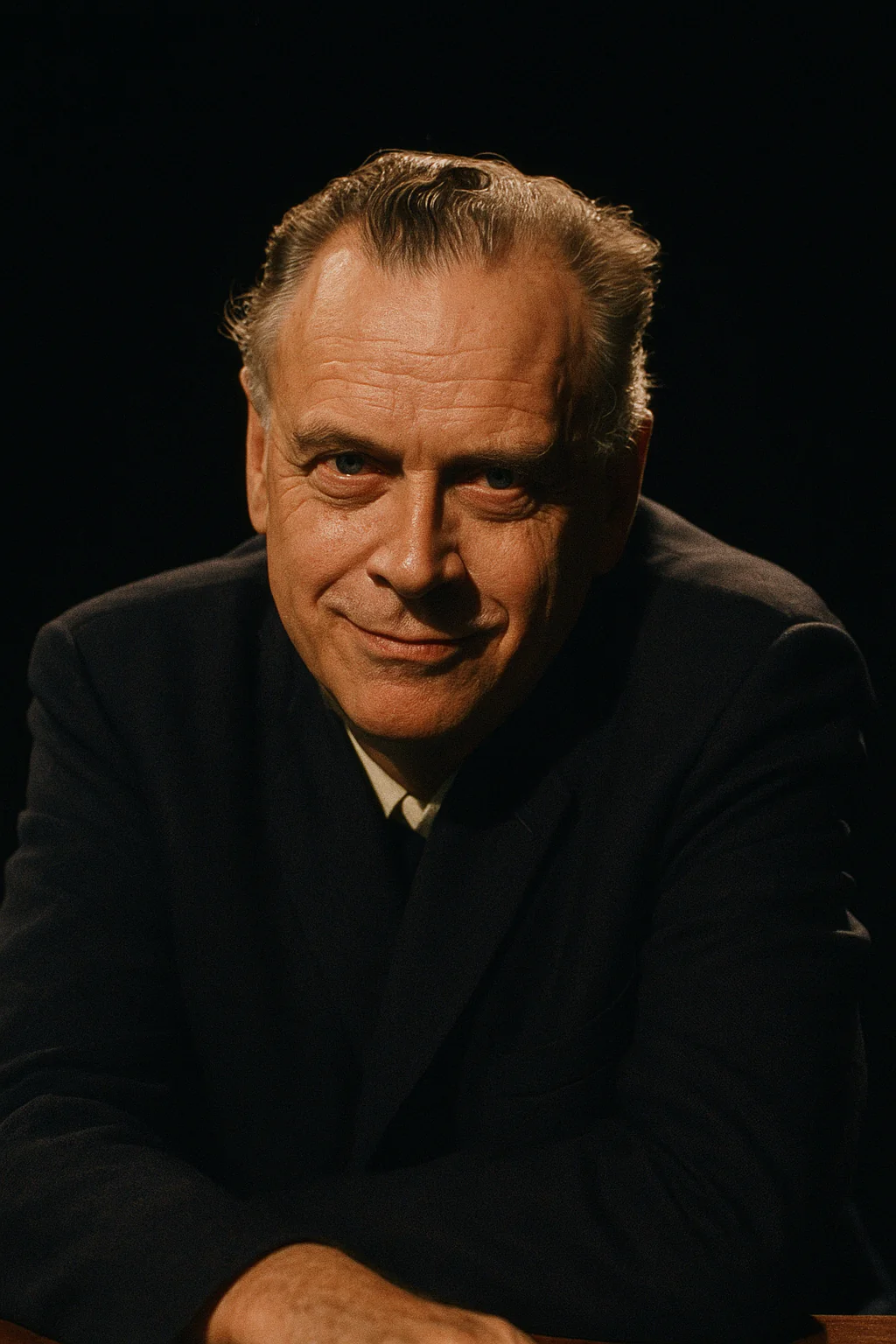
| 54 Quotes | |
| Born as | Herbert Marshall McLuhan |
| Occup. | Sociologist |
| From | Canada |
| Born | July 21, 1911 Edmonton, Alberta, Canada |
| Died | December 31, 1980 Toronto, Ontario, Canada |
| Aged | 69 years |
| Cite | |
Citation Formats
APA Style (7th ed.)
Marshall mcluhan biography, facts and quotes. (2026, February 2). FixQuotes. https://fixquotes.com/authors/marshall-mcluhan/
Chicago Style
"Marshall McLuhan biography, facts and quotes." FixQuotes. February 2, 2026. https://fixquotes.com/authors/marshall-mcluhan/.
MLA Style (9th ed.)
"Marshall McLuhan biography, facts and quotes." FixQuotes, 2 Feb. 2026, https://fixquotes.com/authors/marshall-mcluhan/. Accessed 26 Mar. 2026.
Early Life and Background
Herbert Marshall McLuhan was born on 1911-07-21 in Edmonton, Alberta, and grew up in the Canadian prairie West as mass literacy, radio, and movies reorganized daily attention. His father, Herbert Ernest McLuhan, worked in insurance and real estate; his mother, Elsie Naomi Hall, was a schoolteacher and elocution coach with theatrical ambitions. That household blend of commerce, performance, and rhetoric left him unusually attuned to how tone, timing, and spectacle move people as much as argument does.After World War I the family relocated to Winnipeg, where McLuhan came of age amid economic volatility, revivalist public speaking, and the accelerating reach of American popular culture. The Great Depression sharpened his sense that modern life was being rewired by forces that felt impersonal yet intimate - markets, machines, and media - while Canada, positioned between British inheritance and American dominance, offered him a lifelong vantage point on cultural marginality and hybridity.
Education and Formative Influences
McLuhan studied at the University of Manitoba (BA 1933, MA 1934) before continuing at Cambridge University, where he encountered the rigors of literary history, the influence of I.A. Richards, and the intellectual shocks of modernism. He converted to Roman Catholicism in 1937, a decision that shaped his later habit of treating culture as an ecology of symbols with moral consequences. His doctoral work (PhD, 1943) on Thomas Nashe trained him to read the Renaissance as a media revolution driven by print, polemic, and publicity - a template he later applied to radio, television, and advertising.Career, Major Works, and Turning Points
After teaching at the University of Wisconsin and at Saint Louis University, McLuhan settled at the University of Toronto, where he became a central figure in the postwar study of communication. With colleagues such as Harold Innis and at venues like the Centre for Culture and Technology, he developed an approach that fused literary criticism, sociology, and cultural history. His first major book, The Mechanical Bride (1951), dissected ads and headlines as folk art and social instruction; The Gutenberg Galaxy (1962) argued that print shaped Western habits of linear thought; and Understanding Media (1964) made him internationally famous with the aphorism "the medium is the message". In the late 1960s he became a public intellectual of the television age, advising corporations and fielding interviews that turned his own persona into an experimental medium. A serious stroke in 1979 curtailed his work; he died in Toronto on 1980-12-31.Philosophy, Style, and Themes
McLuhan treated media less as channels of information than as environments that reprogram sense perception, social organization, and even the self. He insisted that “Societies have always been shaped more by the nature of the media by which men communicate than by the content of the communication”. , shifting attention from what messages say to what media do. His psychological focus was the quiet coercion of habits: technologies, once adopted, become the unnoticed background that trains attention, rewards certain forms of thought, and punishes others. This is why he framed technology as a feedback loop rather than a neutral tool: “We become what we behold. We shape our tools and then our tools shape us”. Beneath the provocation was an ethical warning that modernity could outsource judgment to systems optimized for speed, spectacle, and repetition.His style mirrored his theory. Rather than build a single linear argument, he wrote in mosaics - aphorisms, puns, and abrupt historical jumps - because he believed electronic media were pulling culture away from print-like sequence toward simultaneity. Advertising and popular entertainment were not trivial to him but diagnostic, even prophetic, because they revealed how attention is manufactured; hence his blunt elevation of commerce into aesthetics: “Advertising is the greatest art form of the 20th century”. McLuhan also cultivated a self-reflexive persona, partly to model how identity itself is mediated and partly to resist being frozen into doctrine. He was fascinated by the way new media create "rearview mirror" thinking - interpreting novelty through old categories - and he tried, with mixed success, to teach readers to perceive the present while it is still forming.
Legacy and Influence
McLuhan helped found modern media studies by providing a vocabulary for technological change that reached far beyond academia, influencing thinkers in communication theory, cultural studies, design, and systems thinking. His phrases entered everyday language, while his deeper method - studying media as total environments - anticipated debates about the internet, social media, algorithmic personalization, and the politics of image. Critics faulted him for determinism and for turning complex history into epigram, yet his best work endures because it trains perception: it asks readers to notice the hidden architecture of attention and the social consequences of the tools we treat as conveniences. In a century defined by screens and networks, McLuhan remains a biographer of the modern nervous system, mapping how culture changes when the forms of communication change first.Our collection contains 54 quotes written by Marshall, under the main topics: Witty One-Liners - Wisdom - Art - Puns & Wordplay - Love.
Other people related to Marshall: Wyndham Lewis (Author), William Irwin Thompson (Philosopher), Arthur Kroker (Author)
Frequently Asked Questions
- What is Marshall McLuhan famous for: Coining the medium is the message and popularizing the global village in media theory.
- Marshall McLuhan Education: University of Manitoba (BA, MA); University of Cambridge (BA, PhD in English).
- Marshall McLuhan biography: Canadian media theorist (1911–1980); born in Edmonton; taught at the University of Toronto; coined the medium is the message and global village.
- Marshall McLuhan global village: The idea that electronic media shrink distance and link everyone into one simultaneous community.
- Marshall McLuhan theory: The medium is the message; hot vs. cool media; the global village; the tetrad of media effects.
- Marshall McLuhan: books: The Gutenberg Galaxy; Understanding Media; The Medium Is the Massage; War and Peace in the Global Village.
- Marshall McLuhan died: December 31, 1980, in Toronto, Canada.
- Marshall McLuhan Sopranos: No direct link; he isn’t a character, at most a pop-culture reference.
- How old was Marshall McLuhan? He became 69 years old
Source / external links