
Martha Graham Biography Quotes 25 Report mistakes
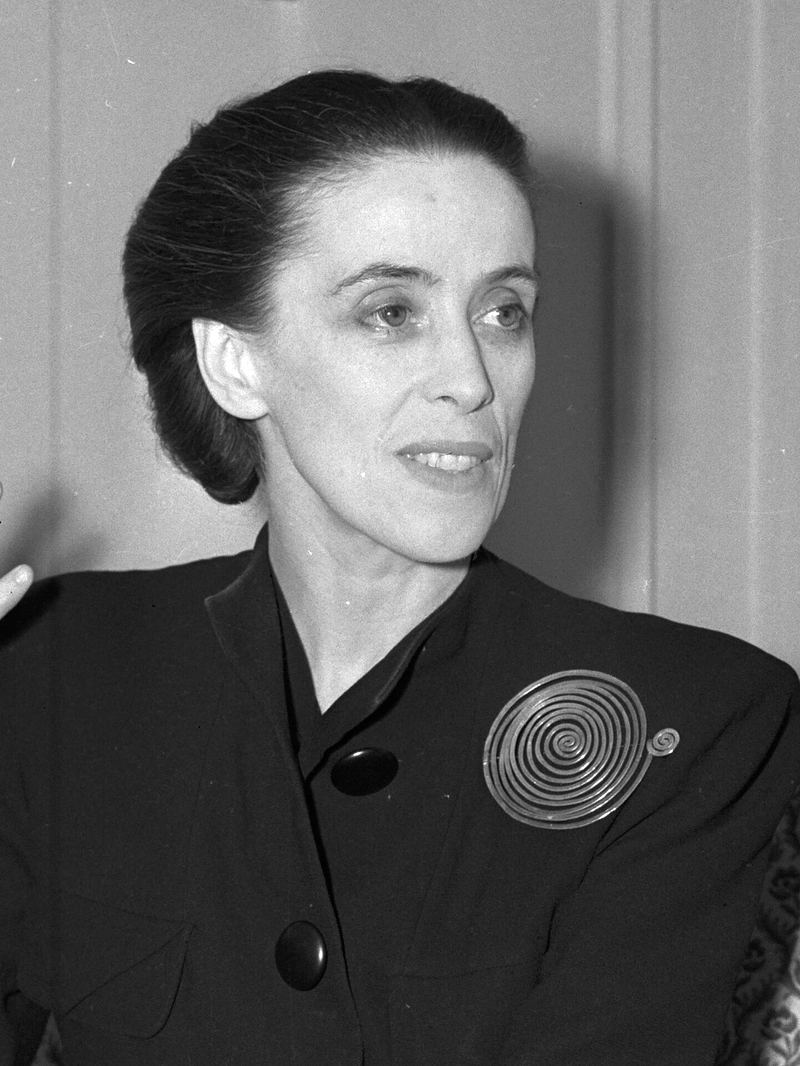
| 25 Quotes | |
| Occup. | Dancer |
| From | USA |
| Born | May 11, 1894 Allegheny, Pennsylvania, USA |
| Died | April 1, 1991 New York City, New York, USA |
| Aged | 96 years |
| Cite | |
Citation Formats
APA Style (7th ed.)
Martha graham biography, facts and quotes. (2026, February 11). FixQuotes. https://fixquotes.com/authors/martha-graham/
Chicago Style
"Martha Graham biography, facts and quotes." FixQuotes. February 11, 2026. https://fixquotes.com/authors/martha-graham/.
MLA Style (9th ed.)
"Martha Graham biography, facts and quotes." FixQuotes, 11 Feb. 2026, https://fixquotes.com/authors/martha-graham/. Accessed 12 Feb. 2026.
Early Life and Background
Martha Graham was born on May 11, 1894, in Allegheny City, Pennsylvania (now part of Pittsburgh), into a late-Victorian America that still distrusted the stage even as it was being electrified by vaudeville, new immigration, and the first mass media. Her father, George Graham, was a physician whose interest in the mind and nerves left her with an early sense that feeling was not decorative but physiological - something the body carried, betrayed, and could be read.In 1908 the family moved west to Santa Barbara, California, then a frontier of health resorts and citrus groves, where landscape and distance encouraged self-invention. Graham grew up amid Presbyterian restraint and a culture that prized composure, and she developed the private intensity that would later make her choreography feel like confession without being confessional. When she encountered dance as an adult, she did not treat it as pastime but as vocation - a way to turn inner pressure into form.
Education and Formative Influences
A decisive shock came in 1911 when she saw Ruth St. Denis in Los Angeles, a performance that suggested the stage could carry ritual, sensuality, and ideas; Graham enrolled at the Denishawn school in 1916 and was quickly absorbed into its touring company. Denishawn gave her discipline, theatrical craft, and exposure to a broad public, but also a model she would outgrow: picturesque "exotic" tableaux and decorative line. By the early 1920s she was seeking a movement truth less ornamental and more psychological, shaped as much by modernism and American directness as by ballet's inheritance.Career, Major Works, and Turning Points
After leaving Denishawn in 1923, Graham worked in New York, danced in the Greenwich Village Follies, and began making dances that rejected prettiness for impact; in 1926 she founded the Martha Graham Dance Company and soon the Martha Graham School, building a laboratory for what became modern dance's most influential technique. Works such as "Heretic" (1929) announced her stark group architecture; "Lamentation" (1930) turned grief into sculpted fabric and breath; "Frontier" (1935) and her refusal to dance at the 1936 Berlin Olympics placed her art in dialogue with democracy and tyranny. With composer Louis Horst as early mentor and later collaborators like Aaron Copland ("Appalachian Spring", 1944) and sculptor Isamu Noguchi (sets that were environments, not backdrops), she created an American myth repertory: "American Document" (1938), "Letter to the World" (1940), "Cave of the Heart" (1946), "Night Journey" (1947), "Errand into the Maze" (1947), and "Clytemnestra" (1958). Her marriages - briefly to Erick Hawkins - and later loneliness, alcohol use, and a severe late-life depression did not end the work; after a near collapse in the 1970s she returned to choreograph again, insisting on craft as a lifeline until her death in New York City on April 1, 1991.Philosophy, Style, and Themes
Graham's method began with the torso: contraction and release as the body's argument with itself, breath turned into visible thought. She treated dance not as decoration but as disclosure, insisting that movement could carry the same gravitas as drama or poetry. "Dance is the hidden language of the soul of the body". That sentence reads like an aesthetic credo, but it also maps her psychology: a woman trained in restraint discovering an art where the unsayable could be structured, repeated, and mastered without being diluted into talk.Her standards were merciless because she believed the body was both instrument and altar. "The body is a sacred garment". In rehearsal this became ethics - a demand for honesty in alignment, timing, and intention, as if falseness were a kind of profanity. The severity had a second edge: fear of the average, fear of artistic safety, fear of the dancer as mere entertainer. "The only sin is mediocrity". Much of her repertory circles mythic women - Medea, Jocasta, Clytemnestra - not to illustrate stories but to stage states of mind: desire turning to fury, devotion turning to possession, the cost of power inside a body that cannot escape itself.
Legacy and Influence
Graham professionalized modern dance in the United States, proving it could sustain a technique, a canon, and an institution that outlived its founder; her company remains a living archive and a proving ground. Her influence runs through generations of choreographers and dancers - including those who studied with or reacted against her - and through theater, opera staging, and film movement language that borrowed her angular expressivity and psychological pacing. If ballet often aimed to defy gravity, Graham made gravity moral, making weight, breath, and impulse into narrative - an American modernism written on the spine.Our collection contains 25 quotes written by Martha, under the main topics: Motivational - Truth - Art - Freedom - Learning.
Other people related to Martha: Gregory Peck (Actor), Mary Wigman (Dancer), Clive Barnes (Journalist), Ted Shawn (Dancer), Doris Humphrey (Dancer), Ruth St. Denis (Dancer), Paul Taylor (Dancer), Samuel Barber (Composer), Agnes de Mille (Dancer)