
Martin Bashir Biography Quotes 18 Report mistakes
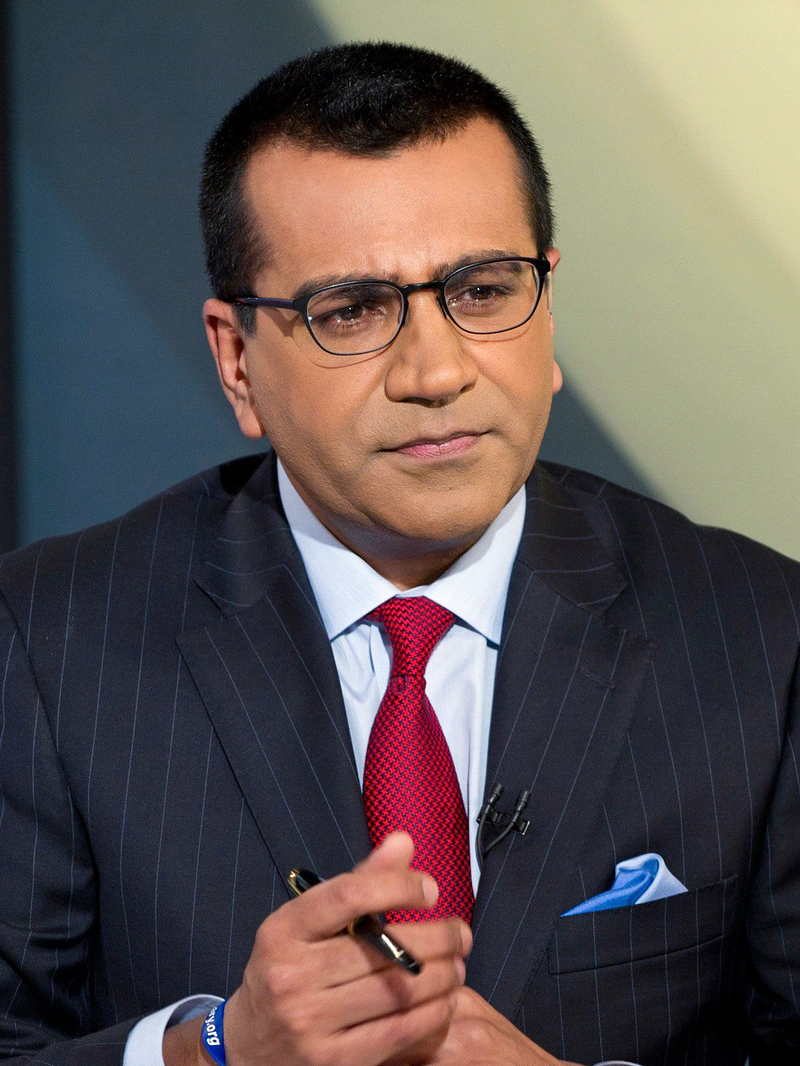
Attr: CNN
| 18 Quotes | |
| Occup. | Journalist |
| From | United Kingdom |
| Born | January 19, 1963 Wigan, Lancashire, England |
| Age | 63 years |
| Cite | |
Citation Formats
APA Style (7th ed.)
Martin bashir biography, facts and quotes. (2026, February 11). FixQuotes. https://fixquotes.com/authors/martin-bashir/
Chicago Style
"Martin Bashir biography, facts and quotes." FixQuotes. February 11, 2026. https://fixquotes.com/authors/martin-bashir/.
MLA Style (9th ed.)
"Martin Bashir biography, facts and quotes." FixQuotes, 11 Feb. 2026, https://fixquotes.com/authors/martin-bashir/. Accessed 26 Mar. 2026.
Early Life and Background
Martin Bashir was born on January 19, 1963, in the United Kingdom, into a British-Pakistani family shaped by postwar migration and the racial weather of late-1960s and 1970s Britain. Growing up in a culture where public institutions often felt distant or suspicious to minorities, he absorbed early lessons about authority, reputations, and the costs of being misunderstood. Those tensions - between private life and public story, between belonging and scrutiny - later became the emotional engine of his on-air persona.He developed a reputation as an exacting, sometimes relentless interviewer: polite on the surface, insistent underneath. Friends and colleagues have described a professional temperament that blended ambition with a desire to be taken seriously in elite newsrooms. That mix could sharpen into an adversarial instinct, and it also produced a particular sensitivity to moral drama: Bashir tended to frame events through personal stakes, as if history was best understood by watching an individual confront pressure.
Education and Formative Influences
Bashir attended King Alfred School in Hampstead, north London, then read English at Dartmouth College in the United States. The transatlantic education mattered: American broadcast journalism prized performance and narrative, while the BBC tradition prized public-service authority. Bashir learned to fuse both. By the time he entered television, he was fluent in the grammar of hard questions, controlled empathy, and the slow build of a documentary that feels like a courtroom - a method that could illuminate character, but also risk turning intimacy into leverage.Career, Major Works, and Turning Points
He rose through British broadcasting to become one of the BBC's best-known interviewers, most famously fronting the 1995 Panorama interview with Diana, Princess of Wales - a cultural event that collapsed monarchy, tabloid culture, and confessional television into a single hour. Years later, investigations found Bashir used deceitful methods to secure access, leading the BBC to apologize and igniting a broader reckoning about ethics, celebrity journalism, and institutional oversight. In the 2000s he worked in the United States, including senior roles at MSNBC and later ABC News, and returned to the BBC in 2016 as religion editor. In 2021, amid renewed scrutiny of the Diana interview and serious health issues, he resigned; the arc of his career became a case study in how journalistic fame can be won by access - and undone by how that access was obtained.Philosophy, Style, and Themes
Bashir's work repeatedly circles the same psychological terrain: the claim that a documentary can be both compassionate and prosecutorial, that fairness is delivered not by comfort but by giving a subject room to incriminate or redeem themselves in their own words. His interviews often proceed like cross-examination wrapped in civility - a style that makes his films feel consequential, but also heightens the ethical question of consent under pressure. He is drawn to figures already trapped inside a public narrative, and he pushes on the seams: what is real, what is performance, what is denial.That impulse is explicit in his public defenses of his Michael Jackson documentary, where he frames the project as factual, comprehensive, and justified by audience engagement: “This was almost two hours of factual documentary”. Even when constrained by legal agreements, he casts himself as the frustrated custodian of truth: “It was not possible to broadcast any of that because of an agreement between Jackson and the family”. And he argues that scrutiny does not necessarily equal harm, suggesting the reporter's burden is disclosure rather than protection: “I don't think his life has been in any way disfigured by the film”. Read together, these lines reveal a revealing self-concept - Bashir as the mediator between celebrity and public, convinced that narrative exposure is a kind of service, even when the power imbalance favors the interviewer.
Legacy and Influence
Bashir's legacy is inseparable from two realities: he helped define modern televised confession, and he became a warning about the methods used to obtain it. The Diana interview in particular reshaped royal coverage, accelerated debates about media intrusion, and influenced a generation of broadcasters who learned that access could eclipse institutions. Yet the later findings about deception also strengthened newsroom conversations about verification, accountability, and the long tail of reputational damage - not only to subjects, but to the credibility of journalism itself. In that sense, Bashir endures as both a builder and a cautionary figure: proof that in the age of celebrity and spectacle, technique can become destiny.Our collection contains 18 quotes written by Martin, under the main topics: Justice - Music - Writing - Knowledge - Parenting.