
Martin Buber Biography Quotes 13 Report mistakes
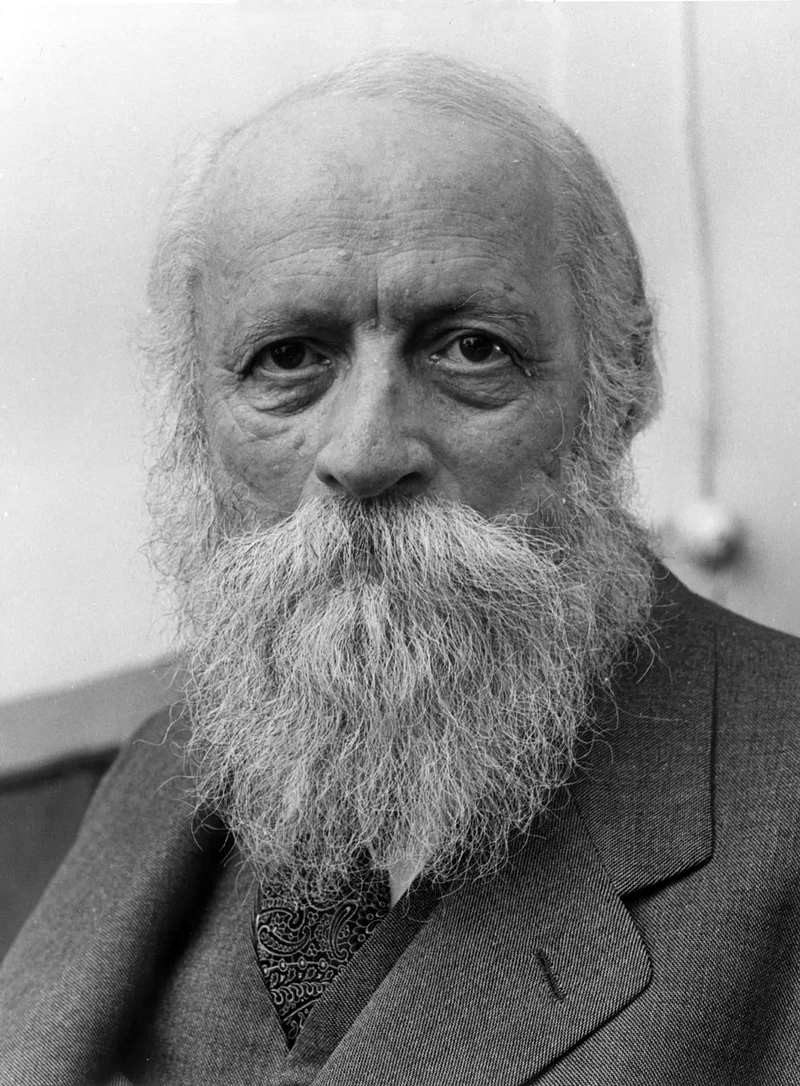
| 13 Quotes | |
| Occup. | Philosopher |
| From | Germany |
| Born | February 8, 1878 Vienna, Austria |
| Died | June 13, 1965 Jerusalem |
| Aged | 87 years |
| Cite | |
Citation Formats
APA Style (7th ed.)
Martin buber biography, facts and quotes. (2026, February 11). FixQuotes. https://fixquotes.com/authors/martin-buber/
Chicago Style
"Martin Buber biography, facts and quotes." FixQuotes. February 11, 2026. https://fixquotes.com/authors/martin-buber/.
MLA Style (9th ed.)
"Martin Buber biography, facts and quotes." FixQuotes, 11 Feb. 2026, https://fixquotes.com/authors/martin-buber/. Accessed 25 Mar. 2026.
Early Life and Background
Martin Buber was born on February 8, 1878, in Vienna, in the German-speaking world of the late Habsburg Empire, and he came of age as European Jewry was pulled between assimilation, resurgent antisemitism, and new national movements. His early childhood was unsettled: after his parents separated, he was raised largely by his grandparents in Lemberg (then in Austria-Hungary, now Lviv, Ukraine). That household joined bourgeois cultivation with Jewish learning, giving him both a feel for modern German letters and an intimate sense of Judaism as lived tradition rather than mere confession.The Galicia of Buber's youth was a crossroads where Hasidic piety, Enlightenment rationalism, and political agitation met in crowded streets and contested synagogues. The young Buber absorbed the emotional power of storytelling and the authority of communal memory, but he also felt the loneliness of a child watching adults fail each other. That early fracture - belonging and displacement at once - later sharpened his lifelong question: how does a human being become whole in relation, without dissolving into the crowd or hardening into isolation?
Education and Formative Influences
From the 1890s Buber studied philosophy, art history, and German studies in Vienna, Leipzig, Zurich, and Berlin, moving through the intellectual currents of fin-de-siecle Central Europe: neo-Kantian rigor, Nietzschean critique, and the new human sciences. He was drawn into Zionist politics and briefly worked in its orbit, yet he resisted reducing Judaism to nationalism alone, seeking a renewal of Jewish spirit and community. Early encounters with Hasidic sources - and with modern thinkers such as Wilhelm Dilthey and Soren Kierkegaard - helped orient him toward lived experience, dialogue, and religious reality as event rather than system.Career, Major Works, and Turning Points
Buber became a central Jewish public intellectual in German letters, first through essays and retellings that introduced Hasidic tales to a broad readership (notably his early collections and the later, widely read Tales of the Hasidim). His decisive philosophical breakthrough arrived with Ich und Du (I and Thou, 1923), followed by dialogical writings such as Between Man and Man and his major engagement with biblical language. With Franz Rosenzweig he undertook a landmark German translation of the Hebrew Bible (begun in the 1920s), aiming to make scripture audible again in living German. The Nazi seizure of power in 1933 ended his German academic life; after years of constrained work within Jewish adult education under persecution, he emigrated to Mandatory Palestine in 1938 and taught at the Hebrew University of Jerusalem. There he became a moral voice on Jewish-Arab relations and on the dangers of political absolutism, carrying the wounds of Europe into a new, conflicted homeland until his death on June 13, 1965.Philosophy, Style, and Themes
Buber's philosophy turns on a simple but demanding claim: personhood is not a substance possessed in private but a reality disclosed in encounter. He distinguished the instrumental stance of I-It from the reciprocal presence of I-Thou, insisting that the deepest human knowledge is relational and cannot be reduced to categories. “Through the Thou a person becomes I”. This was not sentimental sociability; it was an austere psychological ethic. The self that tries to secure itself through control ends up impoverished, while the self that risks address - speaking and being spoken to - is enlarged, even when the meeting is brief or painful.His style matched his aim: compressed, parable-like, often biblical in cadence, suspicious of purely technical philosophy when it forgets the face across the table. Buber prized the concrete - a look, a voice, a shared task - as the doorway to metaphysics. “The world is not comprehensible, but it is embraceable: through the embracing of one of its beings”. At the same time he defended the necessity of inward work, not as escapism but as preparation for true meeting: “Solitude is the place of purification”. In Buber's inner life, solitude and relation form a rhythm - withdrawal to clear the heart of illusion, then return to the human and the divine Thou with fewer defenses. His theology, marked by Hasidic warmth and prophetic severity, refused both authoritarian legalism and a privatized faith; revelation happens when a person is claimed in the midst of life and answers with the whole self.
Legacy and Influence
Buber's dialogical thought became a major tributary of 20th-century existentialism and religious philosophy, shaping fields as diverse as psychotherapy, education, political theory, and interfaith dialogue. His insistence that ethics begins in presence - in the irreducible reality of the other - offered a counterweight to the bureaucratic and ideological dehumanizations of his century, from empire to total war to totalitarianism. Readers continue to return to I and Thou and the Bible translation not for a finished system, but for a discipline of attention: to language that calls, to persons who cannot be used without loss, and to a Judaism and humanism tested by catastrophe yet still oriented toward meeting, responsibility, and hope.Our collection contains 13 quotes written by Martin, under the main topics: Ethics & Morality - Wisdom - Deep - Honesty & Integrity - Book.
Martin Buber Famous Works
- 1923 I and Thou (Book)