
Martin Farquhar Tupper Biography Quotes 10 Report mistakes
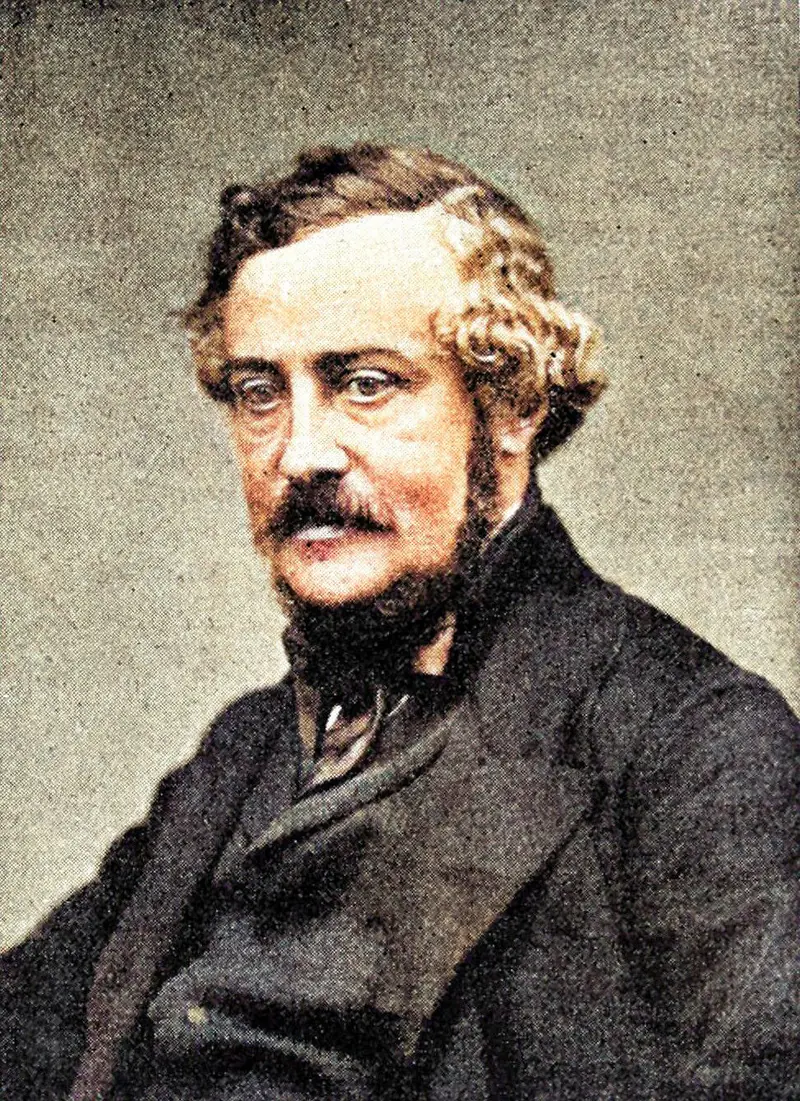
Attr: Maull & Fox
| 10 Quotes | |
| Occup. | Writer |
| From | England |
| Born | November 10, 1810 Devonshire Place, London, England |
| Died | November 28, 1889 |
| Aged | 79 years |
Martin Farquhar Tupper was born in 1810 in England and grew up in a milieu that valued learning, piety, and steady professional ambition. He was educated at Charterhouse, one of the leading English public schools, and then proceeded to the University of Oxford. His studies in classics and moral philosophy at Oxford sharpened the habits that would later define his verse: a taste for sententious statement, an appetite for moral counsel, and a preference for clarity over ornament. After taking his degree he trained for the law and was called to the bar, but the courtroom never held him long. His vocation turned decisively toward letters, and within a few years he committed himself to a literary life.
Turning to Literature
Tupper began publishing in the 1830s, gravitating to devotional and reflective writing. He found a receptive audience among readers who sought moral improvement and domestic guidance rather than poetic experiment. Even in his earliest pieces one hears the lineaments of his characteristic voice: plain-spoken piety, a cadence close to prose, and the ambition to distill common sense into aphorism. He moved in the circles of London publishers and editors, and he cultivated a broad network of correspondents among clergy, educators, and provincial bookmen who kept his work in front of the public.
Proverbial Philosophy
His fame rests chiefly on Proverbial Philosophy, first issued in the late 1830s and expanded in subsequent series. Written in unrhymed, steadily marching lines, the book offered maxims, homilies, and reflections on duty, friendship, industry, and faith. It was designed for the drawing room and the family table, not the lecture hall. The work sold in vast numbers across Britain and the United States, was repeatedly reprinted, and became a standard presentation volume. Its success made Tupper, for a time, one of the most widely read poets in the English-speaking world. In sheer reach among general readers he competed with, and for stretches surpassed, the visibility of Alfred, Lord Tennyson, though the two men appealed to different constituencies and stood far apart in critical esteem.
Reception and Reputation
Contemporary admiration for Tupper came from teachers, ministers, and householders who prized his forthright counsel. Admirers circulated his verses at school ceremonies and charitable events, and he maintained a large correspondence with readers who thanked him for the practical comfort of his lines. Yet the very qualities that endeared him to his public unsettled many critics. As literary taste shifted mid-century, reviewers increasingly dismissed his oracular tone as platitudinous and his style as prosaic. Writers associated with the satirical weekly Punch made him a recurring target, lampooning his maxims and the solemnity of his manner. The arrival of new poetic voices and the spread of aesthetic and realist sensibilities left Tupper, once ubiquitous, looking like a spokesman for an earlier, more didactic age.
Ideas, Causes, and Public Life
Beyond poetry, Tupper was a tireless pamphleteer and public moralist. He wrote on education, temperance, and civic duty, and he lent his name to philanthropic causes in his home county. Always interested in practical improvements to everyday life, he corresponded with postal reformer Rowland Hill and proposed the notion of a small, prepaid card for brief messages, an idea advanced long before the postcard became commonplace. This blend of homely ingenuity and public-mindedness mirrored the larger Victorian world in which he moved, shaped by the reign of Queen Victoria and animated by the spirit of improvement that also animated Prince Albert's projects. Tupper preferred persuasion to polemic, and his interventions, whether poetic or practical, were offered as aids to social concord and personal conduct.
Work Beyond the Best-seller
Although overshadowed by Proverbial Philosophy, he produced many other volumes of verse and prose: devotional lyrics, narrative poems, essays on conduct, and fiction that wove moral instruction into lightly sketched plots. The sheer quantity of his output was remarkable, and his willingness to republish and rearrange material to meet the changing taste of the market showed a practical mind attuned to readers rather than to professional critics. He lectured occasionally, took part in literary societies, and cultivated friendships with clergymen, schoolmasters, and provincial patrons who championed his writing in classrooms and parish libraries.
Home, Character, and Circle
Tupper settled in Surrey for much of his mature life, creating a household that reflected his ideals of domestic virtue and sociability. In his circle were local clergy, philanthropic neighbors, and visiting men of letters; he enjoyed the company of earnest talkers more than that of wits. His manner was courteous, his convictions firm, and his faith uncomplicated. As a correspondent he was generous with advice; as a neighbor he was known for steady attendance at church and for engagement in village improvement schemes. Though he had celebrated fame, he kept his professional arrangements practical and lived without ostentation. Those who knew him well thought him kind, industrious, and convinced of a writer's duty to instruct as well as to please.
Decline and Persistence
From the 1860s onward, Tupper's public standing declined. New poetic fashions, a more skeptical intellectual climate, and the rise of novelists and critics who prized complexity over counsel all worked against him. Yet he continued to publish, revising and augmenting his signature work, issuing fresh collections, and insisting, with unembarrassed conviction, that there remained a large audience for clear moral verse. If he felt the sting of satire, he bore it with fortitude, reminding friends that popularity with readers had been his aim and that he had achieved it on an extraordinary scale.
Final Years and Legacy
Tupper died in 1889, in Surrey, closing a career that matched, in its trajectory, the fortunes of a certain Victorian ideal: that poetry could be practical wisdom set to rhythm, that a book could be a companion in the formation of character. His legacy is paradoxical. Critical histories often remember him as the emblem of a now unfashionable didacticism, a byword for earnestness; general readers of his own time, however, knew him as a trusted counselor in print. The history of Proverbial Philosophy, from best-seller to byword, charts the shifting boundaries of literary value in the nineteenth century. Seen in context, Tupper stands not as a curiosity but as a central witness to a mass reading public coming of age: organized by the schools and the pulpit, broadened by cheap print and postal reformers such as Rowland Hill, and energized by the civic spirit of the Victorian era. That public made him famous, then let him fade, but it also preserved the record of a writer who took seriously the conviction that poetry could teach as well as delight.
Our collection contains 10 quotes who is written by Martin, under the main topics: Wisdom - Parenting - Health - Book - Self-Discipline.
Martin Farquhar Tupper Famous Works
- 1854 Heart: A Social Novel (Novel)
- 1851 The Twins (Book)
- 1847 An Author's Mind (Book)
- 1844 The Crock of Gold (Book)
- 1838 Proverbial Philosophy (Book)
Source / external links