
Martin H. Fischer Biography Quotes 25 Report mistakes
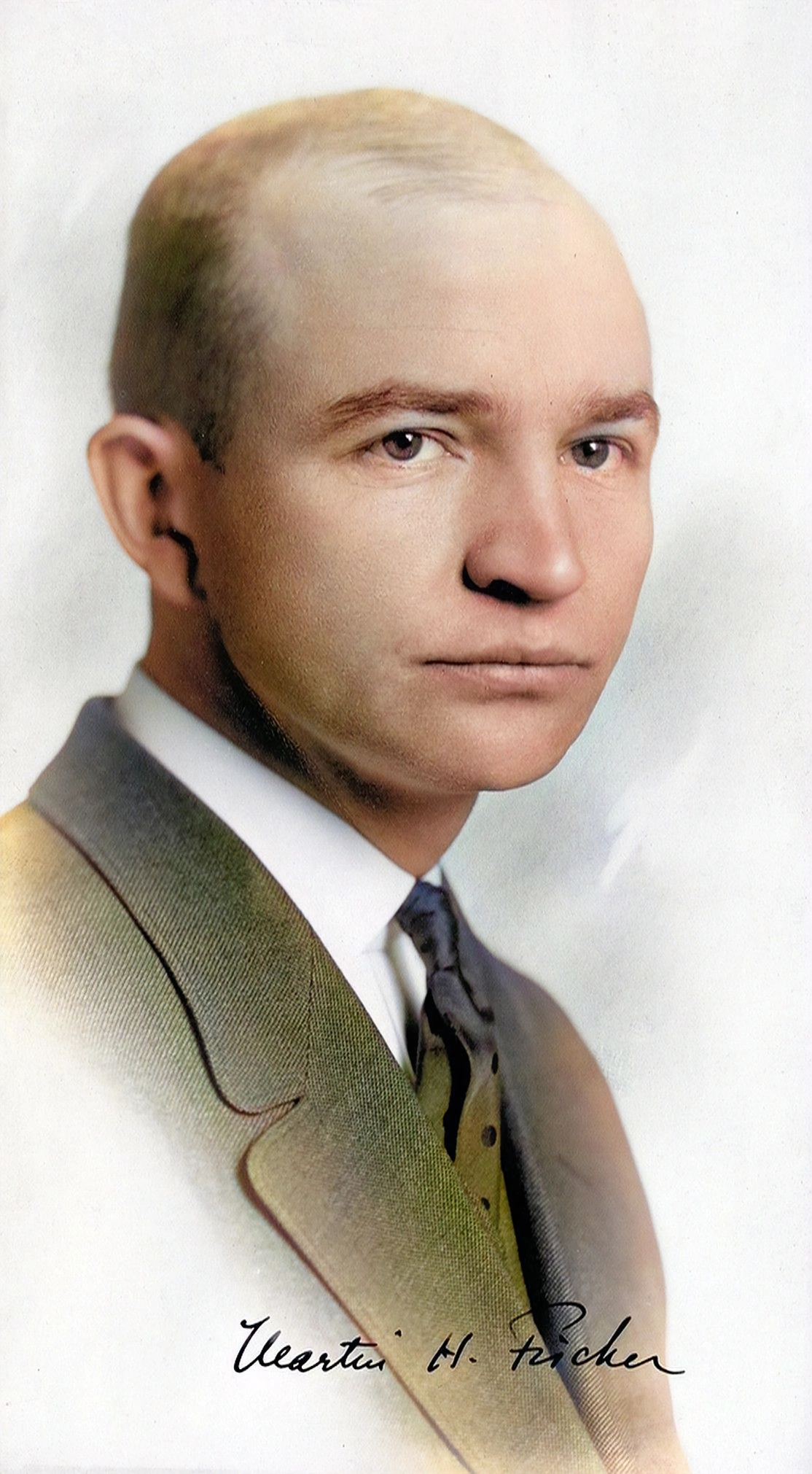
| 25 Quotes | |
| Born as | Martin Henry Fischer |
| Known as | Dr. Martin Henry Fischer |
| Occup. | Author |
| From | Germany |
| Born | November 10, 1879 |
| Died | January 19, 1962 |
| Aged | 82 years |
| Cite | |
Citation Formats
APA Style (7th ed.)
Martin h. fischer biography, facts and quotes. (2026, February 11). FixQuotes. https://fixquotes.com/authors/martin-h-fischer/
Chicago Style
"Martin H. Fischer biography, facts and quotes." FixQuotes. February 11, 2026. https://fixquotes.com/authors/martin-h-fischer/.
MLA Style (9th ed.)
"Martin H. Fischer biography, facts and quotes." FixQuotes, 11 Feb. 2026, https://fixquotes.com/authors/martin-h-fischer/. Accessed 5 Mar. 2026.
Early Life and Background
Martin Henry Fischer was born on November 10, 1879, in Germany, in an era when the German-speaking world set the pace for laboratory medicine and the new discipline of physical chemistry. Even before his name became attached to arguments about the meaning of "science" in medicine, Fischer formed in the shadow of a culture that prized disciplined observation, exact language, and the authority of the university clinic. That mixture - reverence for method, skepticism about empty terminology - would later appear in his most quoted aphorisms.He emigrated to the United States while still young, part of the wider turn-of-the-century flow of Central European talent into American laboratories and medical schools. In America, the promise was scale: new institutions, philanthropic money, and a rapidly professionalizing medical system. The cost was improvisation - inconsistent standards, the hustle of private practice, and an audience that often wanted certainty more than experimental humility. Fischer's inner life, as it can be read through his writing, seems to have been fueled by that tension: a European-trained insistence on rigor facing an American appetite for brisk, practical answers.
Education and Formative Influences
Fischer trained in medicine and physiology in the period when bacteriology, pathology, and chemistry were being fused into "scientific medicine", and he gravitated to the borderlands where chemistry met the clinic - particularly the behavior of colloids, proteins, and water in living tissues. The influence of late-19th-century German laboratory culture is evident: the belief that careful measurement could clarify disease mechanisms, and the counter-belief that measurement without judgment could become its own superstition. His early formation also placed him among physician-writers who used the short, sharpened sentence as a teaching tool, turning the lecture-room maxim into an ethical demand.Career, Major Works, and Turning Points
In the United States Fischer became known as a physician, teacher, and author whose books and lectures pushed readers to think mechanistically about disease while refusing to reduce medicine to mere technique. He wrote on physiology and the physical chemistry of the body - especially the role of colloids and the movement of water - and he developed a public voice as a critic of sloppy reasoning, fashionable jargon, and premature certainty. The turning point of his career was not a single bestseller so much as the steady accumulation of influence through teaching and quotable prose: Fischer learned how to compress a laboratory worldview into sentences that could travel far beyond a lab bench, shaping how students imagined research, diagnosis, and bedside responsibility.Philosophy, Style, and Themes
Fischer's philosophy begins with a warning about categories. He did not deny the value of facts - he denied their sufficiency. “Facts are not science - as the dictionary is not literature”. That comparison exposes his psychology: impatience with pedantry, and a hunger for synthesis. Facts, to him, were raw material; science was the disciplined art of choosing, relating, and testing them against reality. His style mirrored that credo: compact, adversarial, and metaphorical, as if he believed that a well-forged sentence could cut through institutional complacency.Running through his themes is the conviction that inquiry is not confined to an elite space. “All the world is a laboratory to the inquiring mind”. The line suggests both democratic curiosity and personal restlessness - a temperament that could not turn off the diagnostic gaze. Yet Fischer also refused to let "science" become a cold idol. His most humane counsel insists that technique without empathy is a failure of imagination: “In the sick room, ten cents' worth of human understanding equals ten dollars' worth of medical science”. In that balance between experiment and compassion lies the recurring tension of his work - a drive toward explanation, checked by an ethic of presence with the suffering person.
Legacy and Influence
Fischer died on January 19, 1962, having helped shape a distinctly modern voice in medical authorship: the physician as laboratory-minded humanist, suspicious of jargon and alert to the moral labor of care. His enduring influence is less about a single doctrine than about a stance - that real science is interpretation, that curiosity should be portable, and that the clinic is both a technical and a human arena. In medical schools, quotation anthologies, and the broader culture of evidence-based practice, his aphorisms continue to serve as small, sharp instruments - reminders that the point of knowledge is not accumulation but wise action.Our collection contains 25 quotes written by Martin, under the main topics: Witty One-Liners - Wisdom - Truth - Nature - Doctor.