
Martin Heidegger Biography Quotes 30 Report mistakes
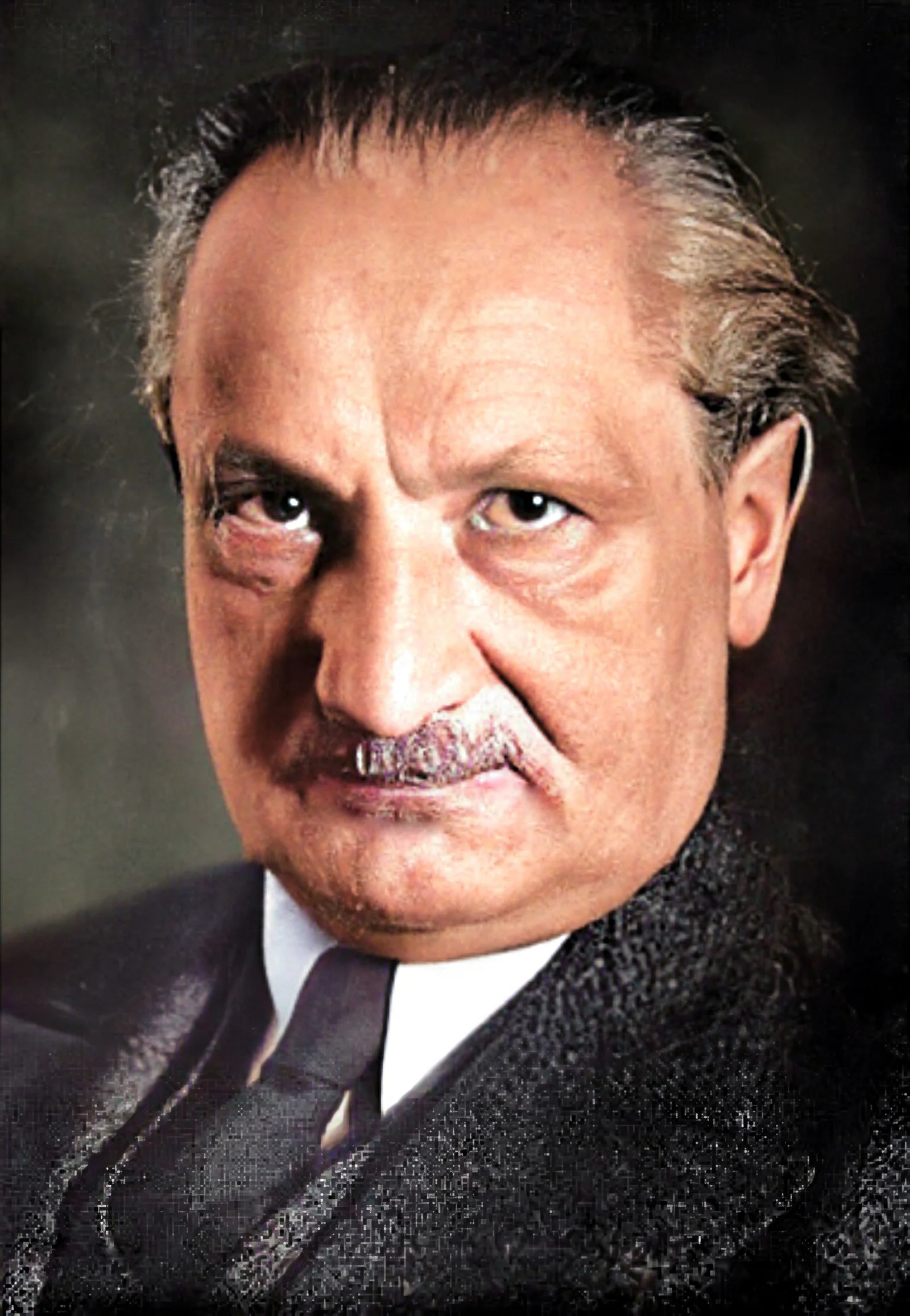
| 30 Quotes | |
| Occup. | Philosopher |
| From | Germany |
| Spouse | Elfride Petri (1917-1976) |
| Born | September 26, 1889 Messkirch, Baden-Württemberg, Germany |
| Died | May 26, 1976 Freiburg im Breisgau, Baden-Württemberg, Germany |
| Aged | 86 years |
| Cite | |
Citation Formats
APA Style (7th ed.)
Martin heidegger biography, facts and quotes. (2026, February 11). FixQuotes. https://fixquotes.com/authors/martin-heidegger/
Chicago Style
"Martin Heidegger biography, facts and quotes." FixQuotes. February 11, 2026. https://fixquotes.com/authors/martin-heidegger/.
MLA Style (9th ed.)
"Martin Heidegger biography, facts and quotes." FixQuotes, 11 Feb. 2026, https://fixquotes.com/authors/martin-heidegger/. Accessed 9 Mar. 2026.
Early Life and Background
Martin Heidegger was born on 1889-09-26 in Messkirch, Baden, in the German Empire, into a Catholic, small-town world shaped by parish rhythms, craft labor, and local hierarchy. His father, Friedrich Heidegger, worked as the sexton of St. Martins Church and as a cooper, and the family lived close to the church precinct - a proximity that gave the young Heidegger both a sensory intimacy with ritual and an early taste for the authority of tradition. The Black Forest landscape, with its paths, timber, and weather, later became more than scenery: it was remembered as a schooling in nearness, finitude, and the slow time of rural work.The era that formed him was one of accelerating German modernity: industrial growth, nationalist confidence, and then the collapse of World War I. Heidegger grew up as Wilhelmine certainties frayed into Weimar instability, a transition that helped fix his lifelong sense that philosophical questions were not academic ornaments but matters of historical destiny. That background also fed his ambivalence toward metropolitan culture and his later self-styling as a thinker of provincial intensity, even as he moved through the elite institutions of German philosophy.
Education and Formative Influences
Heidegger studied theology and then philosophy at the University of Freiburg, initially preparing for the priesthood before shifting toward a more radical intellectual vocation; he completed a doctoral dissertation in 1913 and a habilitation in 1915. He worked closely with Edmund Husserl, absorbing phenomenology's demand to return to the things themselves, and he read Aristotle, Augustine, and medieval scholastics with unusual seriousness for his generation, treating them as living interlocutors rather than museum pieces. The First World War and its aftermath intensified his interest in factical life and concrete existence, and by the early 1920s his Freiburg lectures and Marburg years drew students who sensed that philosophy could again speak with existential urgency - among them Hannah Arendt, Karl Lowith, and Hans-Georg Gadamer.Career, Major Works, and Turning Points
After posts at Freiburg and Marburg, Heidegger published Sein und Zeit (Being and Time) in 1927, a work that made his reputation by re-centering philosophy on the question of Being through an analytic of Dasein - the human being as the site where Being becomes an issue. In 1928 he succeeded Husserl at Freiburg, and in 1933 he became rector, joining the Nazi Party and publicly aligning the university with the new regime; his rectoral address and administrative actions remain the decisive moral rupture in his biography. He resigned the rectorship in 1934 yet remained a party member until 1945; after the war he faced denazification restrictions that limited teaching for several years. From the later 1930s onward he reoriented his project in what he called the Kehre (turn), producing works and lectures such as the Beitrage zur Philosophie (written 1936-38, published later), "The Origin of the Work of Art", "Letter on Humanism" (1947), and "The Question Concerning Technology" (1954), while retreating increasingly to a guarded, oracular public posture.Philosophy, Style, and Themes
Heidegger's early breakthrough lay in treating human existence not as a detached subject confronting objects, but as being-in-the-world, already entangled in tools, projects, moods, and mortality. Anxiety, conscience, and being-toward-death were not psychological curiosities but disclosures: they strip away the complacent anonymity of "the they" and force the individual toward authenticity, a taking up of one's finite possibilities. He insisted that thought must not flatten what it studies; his notorious difficulty was partly strategic, because he believed that “Making itself intelligible is suicide for philosophy”. The line captures a temperament wary of popularization and a psyche that equated intellectual transparency with betrayal - a defensiveness that would both protect the depth of his inquiry and provide cover when clarity was ethically demanded.In the later work, he framed modernity as a technological "enframing" that turns beings into standing-reserve, available for ordering and exploitation; the threat was not machines but a metaphysical posture that forgets Being. Against human self-deification he wrote, “Man is not the lord of beings. Man is the shepherd of Being”. This is less humility than re-education: the human is tasked with listening, guarding, and letting-be, a role that matches his turn toward language, poetry (especially Holderlin), and the event-like character of truth. Yet his rhetoric could veer into shocking equivalences, as in the claim that “Agriculture is now a motorized food industry, the same thing in its essence as the production of corpses in the gas chambers and the extermination camps, the same thing as blockades and the reduction of countries to famine, the same thing as the manufacture of hydrogen bombs”. The sentence reveals a mind prone to totalizing diagnoses, where the metaphysical template can overwhelm historical specificity - an interpretive power that illuminates the logic of instrumentalization while also exposing a moral blind spot in the face of singular crimes.
Legacy and Influence
Heidegger died on 1976-05-26 in Freiburg im Breisgau, leaving a legacy as immense as it is contested: a central architect of existential phenomenology and a decisive influence on hermeneutics (Gadamer), existentialism (Sartre and Merleau-Ponty, often in critique), deconstruction (Derrida), and twentieth-century theology and literary theory. His reactivation of the question of Being reshaped debates about subjectivity, history, art, and technology, while his political entanglement with National Socialism and evasions afterward ensure that his work is read under an ethical shadow. The enduring impact lies in the tension he bequeathed: a philosophy of finitude and disclosure that can sharpen responsibility, and a biography that warns how intellectual grandeur can coexist with catastrophic political judgment.Our collection contains 30 quotes written by Martin, under the main topics: Ethics & Morality - Wisdom - Truth - Mortality - Deep.
Other people related to Martin: Søren Kierkegaard (Philosopher), Anselm Kiefer (Artist), Richard Rorty (Philosopher), Maurice Merleau-Ponty (Philosopher), Paul Celan (Poet), Rudolf Otto (Theologian), Leo Strauss (Philosopher)
Frequently Asked Questions
- Martin Heidegger philosophy about technology: Heidegger critiqued technology in 'The Question Concerning Technology', arguing that it shapes our understanding of the world and poses a threat to authentic being.
- Martin Heidegger influenced: Heidegger influenced philosophers such as Jean-Paul Sartre, Maurice Merleau-Ponty, and Hannah Arendt, as well as existentialism and postmodernism.
- Martin Heidegger height: Details about Martin Heidegger's height are not widely documented.
- Martin Heidegger phenomenology: Heidegger developed a form of phenomenology that investigates the nature of being by examining lived experiences, diverging from Husserl's focus on consciousness.
- Martin Heidegger existentialism: Heidegger is considered a precursor to existentialism, although he distanced himself from the movement, influencing existentialists through his exploration of human existence and authenticity.
- Martin Heidegger philosophy summary: Heidegger's philosophy explores the nature of being, focusing on concepts like Dasein, authenticity, and the critique of modernity's impact on human existence.
- Martin Heidegger Dasein: Dasein is a central concept in Heidegger's philosophy, referring to human existence or 'being-there', emphasizing the individual's experience and consciousness.
- Martin Heidegger famous works: Being and Time
- How old was Martin Heidegger? He became 86 years old
Martin Heidegger Famous Works
- 1959 On The Way to Language (Book)
- 1954 The Question Concerning Technology (Essay)
- 1953 Introduction to Metaphysics (Book)
- 1952 What Is Called Thinking? (Book)
- 1927 Being and Time (Book)
Source / external links