
Martin Kippenberger Biography Quotes 11 Report mistakes
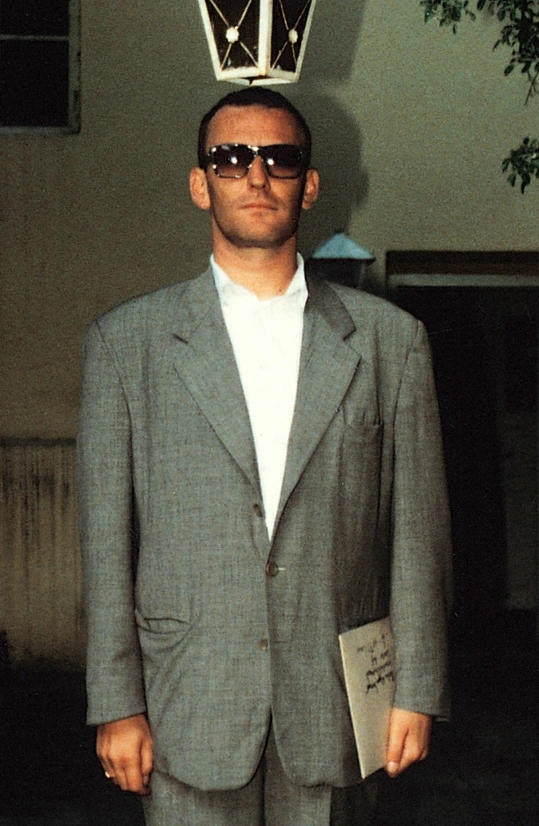
| 11 Quotes | |
| Occup. | Artist |
| From | Germany |
| Born | February 25, 1953 |
| Died | March 7, 1997 |
| Aged | 44 years |
| Cite | |
Citation Formats
APA Style (7th ed.)
Martin kippenberger biography, facts and quotes. (2026, February 11). FixQuotes. https://fixquotes.com/authors/martin-kippenberger/
Chicago Style
"Martin Kippenberger biography, facts and quotes." FixQuotes. February 11, 2026. https://fixquotes.com/authors/martin-kippenberger/.
MLA Style (9th ed.)
"Martin Kippenberger biography, facts and quotes." FixQuotes, 11 Feb. 2026, https://fixquotes.com/authors/martin-kippenberger/. Accessed 26 Mar. 2026.
Early Life and Background
Martin Kippenberger was born on February 25, 1953, in Dortmund, West Germany, into a country still rebuilding its streets and its conscience after the war. He grew up amid the frictions of the Federal Republic in the 1950s and 1960s - rising consumer culture, televised politics, and an older generation inclined to silence - conditions that sharpened his instinct to treat public language as suspect and ripe for parody. Friends and later collaborators would recall a temperament that could be dazzlingly social and abruptly severe, as if conviviality were both a refuge and a weapon.Moving between cities in his youth, Kippenberger absorbed the textures of postwar German life - pubs, cheap hotels, train stations, advertising slogans, and the institutional voice of authority. These became, later, not just settings but raw material. The scene he entered was also haunted by the recent past: artists of his generation faced the double demand to reject moralistic solemnity while refusing amnesia. Kippenberger learned early to survive by speed - in speech, in friendship, in production - and to turn embarrassment, failure, and gossip into usable cultural currency.
Education and Formative Influences
He studied at the Hochschule fur Bildende Kunste in Hamburg in the mid-1970s, but his most decisive education came from the counter-institutions of the era: artist-run spaces, bars, music, and the traffic of ideas between Cologne, Hamburg, and Berlin. He watched how Joseph Beuys expanded the idea of what art could claim socially, how Sigmar Polke and Gerhard Richter dismantled certainty with painterly irony, and how American Pop and Conceptual art weaponized the ordinary. Kippenberger absorbed these as permissions rather than templates, learning to treat the artwork as a situation - a negotiation with taste, money, shame, and charisma - as much as an object.Career, Major Works, and Turning Points
By the late 1970s he was a central agitator in West Germany's post-punk art ecology, living and working in Hamburg and then Cologne and Berlin, alternately artist, organizer, and impresario. In Berlin he became associated with the scene around SO36 and the rough energies of Kreuzberg; he staged exhibitions, designed posters, made paintings that sampled mass media, and cultivated a reputation for productivity that looked like compulsion. Across the 1980s and 1990s his work expanded into sculpture, installation, photography, publishing, and self-mythologizing projects: the Metro-Net concept (imaginary global subway entrances installed as sculptural fragments), the hotel drawings and related paintings, and a prolific body of text-based or emblem-driven canvases that mocked the heroic register of modernism while feeding on it. Major exhibitions through Europe and the United States consolidated his international standing, but the turning point was internal as much as institutional - his ability to turn the very mechanisms of art-world success, publicity, and burnout into subject matter. He died on March 7, 1997, in Vienna, at 44, leaving a career that feels less concluded than abruptly interrupted.Philosophy, Style, and Themes
Kippenberger's public persona - comedian, bully, sentimentalist, ringmaster - functioned as a medium that could carry contradictions without resolving them. He distrusted novelty as a moral claim, insisting instead on recombination, timing, and social truth: “You really can't bring about anything new with art”. That skepticism freed him to raid art history, design, slogans, and private embarrassment, then re-stage them as deadpan artifacts. His work often appears to be about bad taste or irresponsibility until you notice its tight calibration: he used crudeness like a tuning fork to detect hypocrisy, and he treated the artwork as evidence of a lived moment rather than a purified result.At the same time, his speed had an almost anxious logic. “A good artist has less time than ideas”. The line reads like a boast, but it also betrays a fear of falling behind his own mind, a dread that reflection might curdle into paralysis. Yet beneath the sarcasm, he cultivated an ethic of solace in the middle of cultural hangovers and personal excess: “I'm not interested in provoking people, but only in trying to be consoling”. That consolation was rarely tender in surface; it came through laughter, through the permission to be unfinished, and through a stubborn insistence that the abject everyday - the hotel room, the cheap sign, the compromised body - could still hold a kind of human dignity.
Legacy and Influence
Kippenberger's influence endures because he made the contemporary artist's predicament - ambition braided with self-doubt, critique entangled with complicity - into an aesthetic engine. He helped define a European post-1980 language in which painting could be both image and commentary, and in which the artist's social behavior, publishing, and installations formed one continuous practice. Later generations have borrowed his permission to be funny without being light, to be autobiographical without confession, and to make institutions, friendships, and failures part of the work. In an era increasingly fluent in branding, his example remains unsettling: he showed how quickly a persona can become a prison, and how art can still pry open freedom by refusing to pretend it is pure.Our collection contains 11 quotes written by Martin, under the main topics: Art - Deep - Kindness - Legacy & Remembrance.
Source / external links