
Martin Luther King Jr. Biography Quotes 93 Report mistakes
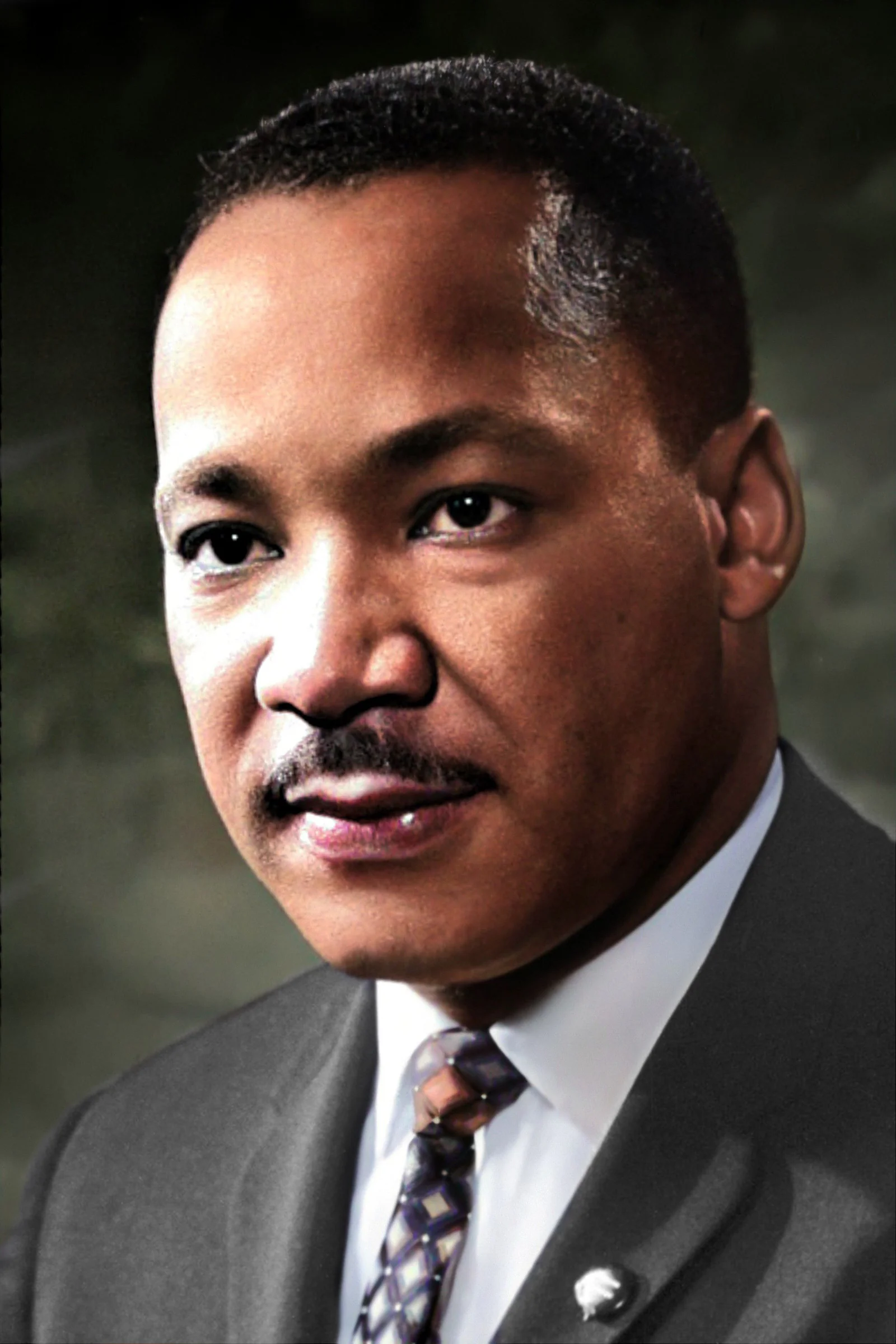
| 93 Quotes | |
| Born as | Michael King Jr. |
| Known as | Daddy King |
| Occup. | Minister |
| From | USA |
| Born | January 15, 1929 Atlanta, Georgia |
| Died | April 4, 1968 Memphis, Tennessee |
| Cause | Assassination |
| Aged | 39 years |
| Cite | |
Citation Formats
APA Style (7th ed.)
Martin luther king jr. biography, facts and quotes. (2026, February 7). FixQuotes. https://fixquotes.com/authors/martin-luther-king-jr/
Chicago Style
"Martin Luther King Jr. biography, facts and quotes." FixQuotes. February 7, 2026. https://fixquotes.com/authors/martin-luther-king-jr/.
MLA Style (9th ed.)
"Martin Luther King Jr. biography, facts and quotes." FixQuotes, 7 Feb. 2026, https://fixquotes.com/authors/martin-luther-king-jr/. Accessed 26 Mar. 2026.
Early Life and Background
Martin Luther King Jr. was born Michael King Jr. on January 15, 1929, in Atlanta, Georgia, into a Black Baptist household where religion, education, and civic responsibility were inseparable. His father, the Rev. Michael King Sr., co-pastored and later led Ebenezer Baptist Church; after a 1934 trip to Germany, King Sr. renamed himself and his son for the Protestant reformer Martin Luther, a symbolic act that fused personal identity with a tradition of moral dissent. His mother, Alberta Williams King, a trained musician and church leader, anchored a home life shaped by scripture, dignity, and the constant presence of racial boundaries.Atlanta in the 1930s and 1940s offered both a relatively stable Black middle class and the daily humiliations of Jim Crow. King absorbed the contradictions early - childhood friendships with white playmates ended abruptly under segregation; streetcar signs and courthouse customs taught him that law could codify cruelty. Yet the Black church also modeled alternative authority: sermons, choir rehearsals, and neighborhood networks showed how a community could nurture inner worth when the wider society denied it. This dual schooling - in exclusion and in collective resilience - helped form the emotional core of his later public composure.
Education and Formative Influences
King entered Morehouse College in Atlanta at fifteen, studying sociology and encountering Morehouse president Benjamin E. Mays, whose social gospel ethic framed Christianity as a mandate to confront injustice. He proceeded to Crozer Theological Seminary in Pennsylvania (B.D., 1951), where he sharpened his preaching craft and wrestled with Reinhold Niebuhr's realism, then to Boston University for doctoral work in systematic theology (Ph.D., 1955), where he encountered personalism and the idea of moral agency grounded in human dignity; in Boston he met Coretta Scott, a musician and activist he married in 1953. Alongside formal study, he was strongly influenced by Mahatma Gandhi's strategy of nonviolent direct action, which offered a disciplined way to convert private conviction into public pressure.Career, Major Works, and Turning Points
In 1954 King became pastor of Dexter Avenue Baptist Church in Montgomery, Alabama, and within a year was propelled into national leadership during the Montgomery Bus Boycott after Rosa Parks' arrest; his home was bombed, he was jailed, and he learned to translate fear into steadiness while building the Montgomery Improvement Association. He helped found the Southern Christian Leadership Conference in 1957, arguing that churches could coordinate mass action across the South. The 1960s brought confrontations that defined him: Birmingham in 1963, where televised brutality amplified the movement's moral claim; the March on Washington and his "I Have a Dream" address; and his "Letter from Birmingham Jail", a tightly reasoned defense of civil disobedience. After the Civil Rights Act (1964) and Voting Rights Act (1965), he widened his agenda toward Northern segregation, poverty, and militarism, speaking against the Vietnam War in 1967 and launching the Poor People's Campaign. On April 4, 1968, while supporting a sanitation workers' strike in Memphis, Tennessee, he was assassinated, ending a life of escalating responsibility at thirty-nine.Philosophy, Style, and Themes
King's inner life was a tension between pastoral tenderness and the hard arithmetic of power. He believed injustice was not only a policy failure but a spiritual sickness that could be confronted without surrendering one's humanity. Nonviolence for him was not passivity; it was a demanding discipline of self-control, strategic disruption, and a refusal to let hatred dictate the terms of struggle. The standard he set for the movement was ethical as well as political: “The time is always right to do what is right”. That sentence captures his impatience with gradualism and his conviction that conscience, not convenience, is the proper clock of history.His rhetoric fused biblical cadence, constitutional promise, and lived Black experience into language that could move crowds and instruct individuals. He framed equality as a test of moral perception, insisting that character must be measured beyond racial myth: “I look to a day when people will not be judged by the color of their skin, but by the content of their character”. Yet he also probed the psychology of complicity, warning that the greatest obstacle was often comfort masquerading as decency: “The ultimate tragedy is not the oppression and cruelty by the bad people but the silence over that by the good people”. In these lines, his theme is clear - liberation requires public risk, and spiritual maturity is proven in solidarity, not sentiment.
Legacy and Influence
King's influence endures in law, memory, and methods: the civil rights victories of the 1960s reshaped American public life, while his model of organized, faith-rooted, nonviolent protest traveled globally to dissidents, clergy, students, and labor movements. His Nobel Peace Prize in 1964 made him an international moral figure, but his later critiques of poverty and war also made him a contested one, reminding admirers that his vision was not limited to integration but aimed at a more just economy and a less violent nation. Commemorated in a federal holiday and studied through speeches, sermons, and the "Letter from Birmingham Jail", he remains a standard against which leaders are measured - not only for eloquence, but for the courage to confront power while insisting that the means must honor the end.Our collection contains 93 quotes written by Martin, under the main topics: Ethics & Morality - Truth - Wisdom - Justice - Love.
Other people related to Martin: Jesse Jackson (Activist), Nhat Hanh (Activist), Joan Baez (Musician), Andrew Young (Clergyman), Cornel West (Educator), Robert Kennedy (Politician), Dorothy Height (Activist), Colman McCarthy (Activist), Julian Bond (Activist), John Lewis (Politician)
Frequently Asked Questions
- How old is Martin Luther King's daughter? Bernice King, Martin Luther King Jr.'s youngest daughter, was born on March 28, 1963, making her 60 years old as of 2022.
- When was Martin Luther King Jr. born and died? Martin Luther King Jr. was born on January 15, 1929, and died on April 4, 1968.
- Did Martin Luther King Jr. die a Catholic? No, Martin Luther King Jr. was a Baptist minister, not Catholic. He was assassinated on April 4, 1968, in Memphis, Tennessee.
- Why was Martin Luther King Jr. important? King was important because he was a key leader in the fight for civil rights, where he raised awareness of racial injustice and played a crucial role in the passage of important legislation like the Civil Rights Act of 1964 and the Voting Rights Act of 1965.
- Why did Martin Luther King Jr. start the Civil Rights Movement? King started the Civil Rights Movement to end racial segregation and discrimination against African Americans, achieving a more just and equal society.
- What were the 3 main ideas of Martin Luther King Jr.? King emphasized nonviolent resistance, equal rights for all races, and the importance of love and unity in overcoming racial injustice.
- What did Martin Luther King Jr. do? Martin Luther King Jr. was a civil rights leader who fought against racial segregation and inequality, advocating for nonviolent protest and delivering powerful speeches, including 'I Have a Dream' speech.
- What was Martin Luther King Jr. Accomplishments? Some of Martin Luther King Jr.'s accomplishments include leading the Montgomery Bus Boycott, giving the 'I Have a Dream' speech, winning the Nobel Peace Prize in 1964, and playing a key role in the passage of the Civil Rights Act of 1964 and the Voting Rights Act of 1965.
- Who is Martin Luther King Jr. Family? Martin Luther King Jr.'s family includes his father, Martin Luther King Sr. (a Baptist minister), his mother, Alberta Williams King (a schoolteacher), his wife, Coretta Scott King, and their four children: Yolanda, Martin Luther III, Dexter, and Bernice.
- How was Martin Luther King Jr. Childhood? Martin Luther King Jr. had a stable, middle-class upbringing in Atlanta, Georgia, as the son of a preacher and a schoolteacher. He excelled academically and showed an early interest in social justice.
- How old was Martin Luther King Jr.? He became 39 years old
Martin Luther King Jr. Famous Works
- 1986 A Testament of Hope: The Essential Writings and Speeches (Book)
- 1968 The Trumpet of Conscience (Book)
- 1967 Where Do We Go from Here: Chaos or Community? (Book)
- 1964 Why We Can't Wait (Book)
- 1963 Strength to Love (Book)
- 1958 Stride Toward Freedom: The Montgomery Story (Book)