
Martin Scorsese Biography Quotes 30 Report mistakes
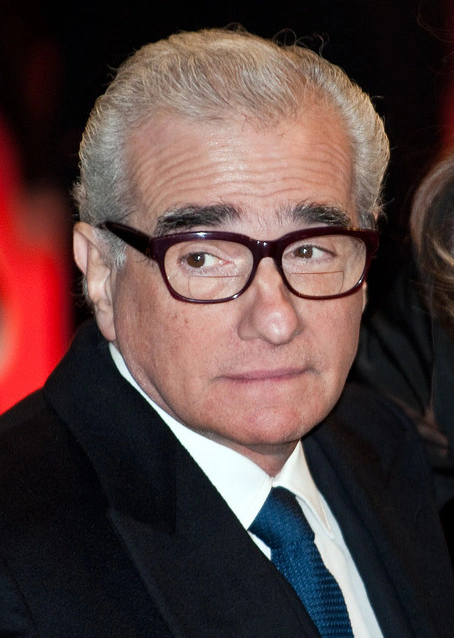
| 30 Quotes | |
| Occup. | Director |
| From | USA |
| Born | November 17, 1942 |
| Age | 83 years |
| Cite | |
Citation Formats
APA Style (7th ed.)
Martin scorsese biography, facts and quotes. (2026, February 11). FixQuotes. https://fixquotes.com/authors/martin-scorsese/
Chicago Style
"Martin Scorsese biography, facts and quotes." FixQuotes. February 11, 2026. https://fixquotes.com/authors/martin-scorsese/.
MLA Style (9th ed.)
"Martin Scorsese biography, facts and quotes." FixQuotes, 11 Feb. 2026, https://fixquotes.com/authors/martin-scorsese/. Accessed 12 Feb. 2026.
Early Life and Background
Martin Charles Scorsese was born on November 17, 1942, in Queens, New York City, and raised in Manhattan's Little Italy, a dense postwar neighborhood shaped by Sicilian-Italian family networks, storefront Catholicism, and the street codes of men who measured status in toughness, clothes, and cash. Childhood asthma kept him indoors and observant, turning him into what he later became on film: a watcher of ritual and violence, confession and performance. While other boys played stickball, Scorsese studied faces from apartment windows, the choreography of arguments, and the way power moved through a room.His parents, Charles and Catherine Scorsese, were working-class and deeply embedded in the community; their world supplied him with dialect, food, jokes, and an ethic of loyalty that could shade into complicity. In the 1950s and early 1960s, Little Italy was also a stage where petty crime brushed against everyday life, and the Church offered both refuge and pressure. The young Scorsese absorbed the tension between sin and salvation not as abstraction but as daily weather - a tension that would later animate his most intimate characters, who want grace but cannot stop choosing damage.
Education and Formative Influences
Scorsese initially considered the priesthood, attending Cardinal Hayes High School in the Bronx, before turning decisively toward cinema; the pivot mattered because it reframed faith as an artistic problem rather than a vocational one. He studied at New York University, earning a BA in 1964 and an MFA in 1966, and came up in a city where European art films played alongside Hollywood revivals and television was rewriting attention spans. NYU connected him to collaborators and a language of film history; the French New Wave, Italian neorealism, and classic American studio craft fused with his street-level memory of New York, teaching him that personal experience could be formalized into rigorous mise-en-scene.Career, Major Works, and Turning Points
After early features and campus work, he broke out with Mean Streets (1973), translating Little Italy into a moral arena and launching a long partnership with Robert De Niro; the 1970s New Hollywood moment gave him room to mix autobiography with genre electricity. Taxi Driver (1976) and Raging Bull (1980) intensified his preoccupation with masculinity, guilt, and self-mythology, while Goodfellas (1990) turned crime into velocity and memory, and Casino (1995) into systems and spectacle. A near-collapse from cocaine and exhaustion in the late 1970s was a private turning point that sharpened his sense of work as survival; later decades showed range without dilution - The Last Temptation of Christ (1988), The Age of Innocence (1993), Gangs of New York (2002), The Departed (2006, which brought his long-delayed Oscar), Hugo (2011), The Wolf of Wall Street (2013), The Irishman (2019), and Killers of the Flower Moon (2023). Parallel to directing, he became a leading preservationist through The Film Foundation (1990), arguing that the past is not nostalgia but a usable archive.Philosophy, Style, and Themes
Scorsese thinks like an editor and confessor at once: cinema as selection, and selection as moral diagnosis. His guiding idea is that meaning is created not only by what is shown but by what is withheld - "Cinema is a matter of what's in the frame and what's out". That sentence is aesthetic, but it is also psychological: his characters are defined by what they cannot admit, by the corners of the frame where consequences wait. Formally, this becomes the signature Scorsese grammar - prowling camera, needle-drop counterpoint, freeze-frames and voiceover, hard cuts that mimic temptation, and close-ups that treat faces as battlegrounds between pride and shame.Beneath the bravura is a craftsman's anxiety about reduction, a refusal to let experience become a slogan. "There's no such thing as simple. Simple is hard". The line explains why even his most propulsive films keep opening trapdoors into tenderness or dread: the gangster yearns for belonging, the mogul for purity, the believer for certainty, the lover for a clean ending that the world will not grant. As he aged, the moral temperature shifted from hot judgment to wary compassion, a turn he has named directly: "And as I've gotten older, I've had more of a tendency to look for people who live by kindness, tolerance, compassion, a gentler way of looking at things". Late Scorsese does not excuse brutality; it studies the hunger that breeds it, then asks what a gentler life would cost.
Legacy and Influence
Scorsese stands as the major New York auteur of the postwar American century, a director who proved that popular genres can carry theology, anthropology, and autobiography without losing pulse. He reshaped crime cinema, expanded what a studio film could sound and move like, and mentored generations through advocacy, interviews, and preservation work that saved endangered global film heritage. His influence is visible in the kinetic realism of modern gangster and character-driven filmmaking, but his deeper gift is ethical: he made American ambition look like a spiritual condition, and he left a body of work that insists style is not decoration - it is a way of telling the truth about how people rationalize what they do.Our collection contains 30 quotes written by Martin, under the main topics: Ethics & Morality - Wisdom - Learning - Kindness - Movie.
Other people related to Martin: Richard Price (Writer), Fran Lebowitz (Journalist), Jean-Luc Godard (Director), Jodie Foster (Actress), Oliver Stone (Director), Max von Sydow (Actor), Ellen Burstyn (Actress), Gwen Stefani (Musician), Winona Ryder (Actress), Matthew McConaughey (Actor)
Source / external links