
Martin Yan Biography Quotes 34 Report mistakes
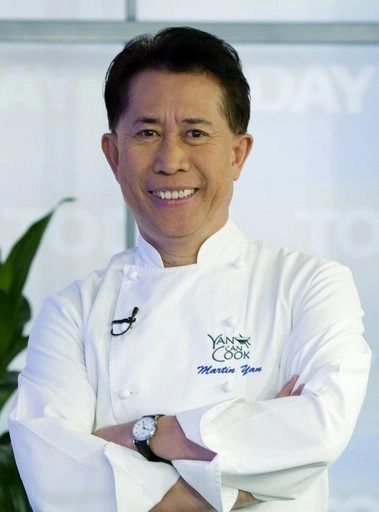
| 34 Quotes | |
| Occup. | Celebrity |
| From | China |
| Born | December 22, 1948 Guangzhou, Guangdong Province, China |
| Age | 77 years |
| Cite | |
Citation Formats
APA Style (7th ed.)
Martin yan biography, facts and quotes. (2026, February 11). FixQuotes. https://fixquotes.com/authors/martin-yan/
Chicago Style
"Martin Yan biography, facts and quotes." FixQuotes. February 11, 2026. https://fixquotes.com/authors/martin-yan/.
MLA Style (9th ed.)
"Martin Yan biography, facts and quotes." FixQuotes, 11 Feb. 2026, https://fixquotes.com/authors/martin-yan/. Accessed 5 Mar. 2026.
Early Life and Background
Martin Yan was born on December 22, 1948, in Guangzhou, Guangdong, China, into a Cantonese family whose daily rhythms were shaped by food markets, fast home cooking, and the postwar pressures of rebuilding life in a changing South China. He grew up amid the sensory schooling of southern Chinese cuisine - the smell of ginger and scallion, the precision of knife work, the practicality of stir-frying - and absorbed early the idea that a cook is both craftsperson and provider, responsible for turning modest ingredients into warmth, nutrition, and cohesion at the table.Political and economic upheavals pushed many families to seek stability through movement across Chinese-speaking worlds, and Yan's youth unfolded against that larger backdrop of migration and reinvention. The experience quietly trained him for the public role he would later inhabit: a cultural translator who could honor tradition while adapting it for new kitchens, new languages, and new audiences without losing the emotional core of the food.
Education and Formative Influences
Yan formally trained in culinary arts in Hong Kong, then broadened his expertise abroad, including study in North America, a trajectory that gave him both classical technique and an educator's instinct for explaining why things work. He learned to teach cooking as a sequence of controllable variables - heat, timing, mise en place, sauce balance - while also reading diners' expectations in different places, a skill that would become central to his media career.Career, Major Works, and Turning Points
After establishing himself as a chef and instructor, Yan became internationally recognizable through television, most famously as the host of "Yan Can Cook" (which premiered in 1982 and ran for decades), where his rapid knife work and buoyant demonstrations made Chinese cooking feel achievable rather than intimidating. The show, along with companion cookbooks and frequent public appearances, turned him into a culinary celebrity and a durable ambassador for Chinese cuisine in the United States and beyond, at a time when American interest in "authentic" regional food was expanding. His turning point was not a single dish but a format: teaching as entertainment, built on repetition, clarity, and respect for home cooks, which allowed him to reach audiences far beyond the restaurant dining room.Philosophy, Style, and Themes
Yan's on-screen style - brisk, precise, and friendly - expresses a philosophy of craft over glamour. He consistently frames success as disciplined preparation rather than mysterious talent, and his teaching centers on the controllables of cooking: the cut, the order of operations, the management of heat. This ethic is captured in his insistence that fundamentals decide outcomes: “The only thing that counts is if you know how to prepare your ingredients. Even if with the best and freshest ingredients in the world, if your dish is tasteless or burnt, it's ruined”. Psychologically, it reads as a self-protective humility and a teacher's rigor - a way of anchoring self-worth in work, not applause, and of giving students a ladder they can climb.He also treats food as a tool for shaping behavior, especially across generations and cultures, and he often smuggles nutrition and balance into fun. His joke about family dynamics is revealing: “So when I do Chinese cooking, I mix everything together, then the kids have to eat their vegetables. They won't have the patience to pick them out”. Beneath the humor is a caretaker's mentality - the cook as strategist, making the good easy to accept. Travel and openness are another recurring theme, tied to his life between Chinese and American contexts; he argues that movement expands empathy and dissolves provincial certainty: “People who don't travel cannot have a global view, all they see is what's in front of them. Those people cannot accept new things because all they know is where they live”. In Yan's world, cuisine is not merely heritage - it is a practice of curiosity.
Legacy and Influence
Martin Yan helped normalize Chinese cooking on Western television as something learnable, regional, and technique-driven, influencing generations of home cooks, culinary students, and food media personalities who followed the demonstration-first model. More than any single recipe, his enduring contribution is the bridge he built between cultures: a confident presentation of Chinese culinary logic - preparation, speed, balance, and adaptability - that made audiences feel welcomed rather than tested, and invited them to see a cuisine not as exotic spectacle but as living knowledge.Our collection contains 34 quotes written by Martin, under the main topics: Freedom - Kindness - Equality - Success - Peace.
Source / external links