
Marvin Davis Biography Quotes 3 Report mistakes
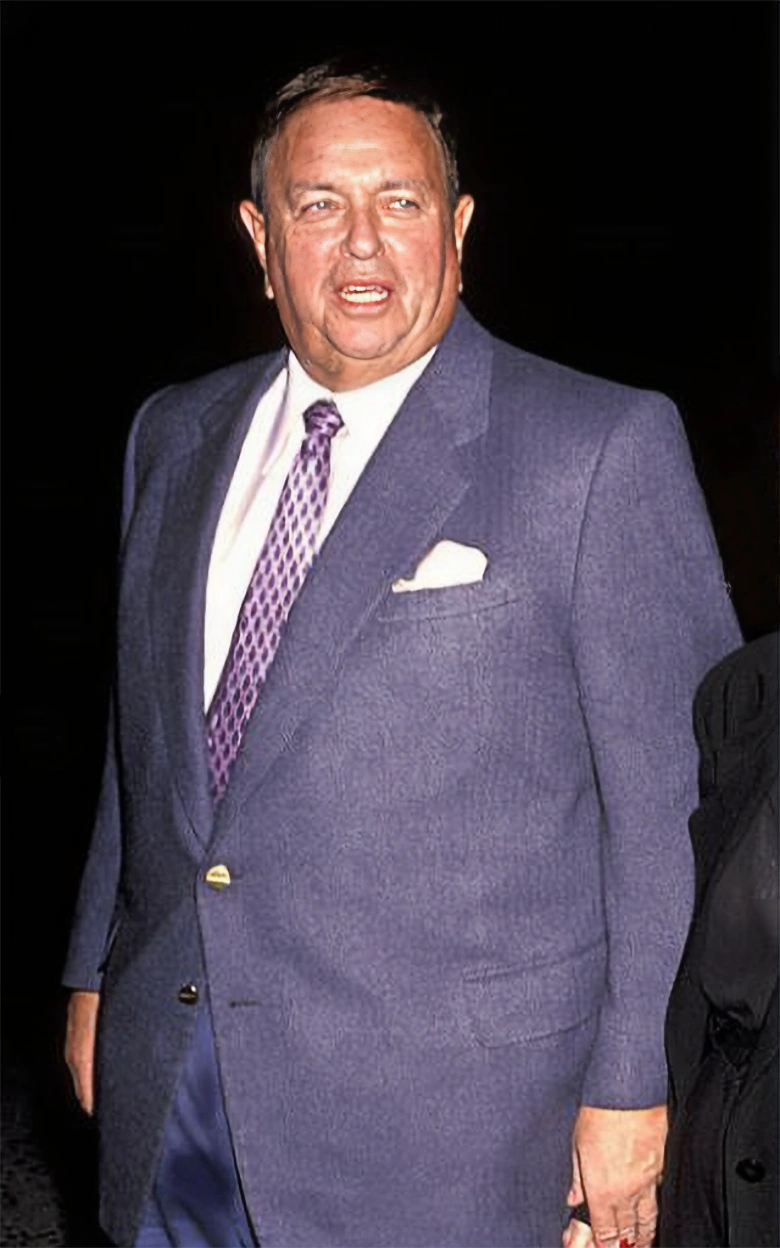
| 3 Quotes | |
| Born as | Marvin H. Davis |
| Occup. | Businessman |
| From | USA |
| Spouse | Barbara Levine (1951) |
| Born | August 28, 1925 Newark, New Jersey, USA |
| Died | September 25, 2004 Beverly Hills, California, USA |
| Aged | 79 years |
| Cite | |
Citation Formats
APA Style (7th ed.)
Marvin davis biography, facts and quotes. (2026, February 11). FixQuotes. https://fixquotes.com/authors/marvin-davis/
Chicago Style
"Marvin Davis biography, facts and quotes." FixQuotes. February 11, 2026. https://fixquotes.com/authors/marvin-davis/.
MLA Style (9th ed.)
"Marvin Davis biography, facts and quotes." FixQuotes, 11 Feb. 2026, https://fixquotes.com/authors/marvin-davis/. Accessed 12 Feb. 2026.
Early Life and Background
Marvin H. Davis was born on August 28, 1925, in the United States, into a generation shaped by the aftershocks of the Great Depression and the mobilizing forces of World War II. Those eras left a durable imprint on American business culture: frugality, scale, and an appetite for calculated risk. Davis came of age as the country was learning to build big again - highways, suburbs, entertainment, and new forms of corporate finance - and he would spend his life translating that postwar confidence into assets you could own, improve, and sell.Public accounts of his private life were notably spare, which fits the profile of a dealmaker whose identity was built less on personal myth than on transactions and outcomes. Friends and associates described a man drawn to the tangible and the winnable: properties, teams, and ventures where leverage came from timing and negotiation rather than publicity. His inner engine, as his later remarks suggest, was a mix of boyish acquisitiveness and adult discipline - the desire to possess paired with the patience to wait for the right moment to act.
Education and Formative Influences
Davis entered adulthood as American enterprise professionalized, when oil, real estate, and media increasingly intersected with Wall Street techniques. He absorbed the practical education of that world: partnership structures, the logic of syndication, and the central lesson of postwar capitalism - that control could be assembled through alliances and well-timed capital, not only inherited fortune. In a period when Los Angeles was rapidly becoming both a manufacturing-and-logistics hub and the symbolic capital of leisure, Davis learned to treat the region not as a backdrop but as a self-contained economy with its own rules and momentum.Career, Major Works, and Turning Points
Davis became best known as a businessman-investor whose name surfaced at the junction of oil, real estate, and sports ownership in late-20th-century America. His career reflected the era when investors treated franchises and landmark properties as both cultural trophies and financial instruments, with value created by shrewd entry price, operational tightening, and resale timing. He was a major figure in Los Angeles-area business circles and, in later years, a high-profile owner of the Denver Broncos (eventually selling the team in a deal that highlighted how dramatically franchise valuations had escalated). His broader pattern was consistent: assemble partners, buy into scarce assets, and rely on the long-run growth of premium markets - especially Southern California - to do compounding work.Philosophy, Style, and Themes
Davis projected a philosophy of acquisition that was candid about the emotional appeal of wealth. "As men get older, the toys get more expensive". The line reads as a joke, but it doubles as self-diagnosis: he understood that status objects - a sports franchise, a marquee property, a major stake in a venture - are often adult substitutions for youthful play, except now the play happens at institutional scale. Psychologically, it hints at a man who did not romanticize his motives; he normalized them, which can be a form of control. By naming desire, he contained it, channeling it into deals.His style also favored partnership and local concentration rather than restless empire-building. "The three of us pitched in $15, 000 a piece to get it started". In one sentence he reveals the mechanics of his world: capital pooled among trusted peers, risk shared, and credibility earned through participation. And he was famously attentive to the gravitational pull of Los Angeles. "There's no need to travel further. The Los Angeles area is big enough for us". That outlook was not parochial; it was strategic. Postwar Los Angeles was an expanding continent of its own - entertainment, real estate, migration, and capital - and Davis bet that depth in a single booming region could outperform thinly spread ambition.
Legacy and Influence
Marvin H. Davis died on September 25, 2004, after a life that tracked the financialization of American leisure and land: the conversion of teams and properties into globally recognized stores of value. His legacy is less a single signature company than a recognizable investor archetype - the quiet accumulator who uses partnerships, timing, and prime geography to turn capital into cultural assets. In the decades after his peak, sports-team valuations and Los Angeles real estate only reinforced the logic he lived by: scarcity plus scale rewards the patient buyer, and the line between "toy" and "portfolio" is often only the size of the check.Our collection contains 3 quotes written by Marvin, under the main topics: Witty One-Liners - Startup - Travel.
Frequently Asked Questions
- Who are Brandon Davis' parents? Brandon Davis' parents are Nancy Davis and Nebil Zarif.
- Is Brandon Davis the grandson of Marvin Davis? Yes, Brandon Davis is the grandson of Marvin Davis.
- How much was Marvin Davis worth when he died? Marvin Davis was reportedly worth around $5.8 billion at the time of his death.
- What happened to Marvin Davis? Marvin Davis died in 2004 at the age of 79.
- How old was Marvin Davis? He became 79 years old
Source / external links