
Mary Barra Biography Quotes 9 Report mistakes
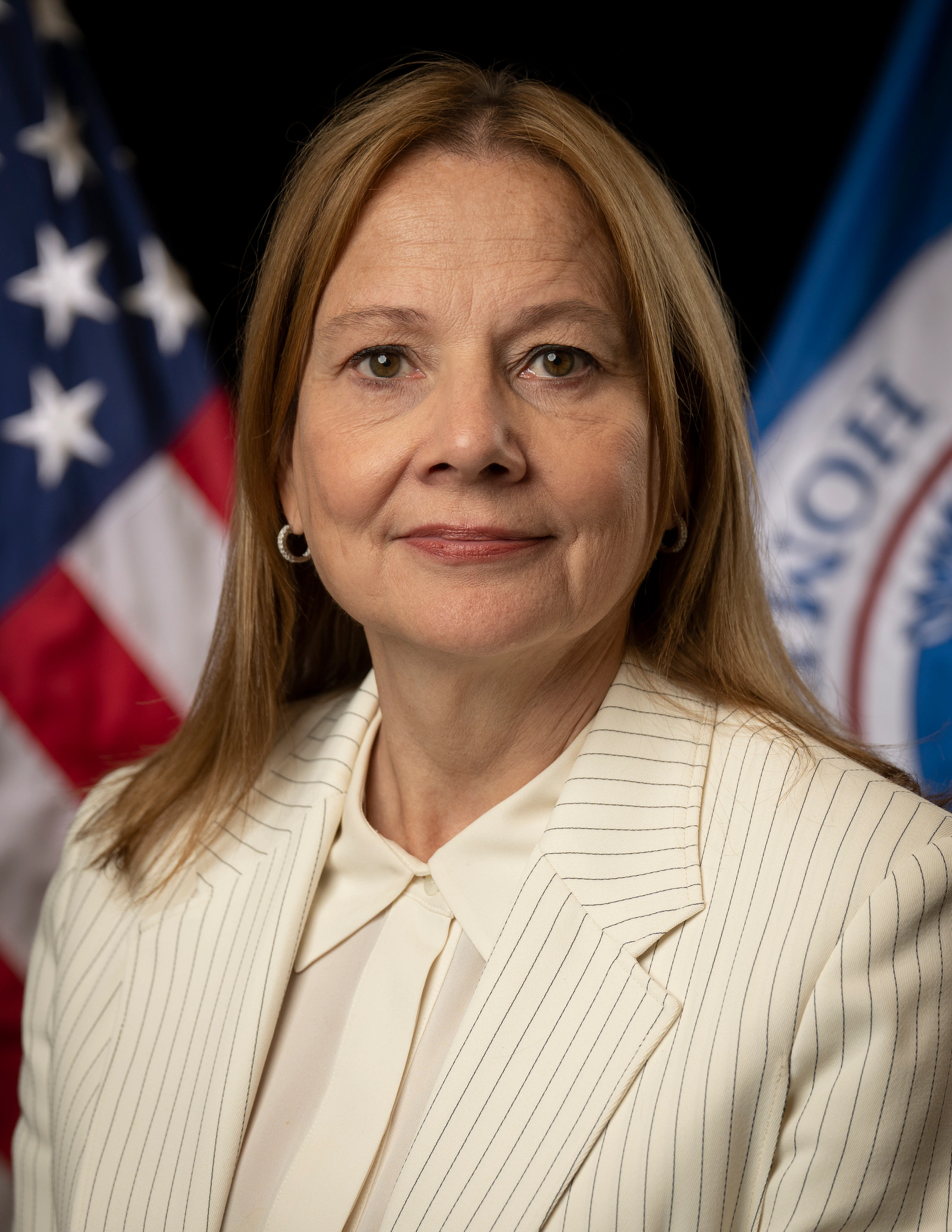
Attr: Benjamin Applebaum
| 9 Quotes | |
| Occup. | Businesswoman |
| From | USA |
| Born | December 24, 1961 Royal Oak, Michigan |
| Age | 64 years |
| Cite | |
Citation Formats
APA Style (7th ed.)
Mary barra biography, facts and quotes. (2026, March 4). FixQuotes. https://fixquotes.com/authors/mary-barra/
Chicago Style
"Mary Barra biography, facts and quotes." FixQuotes. March 4, 2026. https://fixquotes.com/authors/mary-barra/.
MLA Style (9th ed.)
"Mary Barra biography, facts and quotes." FixQuotes, 4 Mar. 2026, https://fixquotes.com/authors/mary-barra/. Accessed 6 Mar. 2026.
Early Life and Background
Mary Teresa Barra was born on December 24, 1961, in Royal Oak, Michigan, and grew up in the Detroit area in a household shaped by the rhythms of the auto industry. Her father, a die maker at Pontiac, provided a working-class vantage point on manufacturing pride and the fragility of industrial employment in the late 1970s and early 1980s, when oil shocks, foreign competition, and quality crises pressured Detroit to rethink everything from product design to labor practices. That environment gave Barra an early, unsentimental sense that cars were not abstractions but livelihoods, and that management decisions carried consequences for communities.As a teenager she took a job at General Motors, starting in 1980 at the Pontiac Motor Division, checking fender panels and doing other plant-floor work while still young enough to absorb the culture at its most granular level. That early proximity to the line - and to the pride and frustrations of hourly workers - later served as a quiet counterweight to executive distance. From the start, her story was less about charismatic arrival than about accumulation: learning how a vast institution actually functions, and how easily it can drift away from the people who build its products.
Education and Formative Influences
Barra studied electrical engineering at Kettering University (then GMI Engineering and Management Institute), an education designed for the applied realities of industry, and later earned an MBA from Stanford Graduate School of Business in 1990 as a GM fellow. The pairing mattered: Kettering trained her to respect systems, constraints, and process discipline, while Stanford placed her inside a wider managerial conversation about strategy, globalization, and organizational behavior just as American manufacturing was being forced to modernize. Those years helped crystallize a worldview in which engineering rigor and culture change were not separate projects but mutually dependent.Career, Major Works, and Turning Points
Returning to GM, Barra rose through manufacturing engineering, plant management, and human resources, becoming vice president of global manufacturing engineering (2008), then vice president of global human resources (2009) during the financial crisis, when GM went through bankruptcy and reinvention. She later led global product development as senior vice president (2011-2013), and in January 2014 became GM's chief executive - the first woman to lead a major global automaker. Her early tenure was defined by the ignition switch crisis and the painful public reckoning over safety, accountability, and internal silos; it became a forcing function for Barra's push to remake decision pathways, elevate "speak up" culture, and connect incentives to customer trust. In the years that followed she steered GM through accelerated electrification strategy, high-stakes labor negotiations, and supply-chain shocks, while attempting to reposition the company from a legacy manufacturer to a software-and-services-enabled EV leader.Philosophy, Style, and Themes
Barra's leadership psychology is grounded in agency, stamina, and the belief that self-concept can be a hidden limiter. “The only thing you have control over is yourself and your own work ethic”. That sentence reads less like a motivational poster than a coping tool for executives operating inside giant organizations where many variables - unions, regulators, geopolitics, supplier bottlenecks, platform delays - remain stubbornly uncontrollable. It also explains her bias toward operational follow-through: she tends to treat credibility as something earned by execution, not rhetoric, and to view personal discipline as the lever that keeps complex systems from drifting.She also frames inclusion as performance, not charity, reflecting both the demographic realities of the modern workforce and the competitive pressure on product and software teams to think beyond old defaults. “Diversity is a competitive advantage. When you bring together people with different backgrounds, experiences, and perspectives, you can achieve great things”. In Barra's case, diversity rhetoric is paired with a managerial preoccupation with collaboration - a recognition that large technical programs fail less from lack of intelligence than from misaligned incentives and fractured communication. “Never underestimate the power of a team who knows how to work together”. The through-line is institutional: she is not trying to be a lone visionary, but a builder of conditions in which hard truths surface early and teams move as one.
Legacy and Influence
Barra's legacy sits at the junction of symbolism and systems: she became a historic figure as a woman leading one of America's most visible industrial institutions, yet her more durable imprint is likely to be cultural and procedural - pushing a century-old company to treat safety, transparency, and speed of learning as existential rather than optional. In an era when Detroit's old certainties collapsed and re-formed under electrification, software, and climate policy, she helped define what "modern" could mean for a legacy automaker: fewer excuses, more accountability, and a strategic wager that the next century of mobility will reward organizations that can change themselves without losing the discipline that built them.Our collection contains 9 quotes written by Mary, under the main topics: Motivational - Leadership - Work Ethic - Teamwork - Learning from Mistakes.
Source / external links