
Mary MacCracken Biography Quotes 11 Report mistakes
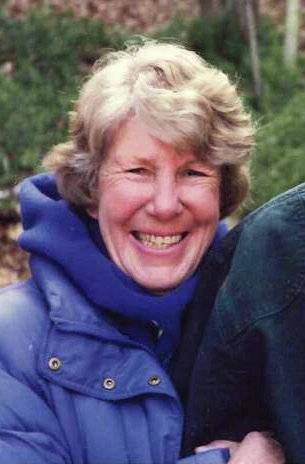
| 11 Quotes | |
| Occup. | Writer |
| From | USA |
| Born | January 19, 1936 USA |
| Age | 90 years |
| Cite | |
Citation Formats
APA Style (7th ed.)
Mary maccracken biography, facts and quotes. (2026, February 11). FixQuotes. https://fixquotes.com/authors/mary-maccracken/
Chicago Style
"Mary MacCracken biography, facts and quotes." FixQuotes. February 11, 2026. https://fixquotes.com/authors/mary-maccracken/.
MLA Style (9th ed.)
"Mary MacCracken biography, facts and quotes." FixQuotes, 11 Feb. 2026, https://fixquotes.com/authors/mary-maccracken/. Accessed 27 Mar. 2026.
Early Life and Background
Mary MacCracken was born on January 19, 1936, in the United States, coming of age in the long wake of the Great Depression and the upheavals of World War II. That era shaped a generation trained to measure hardship quietly and to prize steadiness over spectacle - a sensibility that later surfaced in her writing, which favored practical moral clarity and the daily labor of care over grand theory. As postwar prosperity and the baby boom transformed schools, neighborhoods, and family life, MacCracken watched the country talk about children as the future while often failing to notice particular children in the present.Her early environment is best understood as a doorway into her central preoccupation: the inner lives of young people who are misread by adults. In mid-century America, classrooms were expanding, standardized testing was tightening its grip, and disability was still widely treated as deficiency to be managed or hidden. MacCracken would write into that gap, insisting that the child labeled "difficult" or "slow" was still fully human, and that the ethical test of a community was how it treated the ones it could most easily discard.
Education and Formative Influences
Public records on MacCracken's formal schooling are limited, but her work reflects the imprint of teacher-training culture in an age when "special education" was shifting from informal remediation to recognized practice. She was formed by the everyday mechanics of classrooms - the conference at a desk, the small victory of a new word, the ache of a child bracing for failure - as well as by the broader civil-rights-era argument that institutions should bend toward dignity. Her later nonfiction reads like field notes refined into literature: observation, patient listening, and the conviction that humane attention can outrun bureaucracy.Career, Major Works, and Turning Points
MacCracken became known as a writer whose authority came from lived proximity to children with learning differences and the educators who tried, sometimes clumsily, to serve them. Her most widely cited work, Lovey: A Very Special Child (1989), recounts the relationship between a teacher and a girl with profound disabilities, translating the texture of classroom life into a narrative that reached beyond professional circles. Published as mainstream America was absorbing the implications of disability-rights activism and the implementation of special-education law, the book helped many readers reconsider what "progress" looks like - not as a dramatic cure, but as recognition, communication, and belonging.Philosophy, Style, and Themes
MacCracken's philosophy begins with a refusal to treat children as abstractions. She wrote against the adult tendency to convert a child's difference into a project, a diagnosis into a verdict, or a classroom setback into a moral failing. Her moral center is attachment: the idea that a child's growth depends less on perfect technique than on trustworthy presence. “Children are not problems to be solved. They are people to be loved”. In her psychological map, love is not sentimental indulgence; it is a disciplined attention that keeps returning even when outcomes are slow or invisible.Her style is plainspoken and scene-driven, built from the small interactions where power usually hides: a teacher's tone, a parent's fear, a child's attempt to protect dignity through silence. She treats honesty as an educational tool and a form of respect, arguing that children read evasions as threat. “Level with your child by being honest. Nobody spots a phony quicker than a child”. That insistence reveals her underlying belief about the self: even when language and cognition are impaired, the person remains intact, perceiving and responding in ways adults may not decode. “I learned that no child is ever lost. They may be lost to their families, lost to society, but they are never lost to themselves”. Across her work, the real antagonist is not disability but abandonment - the moment a system decides a child is not worth the time it takes to understand them.
Legacy and Influence
MacCracken endures less as a celebrity author than as a moral witness whose stories broadened the public imagination about disability, learning difference, and teaching as relational labor. Lovey circulated among educators, families, and general readers at a time when inclusive education was contested and often poorly implemented, offering a narrative that made the stakes intimate rather than ideological. Her influence persists in the language many teachers and parents now use instinctively - the focus on strengths, the suspicion of labeling as destiny, and the belief that a child's personhood precedes every plan made for them.Our collection contains 11 quotes written by Mary, under the main topics: Learning - Parenting - Student - Teaching - Teacher Appreciation.
Mary MacCracken Famous Works
- 1977 City Kid (Book)
- 1974 A Circle of Children (Book)
- 1973 Lovey: A Very Special Child (Book)