
Mary Todd Lincoln Biography Quotes 5 Report mistakes
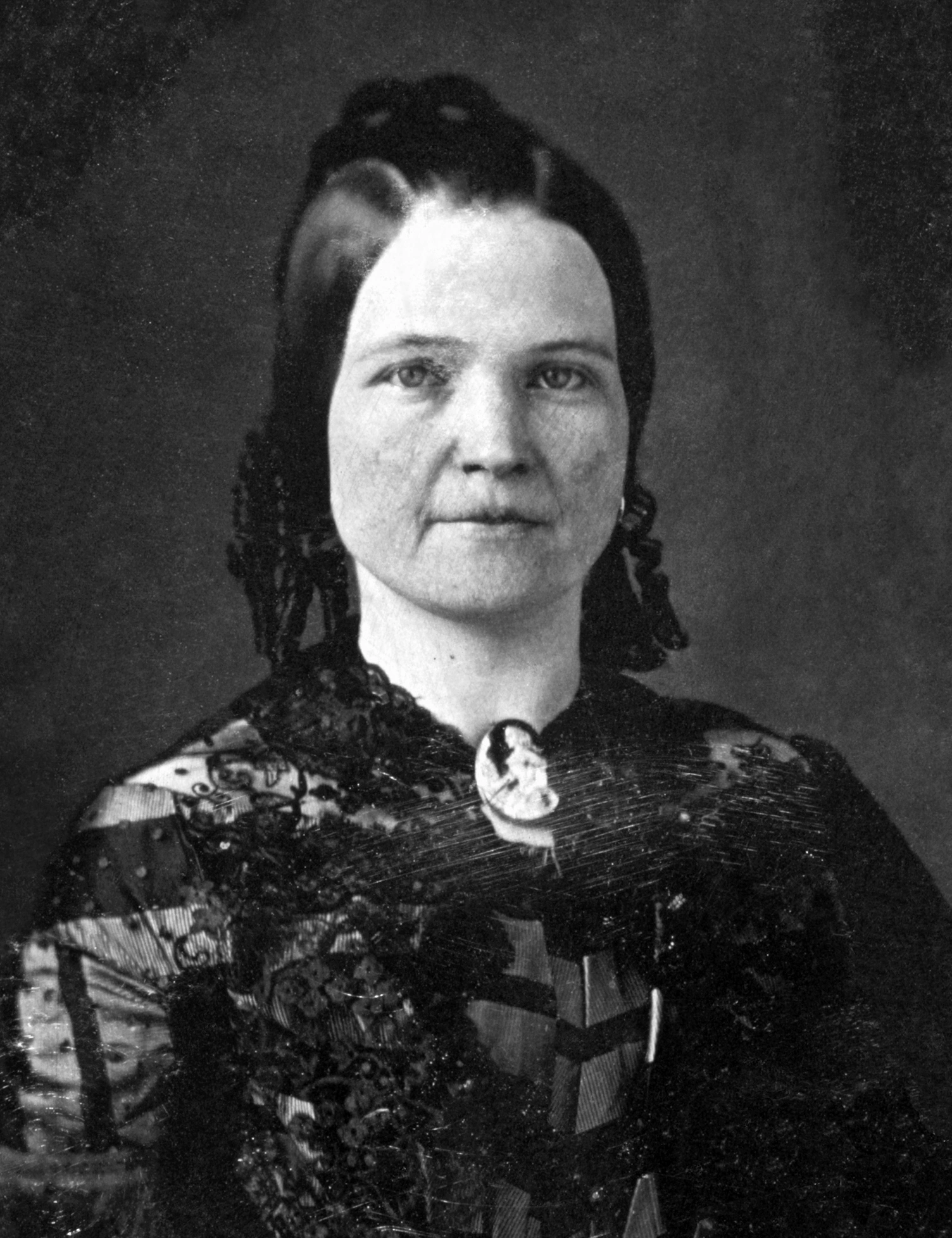
| 5 Quotes | |
| Born as | Mary Ann Todd |
| Occup. | First Lady |
| From | USA |
| Born | December 13, 1818 Lexington, Kentucky, U.S. |
| Died | July 16, 1882 Springfield, Illinois, U.S. |
| Cause | Stroke |
| Aged | 63 years |
| Cite | |
Citation Formats
APA Style (7th ed.)
Mary todd lincoln biography, facts and quotes. (2026, February 17). FixQuotes. https://fixquotes.com/authors/mary-todd-lincoln/
Chicago Style
"Mary Todd Lincoln biography, facts and quotes." FixQuotes. February 17, 2026. https://fixquotes.com/authors/mary-todd-lincoln/.
MLA Style (9th ed.)
"Mary Todd Lincoln biography, facts and quotes." FixQuotes, 17 Feb. 2026, https://fixquotes.com/authors/mary-todd-lincoln/. Accessed 27 Mar. 2026.
Early Life and Background
Mary Ann Todd was born on December 13, 1818, in Lexington, Kentucky, into the prosperous, slaveholding world of the Bluegrass. Her father, Robert Smith Todd, was a banker and politician; her mother, Eliza Parker Todd, died when Mary was young, leaving a family atmosphere that mixed privilege with emotional discontinuity. The Todd household trained daughters to be socially agile and politically aware, and Mary grew up hearing the language of parties, patronage, and public reputation as naturally as church talk.
That early blend of security and rupture helped shape the adult Mary who could be dazzling in a drawing room and volatile in private. In a culture that expected women to rule the domestic sphere quietly, she developed a sharper appetite for argument and attention, and a quick sensitivity to insult. The fault line of her life - the strain between a public role and private need - was already visible in Kentucky, where the genteel codes of femininity sat uneasily on a mind that wanted to participate in history rather than merely host it.
Education and Formative Influences
Unlike many women of her generation, Mary received an education aimed at polish and intellect, studying in Lexington at institutions such as Dr. Ward's boarding school, where French, literature, music, and deportment were as important as scripture. She read widely, followed political news, and learned to use conversation as a tool - for persuasion, for defense, for dominance. In the 1830s she moved to Springfield, Illinois, to live with her sister Elizabeth Edwards and entered the capital-to-be of the Whig West, where ambition traveled faster than pedigree and where she could test her gifts against a more fluid society.
Career, Major Works, and Turning Points
Mary Todd Lincoln never had a conventional "career", but she practiced influence in the only arena formally open to her: marriage, household, and the political salon. She married Abraham Lincoln on November 4, 1842, after a complicated courtship that ended an earlier engagement and left both families uneasy about temperament and money. As a Springfield politician's wife, and then as First Lady from 1861 to 1865, she pushed to be a partner to her husband's ascent, tracking appointments and loyalties with a partisan's memory. Her tenure in the White House unfolded under extraordinary pressure - the Civil War, hostile press, and the death of her son Willie in 1862 - while controversies over spending and patronage sharpened public judgment. The defining turning point came on April 14, 1865, when she sat beside the president at Ford's Theatre and survived his assassination, a trauma that deepened grief into long-term instability, culminating in the death of her son Tad (1871), her spiraling fears and financial troubles, and her involuntary commitment in 1875 after her son Robert sought legal control; she later secured her release and spent her final years largely abroad and then in Springfield, dying on July 16, 1882.
Philosophy, Style, and Themes
Mary's inner life is best read as a contest between theatrical self-command and genuine vulnerability. She was raised to perform femininity as competence - clothing, hosting, taste - yet she also craved the authority usually reserved for men. Her style as First Lady was high-strung and conspicuous, using wardrobes and refurbishing as a language of legitimacy for a new administration surrounded by secession and sneers. Critics reduced her to extravagance, but her spending also functioned as a barricade against contempt: an attempt to make the Lincolns look inevitable, not provincial, and to hold together a household that war repeatedly shattered.
Her words reveal how she experienced public life as a kind of casting, a part she could not fully inhabit without losing herself. “I don't think I'm allowed to talk about that. It is definitely not me. The role has been cast”. The sentence reads like self-diagnosis - a woman aware that the First Lady was a script written by others, and that deviation invited punishment. Yet she also clung to moral drama as consolation when events turned brutal: “Clouds and darkness surround us, yet Heaven is just, and the day of triumph will surely come, when justice and truth will be vindicated”. That providential tone was not naive optimism so much as a coping strategy, a way to force meaning onto chaos after Willie and after the war's bloodshed. Even her sharp humor could be protective, a flash of anxious foresight in a world saturated with threat: “If you keep making jokes like that, somebody is going to shoot you, Father”. Read psychologically, it is the voice of someone who senses how thin the membrane is between politics and violence - and how powerless a wife can be before it breaks.
Legacy and Influence
Mary Todd Lincoln's legacy remains contested because her life sits at the crossroads of gender, grief, and power in the 19th-century United States. Long caricatured as unstable or selfish, she is now more often understood as a politically literate woman trapped in a role without legal authority, crushed by repeated bereavement and by the public's appetite for a scapegoat. Her story has shaped scholarship on Civil War-era domestic politics, mental health, and the costs of fame, and she endures in American memory as a First Lady who experienced the nation's greatest triumph and its most intimate catastrophe in the same room, then spent the rest of her life trying - and often failing - to live afterward.
Our collection contains 5 quotes written by Mary, under the main topics: Witty One-Liners - Justice - Movie - Tough Times.
Other people related to Mary: Sally Field (Actress), Lyman Trumbull (Politician)
Source / external links