
Mary Webb Biography Quotes 6 Report mistakes
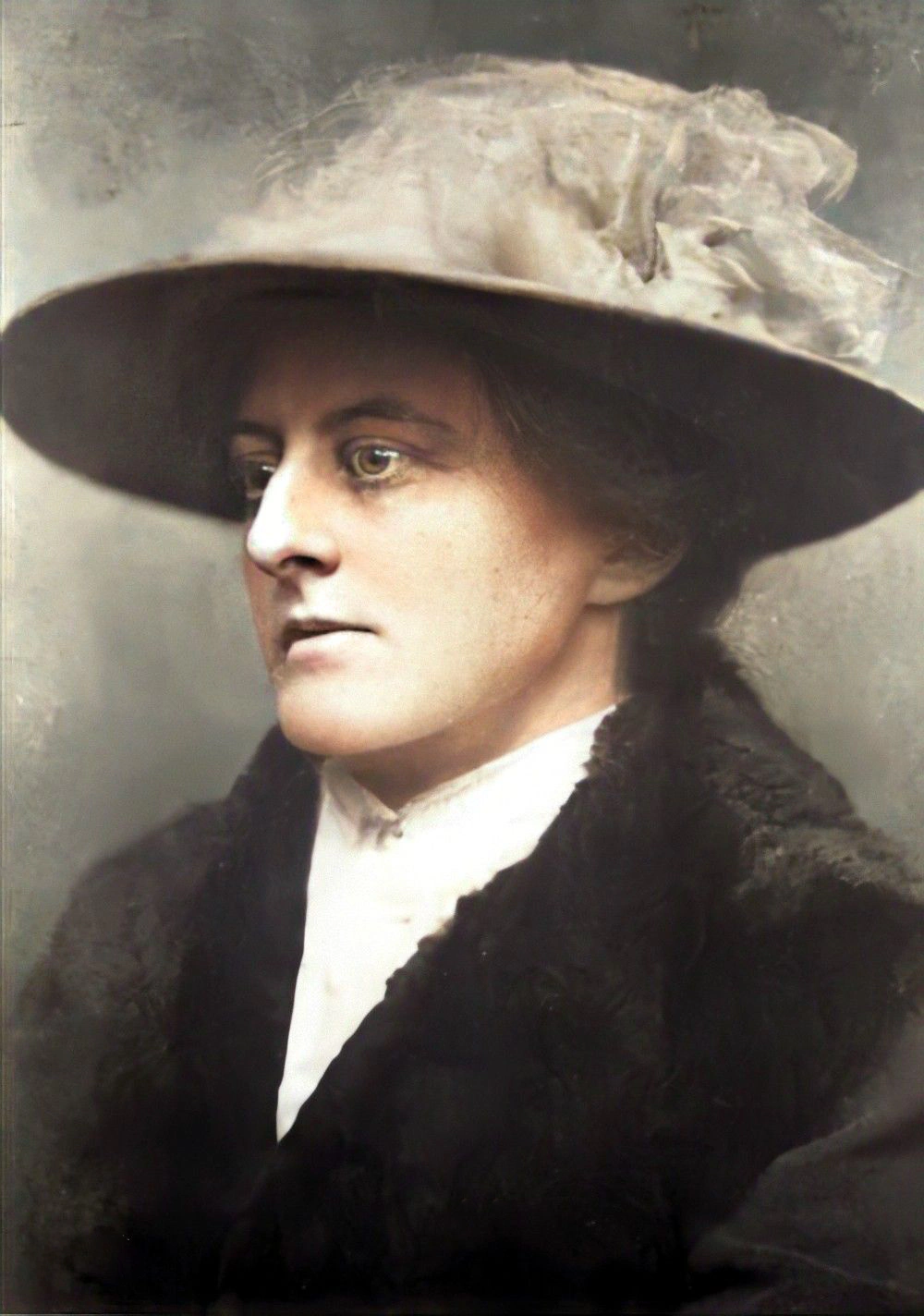
| 6 Quotes | |
| Born as | Mary Gladys Meredith |
| Known as | Mary Gladys Webb |
| Occup. | Novelist |
| From | England |
| Born | March 25, 1881 Shropshire, Leighton, England |
| Died | October 8, 1927 St Leonards-on-Sea, England |
| Aged | 46 years |
| Cite | |
Citation Formats
APA Style (7th ed.)
Mary webb biography, facts and quotes. (2026, February 11). FixQuotes. https://fixquotes.com/authors/mary-webb/
Chicago Style
"Mary Webb biography, facts and quotes." FixQuotes. February 11, 2026. https://fixquotes.com/authors/mary-webb/.
MLA Style (9th ed.)
"Mary Webb biography, facts and quotes." FixQuotes, 11 Feb. 2026, https://fixquotes.com/authors/mary-webb/. Accessed 5 Mar. 2026.
Early Life and Background
Mary Webb was born Mary Gladys Meredith on March 25, 1881, in the Shropshire village of Leighton, near Church Stretton, England, a landscape of ridges, lanes, and small farms that would become the emotional geography of her fiction. Her father, George Meredith, was a schoolmaster; her mother, Alice, ran the household under the pressures typical of rural lower-middle-class life in late Victorian England, when education offered aspiration but little security. Webb grew up among tenant farmers, shopkeepers, and chapel-goers, learning early how reputation and custom could govern a life as tightly as law.Childhood illness shaped her inwardness. She suffered from Graves disease and a goiter that affected her health and confidence, and she lived with a heightened sensitivity to weather, sound, and the small social cruelties of a close community. The turn-of-the-century countryside she knew was not pastoral escape but a contested world - wages, inheritance, illegitimacy, and sectarian difference - and her imagination absorbed both its beauty and its harsh economies. From that tension came her lifelong preoccupation with how private longing survives under public scrutiny.
Education and Formative Influences
Webb attended local schools and later studied at teacher-training institutions in Shrewsbury, training that sharpened her ear for dialect and her sense of how language marks class and belonging. She read widely in poetry and the novel, but her formative influences were as much lived as literary: Nonconformist religiosity, folk belief, and the rhythms of agricultural life. These fed a temperament both mystical and practical, and they taught her the discipline of observation - the habit of watching how a glance at church, a gate left open, or a whispered nickname can decide a person's fate.Career, Major Works, and Turning Points
She married Henry Bertram Law Webb in 1912 and lived largely in Shropshire, writing through chronic ill health and limited means. After early poetry (Poems and "Wayside Songs"), she turned decisively to fiction, publishing novels that fused regional realism with a visionary intensity: Gone to Earth (1917), The House in Dormer Forest (1920), Seven for a Secret (1922), Precious Bane (1924), and her final, starkly fated portrait of desire and cruelty, Armindell (1927). Her work sold modestly in her lifetime; the turning point in public reputation came after her death on October 8, 1927, when admirers and later champions brought her to a wider audience, treating her as a singular voice of the English border counties rather than a mere "regional" curiosity.Philosophy, Style, and Themes
Webb wrote as if landscape were conscience. Hills, hedges, wind, and water do not sit as scenery in her books; they press upon decisions, temptations, and guilt. Her characters are often trapped between bodily appetite and spiritual hunger, between village judgment and private truth. She returns obsessively to women whose desires are policed by kinship and church, and to men who mistake possession for love. The result is a moral drama conducted in the tones of folk tale and the textures of realism - sensuous, admonitory, and tender toward human weakness without excusing it.Her aphorisms reveal the psychological engine of that drama: time, mercy, and the cost of goodness. “If you stop to be kind, you must swerve often from your path”. In Webb, kindness is not sentiment but a deliberate deviation from the social tracks laid down by inheritance, gossip, and pride - and those deviations carry consequences. She also treats memory as an ethical force, not nostalgia: “The past is only the present become invisible and mute; and because it is invisible and mute, its memorized glances and its murmurs are infinitely precious. We are tomorrow's past”. That conviction animates her narrative method, where an old insult or a childhood scene resurfaces like a spring under turf, explaining why a character cannot simply "move on". Yet nature, for Webb, is never a closed verdict; it offers renewal and eerie consolation: “Nature's music is never over; her silences are pauses, not conclusions”. Even in her bleakest plots, the world continues, and that continuance can be either grace or indictment.
Legacy and Influence
Webb's enduring influence lies in the intensity with which she made rural England a site of metaphysical conflict, anticipating later twentieth-century interest in the psychological darkness of small communities while preserving an older, lyric relation to place. Precious Bane remains her most admired achievement, praised for its voice, moral complexity, and fusion of earthiness with visionary insight; Gone to Earth, with its doomed heroine and elemental mood, has continued to attract adaptations and re-readings. Though never as canonical as Hardy, she stands as a distinct inheritor and transformer of the English regional tradition, remembered for turning Shropshire fields and lanes into a stage where memory, desire, and conscience argue without end.Our collection contains 6 quotes written by Mary, under the main topics: Motivational - Nature - Kindness - Time - Prayer.
Mary Webb Famous Works
- 1929 Armour Wherein He Trusted (Novel)
- 1924 Precious Bane (Novel)
- 1922 Seven for a Secret (Novel)
- 1920 The House in Dormer Forest (Novel)
- 1917 Gone to Earth (Novel)
- 1916 The Golden Arrow (Novel)
Source / external links