
Mary Wilson Little Biography Quotes 10 Report mistakes
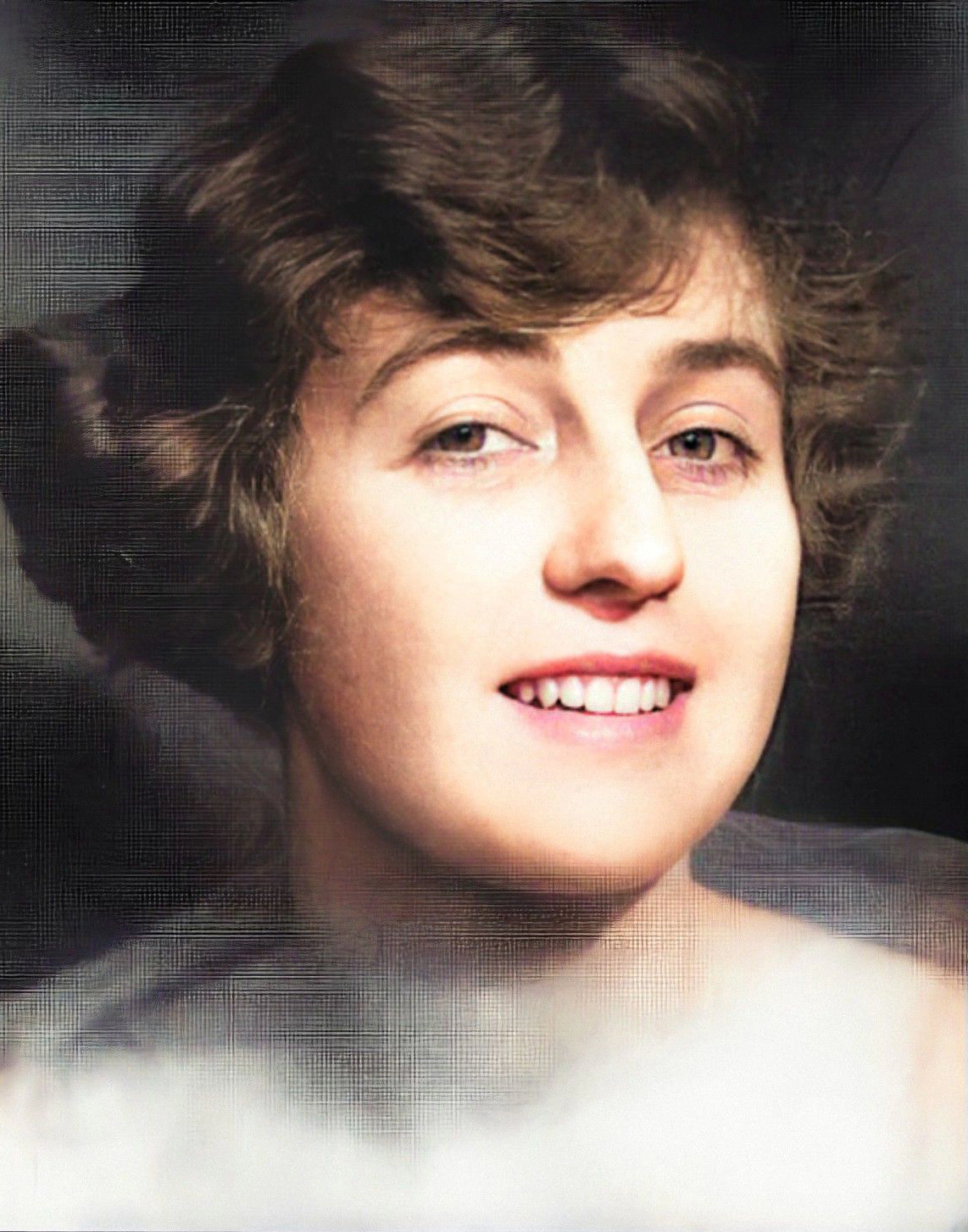
| 10 Quotes | |
| Occup. | Writer |
| From | USA |
| Born | December 2, 1866 Brookline, Massachusetts |
| Died | March 25, 1957 North Tarrytown, New York |
| Aged | 90 years |
| Cite | |
Citation Formats
APA Style (7th ed.)
Mary wilson little biography, facts and quotes. (2026, February 11). FixQuotes. https://fixquotes.com/authors/mary-wilson-little/
Chicago Style
"Mary Wilson Little biography, facts and quotes." FixQuotes. February 11, 2026. https://fixquotes.com/authors/mary-wilson-little/.
MLA Style (9th ed.)
"Mary Wilson Little biography, facts and quotes." FixQuotes, 11 Feb. 2026, https://fixquotes.com/authors/mary-wilson-little/. Accessed 12 Feb. 2026.
Early Life and Background
Mary Wilson Little was born on December 2, 1866, in the United States, in the first generation to come of age after the Civil War. Her lifetime stretched from Reconstruction through two world wars and into the early Cold War, an arc that remade American publishing: magazines became mass media, the short humorous sketch became a staple, and the boundary between genteel letters and popular wit thinned. In that long span, Little emerged as a writer identified with the social observation and epigrammatic humor that flourished in American periodicals at the turn of the 20th century.The public record for Little is thinner than her name suggests it should be, a common fate for writers whose work circulated in newspapers, magazines, and quotation columns rather than in heavily preserved book lines. What survives most clearly is her voice - compact, skeptical, and unromantic about the rituals of respectability. In an era that rewarded women authors for moral uplift or domestic sentiment, her reputation as a sharp observer implies a temperament willing to risk mild scandal: to say the quiet part aloud, then make it funny enough to print.
Education and Formative Influences
Nothing reliable survives about Little's formal education, but the texture of her best-known lines suggests a writer trained by reading and by the daily discipline of the press: a mind that learned to compress arguments into a sentence and to treat society itself as a text to be annotated. The late 19th-century American humor tradition - from newspaper squibs to salon aphorisms - provided a model for a woman who could not always claim institutional authority, yet could win space through precision, speed, and the protective mask of wit.Career, Major Works, and Turning Points
Little is best understood as a period writer whose influence traveled through repetition: quotation, reprinting, and the durable afterlife of the epigram. Rather than a single canonical book, her calling card was the polished one-liner that editors could drop into columns and readers could carry away intact. The turning point for such writers was not a bestseller list but recognition as a reliably quotable voice - a status that, once achieved, could outlast the original venues and persist through anthologies long after bylines faded.Philosophy, Style, and Themes
Little's philosophy is social realism with a comedian's scalpel. She assumes that people perform virtue as much as they practice it, and she treats etiquette as an elaborate system for concealing motives without collapsing civility. "Politeness is half good manners and half good lying". The sentence is funny because it is proportioned like a recipe, but it also reads like a psychological diagnosis: she expects self-interest, plans for it, and prefers honest acknowledgment to pious theater. That stance places her within a modernizing America increasingly aware of advertising, public relations, and the curated self.Her style is aphoristic - short, balanced, and built to survive being detached from context. Yet beneath the neatness is a consistent theme: the mismatch between lofty ideals and the everyday human animal. "If man is only a little lower than the angels, the angels should reform". The joke turns on reversing the usual hierarchy, but the deeper claim is moral: the standard story about human fallenness may be a convenient excuse, while the higher standard itself might be unrealistic or hypocritical. Even her darker humor aims at the same target, puncturing solemnity by pointing out how language prettifies what life actually does. "The tombstone is about the only thing that can stand upright and lie on its face at the same time". Here mortality becomes a study in double meanings, and grief is met not with denial but with a bracing refusal to sentimentalize.
Legacy and Influence
Mary Wilson Little died on March 25, 1957, having outlived the Victorian codes she anatomized and witnessed the rise of a more openly skeptical, media-driven culture that would make her kind of humor feel increasingly native. Her legacy is less a shelf of volumes than an enduring tone: the brisk, morally alert wisecrack that exposes the machinery of manners, the vanity behind virtue-signaling, and the fragile rhetoric we build around death. In quotation culture - that parallel canon where the most portable sentences win - she remains a recognizable presence, proof that a writer can be remembered not only for plots and arguments, but for the clean incision of a single line.Our collection contains 10 quotes written by Mary, under the main topics: Witty One-Liners - Ethics & Morality - Puns & Wordplay - Dark Humor - Mortality.
Mary Wilson Little Famous Works
- 1914 Little, Little Uncle Tom (Book)