
Mary Wollstonecraft Biography Quotes 30 Report mistakes
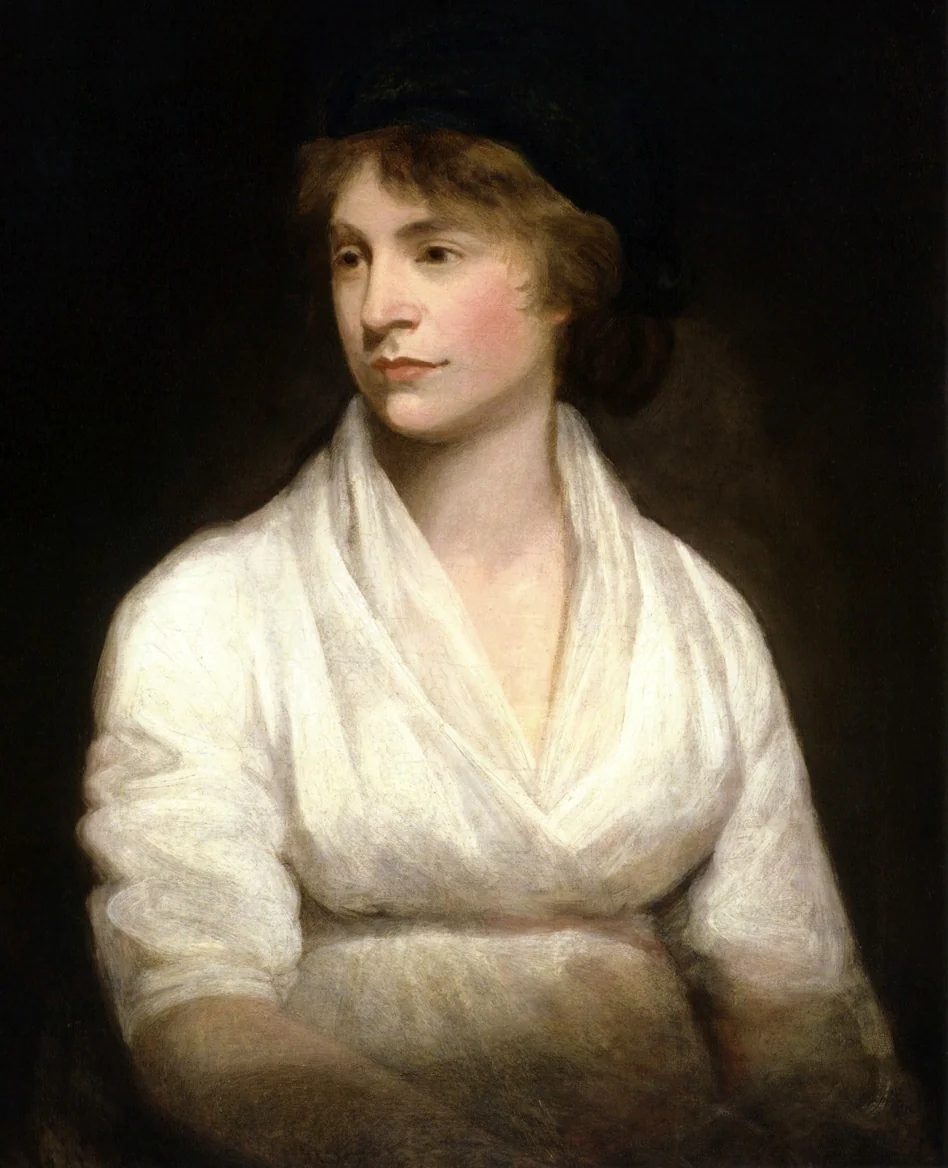
| 30 Quotes | |
| Occup. | Writer |
| From | United Kingdom |
| Born | April 27, 1759 Spitalfields, London |
| Died | September 10, 1797 |
| Cause | Septicaemia |
| Aged | 38 years |
| Cite | |
Citation Formats
APA Style (7th ed.)
Mary wollstonecraft biography, facts and quotes. (2026, February 11). FixQuotes. https://fixquotes.com/authors/mary-wollstonecraft/
Chicago Style
"Mary Wollstonecraft biography, facts and quotes." FixQuotes. February 11, 2026. https://fixquotes.com/authors/mary-wollstonecraft/.
MLA Style (9th ed.)
"Mary Wollstonecraft biography, facts and quotes." FixQuotes, 11 Feb. 2026, https://fixquotes.com/authors/mary-wollstonecraft/. Accessed 27 Mar. 2026.
Early Life and Background
Mary Wollstonecraft was born on 27 April 1759 in Spitalfields, London, into a family whose respectability was brittle and whose finances were unstable. Her father, Edward John Wollstonecraft, squandered money and drifted between failed ventures and rented farms, hauling the household through England and Wales. In that unsettled geography, Mary learned early to read character as a survival skill - especially male volatility - and she developed an intense protective loyalty to her sisters, particularly Eliza and Everina.Domestic disorder did not merely inconvenience her; it formed her moral imagination. She witnessed her father's drunkenness and violence toward her mother and began to associate patriarchal authority with arbitrary power rather than natural leadership. Friendship became her counter-family: her bond with the wealthy, intellectually curious Fanny Blood offered a model of chosen kinship and collaborative self-making, but it also taught her how precarious a woman's security could be when it depended on marriage, health, and patronage.
Education and Formative Influences
Wollstonecraft received no systematic schooling; she educated herself in fragments snatched from circulating libraries, dissenting circles, and hard employment. She worked as a lady's companion and then as a governess in Ireland, experiences that placed her inside the machinery of class and gender formation - children trained into hierarchy, girls trained into pleasing. In London she entered the rational dissenting milieu around publisher Joseph Johnson, where conversation, reviews, and translation functioned as an informal university; there she absorbed Enlightenment moral philosophy and the revolutionary debates ignited by the American and French upheavals.Career, Major Works, and Turning Points
In the late 1780s Wollstonecraft turned authorship into subsistence and vocation: Thoughts on the Education of Daughters (1787) and the novel Mary: A Fiction (1788) tested her ideas about sensibility and women's narrowed prospects, while Original Stories from Real Life (1788) staged a new pedagogy of reason and character. After Fanny Blood's death in 1785 and the collapse of the school they had founded at Newington Green, she moved decisively toward writing as independence. Her political voice burst into public controversy with A Vindication of the Rights of Men (1790), a rebuttal to Edmund Burke that defended republican virtue and attacked inherited privilege; two years later A Vindication of the Rights of Woman (1792) applied those arguments to gender, insisting that the nation could not claim enlightenment while half its citizens were educated into dependence. She traveled to revolutionary France in 1792-1795, observing the Terror and writing An Historical and Moral View of the Origin and Progress of the French Revolution (1794), then formed a turbulent relationship with the American adventurer Gilbert Imlay, bearing a daughter, Fanny, in 1794. After Imlay's abandonment and two suicide attempts, she returned to London, married the philosopher William Godwin in 1797, and died on 10 September 1797 from postpartum infection after giving birth to Mary (later Mary Shelley), leaving behind the unfinished novel Maria, or The Wrongs of Woman.Philosophy, Style, and Themes
Wollstonecraft's central conviction was that character is made, not fated: social arrangements train minds into obedience or into virtue. Her feminism was therefore not a plea for indulgence but a demand for civic and moral coherence. She diagnosed how femininity was manufactured as a kind of gilded captivity - “Taught from infancy that beauty is woman's sceptre, the mind shapes itself to the body, and roaming round its gilt cage, only seeks to adorn its prison”. Behind the lyric compression sits lived observation: from governess work to fashionable salons, she saw how praise could be a leash and how economic vulnerability turned romance into strategy. Equality, for her, was not a decorative ideal but the soil in which morality grows: “Virtue can only flourish among equals”. That sentence exposes the psychological core of her politics - she distrusted both domination and submission because each deforms the self into either tyrant or dependent.Her prose style mixes analytic severity with sudden heat, a tone shaped by personal crisis and by the pamphlet wars of the 1790s. She writes as if argument must be urgent enough to compete with habit, and she returns obsessively to education as the hinge between private life and public liberty. “Strengthen the female mind by enlarging it, and there will be an end to blind obedience”. The promise is psychological as much as institutional: enlarge the mind, and a woman ceases to negotiate her existence through flattery and fear. Yet Wollstonecraft never pretended that reason alone could heal; her novels and letters admit the ache of attachment, the humiliations of dependence, and the desperate bargains women make when affection is their only currency. Her ideal marriage is a friendship of equals, not a rescue, and her republicanism begins at home - in the daily ethics of mutual duty.
Legacy and Influence
Wollstonecraft's reputation was scorched almost immediately by Godwin's Memoirs (1798), which revealed her love affairs, illegitimate child, and suicide attempts to a culture eager to punish a woman who argued in public. Over the 19th century she survived as a cautionary tale and a secret ancestor; over the 20th and 21st she reemerged as a foundational theorist of liberal feminism and a pioneer of linking education, citizenship, and gender justice. Her influence runs through suffrage arguments, modern debates about domestic labor and political representation, and the literary line that reaches to her daughter Mary Shelley, whose fiction transformed questions of creation, responsibility, and autonomy into myth. Wollstonecraft endures because she wrote from the collision point between ideals and experience, insisting that freedom is not abstract - it is trained, practiced, and owed.Our collection contains 30 quotes written by Mary, under the main topics: Motivational - Ethics & Morality - Wisdom - Mortality - Freedom.
Other people related to Mary: John Opie (Artist), Alice S. Rossi (Sociologist)
Mary Wollstonecraft Famous Works
- 1798 Maria; or, The Wrongs of Woman (Novel)
- 1796 Letters Written in Sweden, Norway, and Denmark (Book)
- 1792 A Vindication of the Rights of Woman (Book)
- 1790 A Vindication of the Rights of Men (Book)
- 1789 The Female Reader; or Miscellaneous Pieces in Prose and Verse (Book)
- 1788 Original Stories from Real Life (Book)
- 1788 Mary: A Fiction (Novel)
Source / external links