
Mat Fraser Biography Quotes 10 Report mistakes
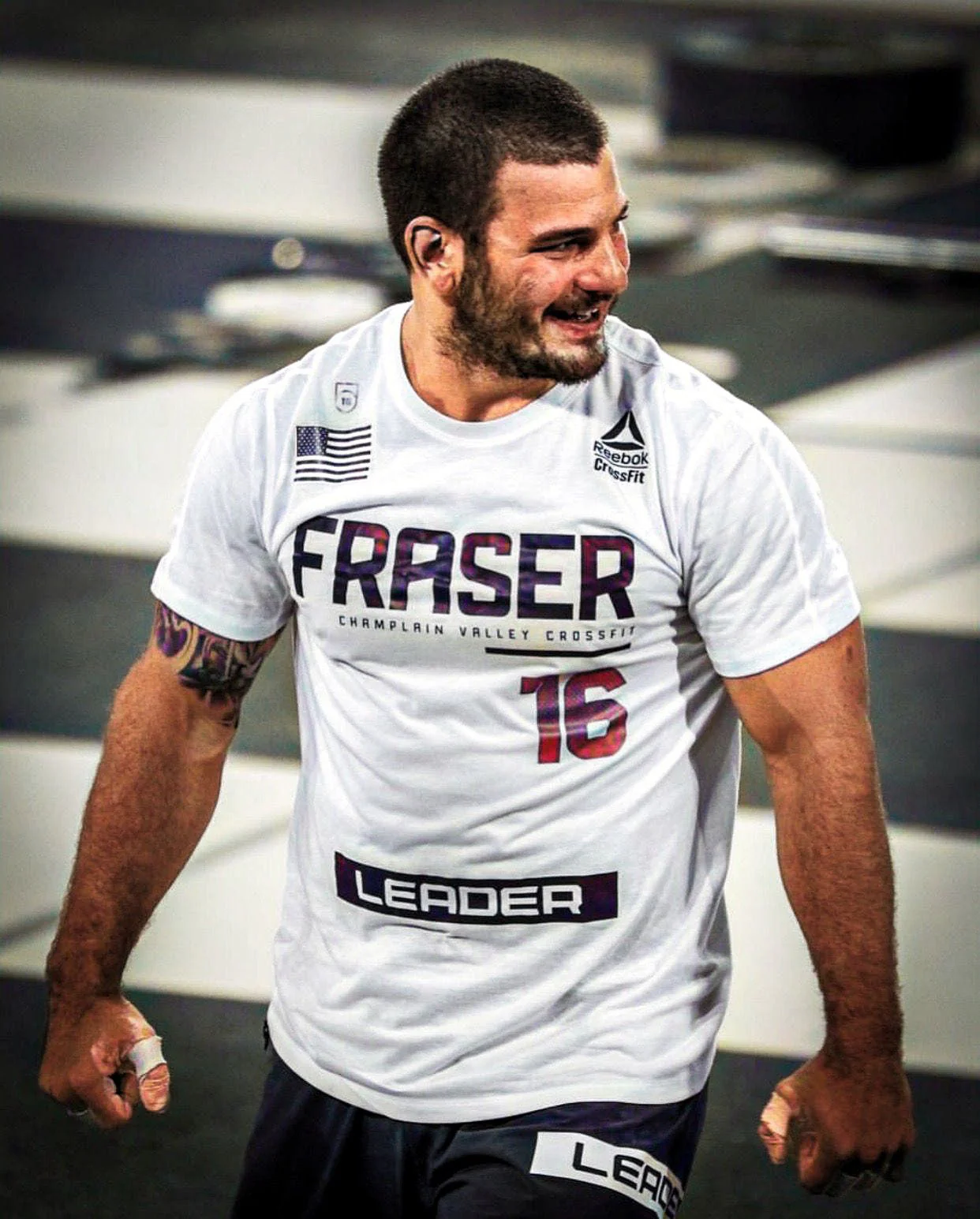
| 10 Quotes | |
| Born as | Mathew Fraser |
| Occup. | Athlete |
| From | USA |
| Born | 1990 New Orleans, Louisiana, USA |
| Cite | |
Citation Formats
APA Style (7th ed.)
Mat fraser biography, facts and quotes. (2026, February 3). FixQuotes. https://fixquotes.com/authors/mat-fraser/
Chicago Style
"Mat Fraser biography, facts and quotes." FixQuotes. February 3, 2026. https://fixquotes.com/authors/mat-fraser/.
MLA Style (9th ed.)
"Mat Fraser biography, facts and quotes." FixQuotes, 3 Feb. 2026, https://fixquotes.com/authors/mat-fraser/. Accessed 12 Feb. 2026.
Early Life and Background
Mat Fraser, born Mathew Fraser around 1990 in the United States, came of age in a culture that increasingly celebrated quantified performance - stopwatch splits, leaderboards, and social-media proof of effort. In the public record, his biography is often told as if it were inevitable: an American athletic temperament sharpened by the early-21st-century obsession with measurable gains. Yet the more revealing arc is not inevitability but self-construction - the way a young competitor learns to convert restlessness into routine, and routine into identity.Fraser has been described first and foremost as an athlete, but that label can flatten what is essentially a psychological project: to build a self that holds steady under pressure. Athletes of his generation faced an unusual double demand - to perform in real time and to narrate performance afterward, turning training into a story that others could follow. That environment rewarded not only physical durability but also emotional economy: the ability to suffer privately, then present results cleanly and without melodrama.
Education and Formative Influences
Details of Fraser's formal education are not reliably established in widely accessible sources, so his formative influences are best understood through the broader ecosystem that shaped American sport in the 2000s and 2010s: specialization at younger ages, the rise of strength-and-conditioning as a mainstream discipline, and an internet culture that traded in motivation, optimization, and the ethics of "earning" outcomes. In that milieu, an athlete learns early that talent is only the entry fee, and that consistency - boring, repetitive, and lonely - is what creates separation.Career, Major Works, and Turning Points
Fraser's career, as it is commonly framed, is a pursuit of competitive excellence built from training blocks, injuries managed rather than romanticized, and incremental performance refinements that compound over years. His "major works" are less a catalog of publications than a body of performances and the training ethos behind them: preparation that treats every weakness as actionable and every result as provisional. The turning points in such a career are rarely cinematic; they are quieter decisions - to accept delayed gratification, to return after setbacks without bargaining, to choose process over applause - that eventually make later achievements look like destiny.Philosophy, Style, and Themes
Fraser's inner life, as read through the motivational language attached to him, centers on discipline as a moral stance. "You can't cheat the grind. It knows how much you've invested. It won't give you anything you haven't worked for". That sentence is less a slogan than an admission of faith: he locates fairness not in the world, which is uneven, but in the ledger of effort, which he can control. Psychologically, it suggests a temperament that manages anxiety by tightening the circle of controllables - sleep, training, nutrition, recovery, attention - and treating everything else as noise.A second theme is the incremental self, the refusal to negotiate with complacency. "The only person you should try to be better than is the person you were yesterday". In that framing, rivals are real but secondary; the true opponent is yesterday's comfort, yesterday's excuses, yesterday's limits. And because such a creed can turn punishing if left unchecked, its most humanizing counterpart is the acceptance of suffering as temporary currency: "Pain is temporary. Pride is forever". Here the athlete reveals a particular bargain with the body - endure now to preserve a coherent self-image later - a bargain that can produce greatness but also requires vigilance so that pride does not become a cage.
Legacy and Influence
Fraser's enduring influence lies in how he exemplifies a modern American athletic archetype: the competitor as craftsman, building excellence through systems rather than mystique. Whether encountered as a name on a result sheet or as a figure in the motivational bloodstream of training culture, he stands for an ethic that privileges daily proof over inherited promise. For aspiring athletes, the legacy is not merely the idea of winning, but the more transferable lesson that identity can be engineered - one difficult, unglamorous repetition at a time.Our collection contains 10 quotes written by Mat, under the main topics: Motivational - Work Ethic - Perseverance - Self-Improvement.
Source / external links