
Matt Drudge Biography Quotes 30 Report mistakes
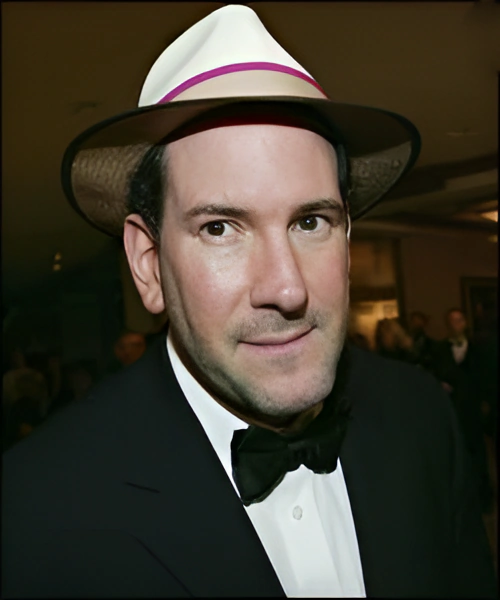
| 30 Quotes | |
| Born as | Matthew Nathan Drudge |
| Occup. | Journalist |
| From | USA |
| Born | October 27, 1966 Takoma Park, Maryland, USA |
| Age | 59 years |
| Cite | |
Citation Formats
APA Style (7th ed.)
Matt drudge biography, facts and quotes. (2026, February 24). FixQuotes. https://fixquotes.com/authors/matt-drudge/
Chicago Style
"Matt Drudge biography, facts and quotes." FixQuotes. February 24, 2026. https://fixquotes.com/authors/matt-drudge/.
MLA Style (9th ed.)
"Matt Drudge biography, facts and quotes." FixQuotes, 24 Feb. 2026, https://fixquotes.com/authors/matt-drudge/. Accessed 25 Mar. 2026.
Early Life and Background
Matthew Nathan Drudge was born on October 27, 1966, in the United States, and came of age in the long afterglow of Watergate and the tightening glare of cable news. That era mattered: it trained a generation to treat politics as both spectacle and moral contest, and it rewarded the person who could move information faster than institutions could absorb it. Drudge would later build a career precisely on that speed gap, positioning himself as a one-man bulletin board between official statements and the private talk that preceded them.His early life is best understood less as a march toward a newsroom than as an apprenticeship in American media appetite. He was drawn to the machinery of entertainment and the backstage routes by which stories travel - call sheets, press packets, tips, reputations. Even before he had a formal platform, he gravitated toward the idea that attention is a currency and that the most valuable facts are often the ones powerful people assume will stay inside the room.
Education and Formative Influences
Drudge did not follow the conventional pipeline of elite journalism; his formative influences were the emerging Internet, tabloid energy, and the 1990s culture of constant programming in which television, radio, and early web pages competed to set the day's conversation. In that environment, the lesson was not merely how to report, but how to aggregate, frame, and time information so it lands like a gavel - a style that would later define both his admirers' praise (independence from gatekeepers) and his critics' charge (sensationalism).Career, Major Works, and Turning Points
In the mid-1990s Drudge began circulating The Drudge Report, a rapidly updated online digest of tips, media chatter, and political scandal that turned the web into a front page. Its defining turning point came during the Clinton years, when Drudge publicized reporting related to the Monica Lewinsky scandal after Newsweek held its story - a moment that crystallized his role as a bypass around editorial caution and helped reshape how scoops travel from rumor to confirmation. He later claimed credit for breaking major celebrity news, including the death of Diana, Princess of Wales, underscoring his identity as an operator watching the same events as legacy media but willing to publish first and argue later. Over time the site became both a powerhouse traffic engine and a political weather vane, its stark banner headlines influencing what cable panels debated, what talk radio amplified, and what campaigns feared would appear before sunrise.Philosophy, Style, and Themes
Drudge's psychology as a journalist is rooted in ambivalence: he champions openness while fearing the degradation of public attention. He warned, “There's a danger of the Internet just becoming loud, ugly, and boring with a thousand voices screaming for attention”. That line reads as self-diagnosis as much as critique - an awareness that the same democratized megaphone that empowered his rise could also drown out meaning, turning reporting into a perpetual audition. His stripped-down design and punchy blurbs function like an antidote to that noise: compression, urgency, and the insinuation that what matters is already known somewhere - you just need the right conduit.He also framed the modern media ecosystem as mutually parasitic rather than oppositional: “The Internet feeds off the main press, and the main press feeds off the Internet. They're working in tandem”. The Drudge method thrives in that loop, extracting heat from mainstream reporting and then feeding the amplified result back into television and print as a topic that must be addressed. Yet Drudge repeatedly cast himself as an arbiter, not merely a megaphone, insisting on selective restraint: “A lot of the stories are internal. They leak it to me, wanting to get attention, wanting to get that headline. More times than not, I will not give it to them”. The subtext is control - the lone editor deciding when to reward a source's hunger, and when to starve it.
Legacy and Influence
Drudge's enduring influence lies in how thoroughly he normalized a post-gatekeeper news cycle: aggregation as power, speed as authority, and the headline as a political actor. The Drudge Report helped prove that a small operation could set the agenda for gigantic institutions, accelerating the migration of scoops, outrage, and rumor across platforms. In doing so, Drudge became both an architect and a symbol of the Internet-era press - a figure who forced traditional newsrooms to compete with an always-on outsider, and who left behind a template, for better and worse, for how digital news can command attention without resembling the institutions it disrupts.Our collection contains 30 quotes written by Matt, under the main topics: Witty One-Liners - Truth - Sarcastic - Writing - Freedom.
Matt Drudge Famous Works
- 2000 Drudge Manifesto (Book)
- 1995 The Drudge Report (Website)
Source / external links