
Matt Groening Biography Quotes 32 Report mistakes
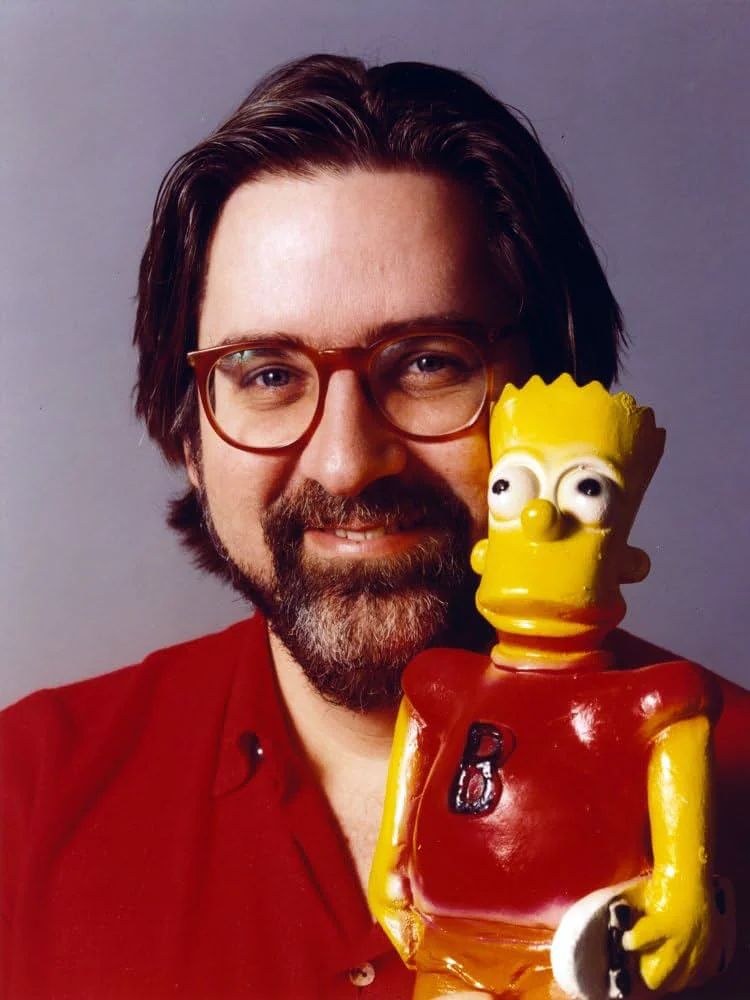
| 32 Quotes | |
| Born as | Matthew Abram Groening |
| Occup. | Cartoonist |
| From | USA |
| Born | February 15, 1954 Portland, Oregon |
| Age | 72 years |
| Cite | |
Citation Formats
APA Style (7th ed.)
Matt groening biography, facts and quotes. (2026, February 11). FixQuotes. https://fixquotes.com/authors/matt-groening/
Chicago Style
"Matt Groening biography, facts and quotes." FixQuotes. February 11, 2026. https://fixquotes.com/authors/matt-groening/.
MLA Style (9th ed.)
"Matt Groening biography, facts and quotes." FixQuotes, 11 Feb. 2026, https://fixquotes.com/authors/matt-groening/. Accessed 25 Mar. 2026.
Early Life and Background
Matthew Abram Groening was born February 15, 1954, in Portland, Oregon, a city whose wet sidewalks, stubborn neighborhoods, and wry civic self-image later echoed in the lived-in worlds he drew. He grew up in a middle-class family marked by both structure and a certain Pacific Northwest eccentricity. His father, Homer Philip Groening, worked in advertising and filmmaking, and the name - later repurposed with mischievous tenderness - became one of Groening's most durable autobiographical jokes. His mother, Margaret Ruth (Wiggum) Groening, provided another surname that would quietly surface in his fictional Springfield, turning family history into a private code hidden in plain sight.The emotional temperature of Groening's childhood was a mix of earnestness and satire. School, suburban expectations, and the small humiliations of youth became raw material, but not in a confessional way. He learned early that comedy can be a form of self-defense and a way of telling the truth without begging permission. Portland in the 1960s and early 1970s, poised between postwar conformity and countercultural change, offered him both targets to puncture and a model for outsider identity - the feeling that you can love a place while refusing its rules.
Education and Formative Influences
Groening attended Portland's Lincoln High School and then Evergreen State College in Olympia, Washington, graduating in 1977. Evergreen's open curriculum and permissive intellectual climate pushed him toward self-directed work, where reading, drawing, and experimenting with voice mattered more than credentials. He absorbed the DNA of American newspaper cartoons and underground comix, along with the timing of classic animation and the social bite of political satire. The formative lesson was not simply "be funny", but build a personal idiom - a line, a rhythm, a worldview - sturdy enough to survive editors, trends, and rejection.Career, Major Works, and Turning Points
After moving to Los Angeles in the late 1970s and doing a string of jobs, Groening created the comic strip "Life in Hell" (first published in 1978), a bleakly affectionate portrait of anxious rabbits and bureaucratic despair that gained a cult following in alternative weeklies and books. A decisive turn came in 1987 when producer James L. Brooks asked him for animated shorts for "The Tracey Ullman Show"; Groening, protective of "Life in Hell", devised a new family on the spot - the Simpsons - named after his parents and sisters. "The Simpsons" became a half-hour series in 1989 and evolved into a cultural institution, expanding American primetime animation and establishing a writers-room model that blended literary wit with pop speed. He later created "Futurama" (1999) with David X. Cohen, fusing science fiction structure with workplace comedy, and "Disenchantment" (2018), a fantasy variation on his recurring themes of failure, yearning, and stubborn hope.Philosophy, Style, and Themes
Groening's art looks deceptively simple: thick outlines, instantly readable silhouettes, faces that function like typographic marks. The simplicity is strategic - it makes room for density elsewhere, especially in language. His humor rests on contradictions: sentimental families who wound each other, cynics who still want grace, institutions that fail yet persist because people do. The best Groening material treats the American promise as both beautiful and ridiculous, and it refuses to resolve that tension. His worlds are crowded with background jokes, throwaway signage, and minor characters who feel like they have entire lives offscreen, conveying a democracy of attention - everyone is funny, everyone hurts, everyone counts.Psychologically, Groening's signature is empathy disguised as irreverence. Bart's rebellion crystallizes a suspicion of obedience and a loyalty to childhood perception: “Well, most grown-ups forget what it was like to be a kid. I vowed that I would never forget”. That vow explains why his satire rarely reads as purely superior; it remembers the fear and boredom beneath misbehavior. He also rejects the fantasy that order and compliance will save us: “A lot of people believe that if everybody just did what they were told - obeyed - everything would be fine. But that's not what life is all about. That's not real. It's never going to happen”. Even his most absurd metaphors for romance capture an adult awareness of chaos and ambush - love as slapstick danger rather than tidy destiny: “Love is a snowmobile racing across the tundra and then suddenly it flips over, pinning you underneath. At night, the ice weasels come”. In Groening, the joke is not an escape from pain; it is a way to look straight at it and keep moving.
Legacy and Influence
Groening helped redefine what mainstream animation could do: literary, satirical, emotionally continuous, and culturally omnivorous without losing character. "The Simpsons" trained generations of writers, comedians, and showrunners, normalized layered joke-writing, and made the animated sitcom a legitimate arena for social critique; "Futurama" proved that philosophical science fiction and warm character comedy could share the same chassis. His influence persists in the cadence of contemporary TV comedy, the visual language of internet humor, and the idea that a cartoon can be both vulgar and humane - a popular art that remembers the kid inside the adult, then laughs with him rather than at him.Our collection contains 32 quotes written by Matt, under the main topics: Witty One-Liners - Funny - Art - Dark Humor - Sarcastic.
Other people related to Matt: Nancy Cartwright (Actress), Jackie Mason (Comedian), Albert Brooks (Actor), Marcia Wallace (Actress), Katey Sagal (Athlete)