
Matthew Arnold Biography Quotes 31 Report mistakes
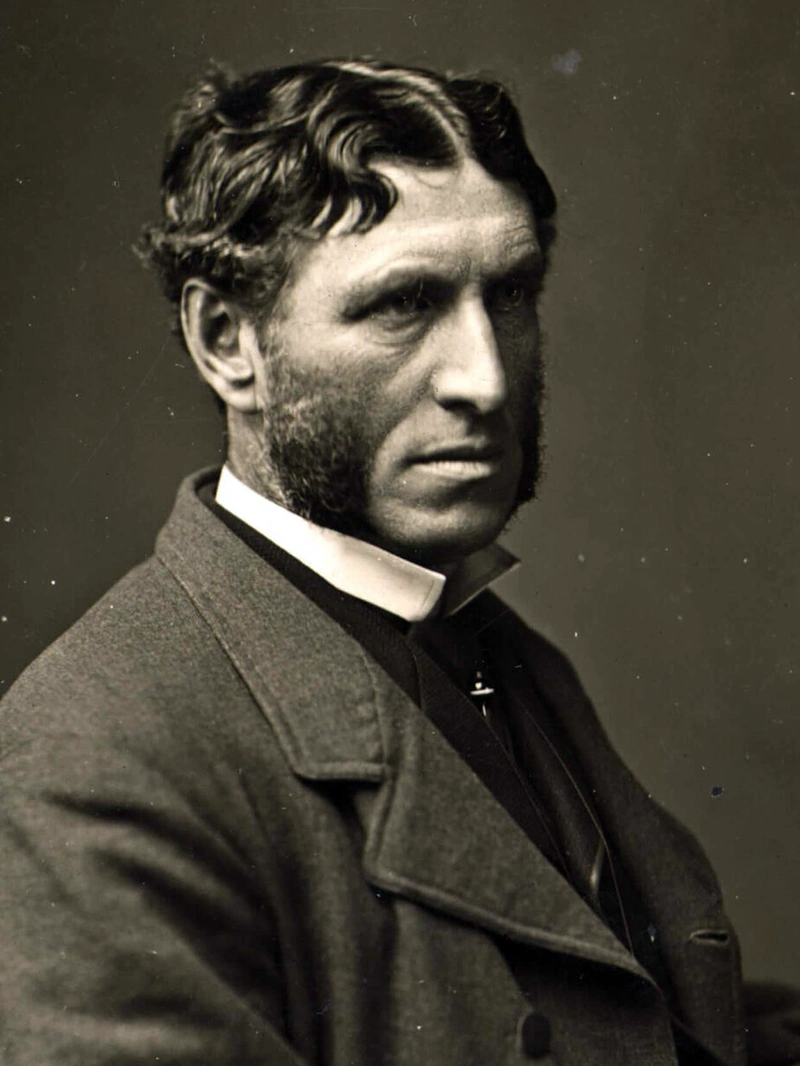
| 31 Quotes | |
| Occup. | Poet |
| From | England |
| Born | December 24, 1822 Laleham, Middlesex, England |
| Died | April 15, 1888 |
| Aged | 65 years |
| Cite | |
Citation Formats
APA Style (7th ed.)
Matthew arnold biography, facts and quotes. (2026, February 11). FixQuotes. https://fixquotes.com/authors/matthew-arnold/
Chicago Style
"Matthew Arnold biography, facts and quotes." FixQuotes. February 11, 2026. https://fixquotes.com/authors/matthew-arnold/.
MLA Style (9th ed.)
"Matthew Arnold biography, facts and quotes." FixQuotes, 11 Feb. 2026, https://fixquotes.com/authors/matthew-arnold/. Accessed 26 Mar. 2026.
Early Life and Background
Matthew Arnold was born on December 24, 1822, at Laleham-on-Thames in Middlesex, into an England tense with reform, industrial change, and religious debate. He grew up in the afterglow of Romanticism but came of age as the Victorian age asked for order, duty, and usable knowledge. That pressure - to make feeling answerable to conscience and intellect - became the lifelong engine of his poetry and criticism.His family placed him at the junction of private sensitivity and public vocation. His father, Thomas Arnold, the formidable headmaster of Rugby School, represented moral seriousness, civic responsibility, and a belief that education could shape national character. The younger Arnold inherited the habit of judging his own emotions against a larger social standard, a trait that later made him both a lyric poet of inward desolation and a public critic convinced that national life could be improved by clearer ideas.
Education and Formative Influences
Arnold was educated at Rugby and then at Balliol College, Oxford, where he won the Newdigate Prize in 1843 and absorbed both classical literature and the Oxford atmosphere of cultivated debate. The friendships and arguments of the time - including the pull of Wordsworthian inwardness, the rigor of Greek and Latin models, and the religious controversies surrounding the Oxford Movement - sharpened his sense that modern life had lost a coherent center. Oxford also taught him that style could be a form of ethics: clear language, measured tone, and disciplined taste as bulwarks against cant, zeal, and mere noise.Career, Major Works, and Turning Points
After a brief period as private secretary to Lord Lansdowne, Arnold spent most of his working life as an inspector of schools (from 1851), a role that took him across England and Wales and forced him to see the nation as it actually was - unevenly educated, religiously divided, and newly democratic. The job both constrained his time and deepened his authority. His poetry appeared in volumes that established him as a major Victorian voice: Poems (1853) with its preface defending classical restraint; the elegiac "Thyrsis" (1867); and, above all, "Dover Beach" (published 1867 though written earlier), where private love stands against a retreating "Sea of Faith". As his poetic output slowed, his prose became decisive: Essays in Criticism (1865, 1888), Culture and Anarchy (1869), and literature lectures collected as On Translating Homer (1861) and later studies of Celtic and continental writing. A lecture tour of the United States in the 1880s broadened his comparative view of modern society and confirmed his role as a transatlantic moral critic.Philosophy, Style, and Themes
Arnold wrote as a man trying to keep his inner life from being torn apart by modernity. He prized lucidity not as a mere aesthetic, but as self-defense against despair and hysteria: a trained intelligence could steady the nerves. His definition of culture as a disciplined pursuit - “Culture is to know the best that has been said and thought in the world”. - reveals a psyche that sought refuge in standards larger than the self. Yet that refuge was never purely bookish; it was a way to regulate feeling, to prevent the lonely mind from becoming its own idol. In poetry he aimed for emotional truth without indulgence, trusting that restraint could intensify pathos rather than dilute it.His criticism of Victorian society was equally psychological: he distrusted collective self-satisfaction because he knew how easily it becomes a narcotic. In Culture and Anarchy he sorted social energies into a famous, half-satiric taxonomy: “Our society distributes itself into Barbarians, Philistines and Populace; and America is just ourselves with the Barbarians quite left out, and the Populace nearly”. The joke is barbed, but the anxiety is real - a fear that material success and political agitation alike could crowd out inward cultivation. Arnold did not separate art from morality; instead he tried to show how art trains perception, and how perception trains conduct. His most influential formulation fuses aesthetics and judgment: “Poetry; a criticism of life under the conditions fixed for such a criticism by the laws of poetic truth and poetic beauty”. In that sentence is his governing hope - that beauty can tell the truth without shouting, and that truth can be bearable when shaped.
Legacy and Influence
Arnold died on April 15, 1888, in Liverpool, collapsing suddenly while hurrying to meet his daughter - a fittingly brisk end for a man who spent his life urging Britain toward steadier habits of mind. He endures as a poet of modern spiritual unease and as a critic who made "culture" a central word in English-speaking debate, for good and ill. Later writers borrowed his standards, resisted his patrician tone, or revised his confidence in a shared canon, but few escaped his questions: what happens to the soul when faith recedes, when democracy expands, and when education becomes national business? His best poems keep their haunted clarity; his best prose keeps its insistence that a society, like a person, must learn to examine itself without flinching.Our collection contains 31 quotes written by Matthew, under the main topics: Ethics & Morality - Truth - Wisdom - Art - Mortality.
Other people related to Matthew: Julian Huxley (Scientist), Lionel Trilling (Critic), George Saintsbury (Writer), Edmund C. Stedman (Poet), Arthur Hugh Clough (Poet)
Matthew Arnold Famous Works
- 1888 Essays in Criticism (Second Series) (Essay)
- 1879 Mixed Essays (Essay)
- 1873 Literature and Dogma (Non-fiction)
- 1870 St. Paul and Protestantism (Essay)
- 1869 Culture and Anarchy (Essay)
- 1867 Dover Beach (Poetry)
- 1867 New Poems (Collection)
- 1865 Thyrsis (Poetry)
- 1865 Essays in Criticism (First Series) (Essay)
- 1861 On Translating Homer (Essay)
- 1853 The Scholar-Gipsy (Poetry)
- 1853 Sohrab and Rustum (Poetry)
- 1853 Poems (Collection)
- 1852 Empedocles on Etna, and Other Poems (Poetry)
- 1849 The Strayed Reveller and Other Poems (Poetry)