
Matthew Barney Biography Quotes 7 Report mistakes
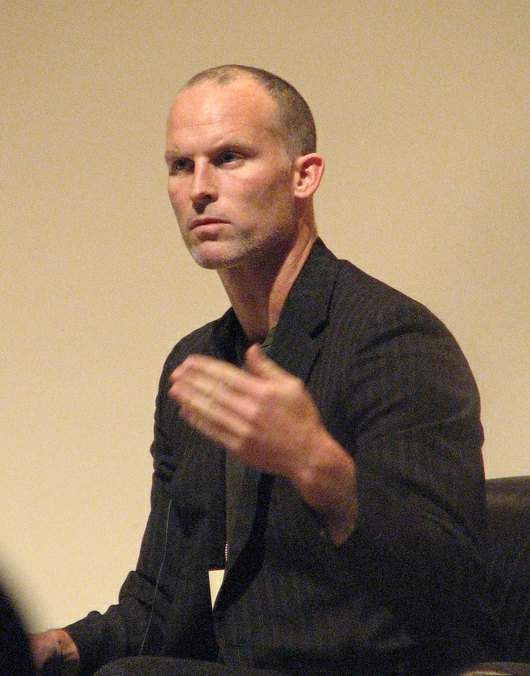
| 7 Quotes | |
| Occup. | Artist |
| From | USA |
| Born | March 25, 1967 |
| Age | 59 years |
| Cite | |
Citation Formats
APA Style (7th ed.)
Matthew barney biography, facts and quotes. (2026, February 19). FixQuotes. https://fixquotes.com/authors/matthew-barney/
Chicago Style
"Matthew Barney biography, facts and quotes." FixQuotes. February 19, 2026. https://fixquotes.com/authors/matthew-barney/.
MLA Style (9th ed.)
"Matthew Barney biography, facts and quotes." FixQuotes, 19 Feb. 2026, https://fixquotes.com/authors/matthew-barney/. Accessed 26 Mar. 2026.
Early life and education
Matthew Barney was born in 1967 in San Francisco and grew up largely in Idaho, a landscape that would later return as a setting and subject in his art. As a teenager he pursued athletics with unusual intensity, a discipline that informed his earliest experiments in performance, endurance, and the body. In the late 1980s he studied art at Yale University, where an interest in anatomy, sports medicine, and process-based sculpture led him to blend drawing, performance, and installation into a single practice. Even before graduating he began staging works that required him to draw under physical constraint, laying the foundations of a lifelong inquiry into how resistance shapes form.Forming a language: early work
Barney emerged in New York in the early 1990s with the Drawing Restraint series, in which he used elastic harnesses, ramps, and other gym-like apparatuses to impede movement while attempting to make marks. The studio became an arena, and materials like petroleum jelly, plastic, and wax served as both sculptural media and metaphors for transformation. His early exhibitions were championed by gallerist Barbara Gladstone, whose support helped bring the work to an international audience. From the outset, critics noted the way he wove together myth, biology, and sport to propose a new kind of narrative sculpture.The Cremaster Cycle
Between the mid-1990s and early 2000s, Barney produced the five-part Cremaster Cycle, an ambitious suite of films with accompanying sculptures, photographs, and drawings. The cycle, non-linear in structure, explored formation and differentiation through elaborately staged tableaux that moved from car culture to architecture to esoteric ritual. Barney frequently performed as central characters, and the films included notable collaborators and appearances, among them the artist Richard Serra and the athlete and model Aimee Mullins. In 2003 the Solomon R. Guggenheim Museum in New York mounted a landmark presentation of the cycle, curated by Nancy Spector, underscoring the project's scale and influence. Earlier, his receipt of the Hugo Boss Prize had already signaled his stature in contemporary art.Collaboration, music, and performance
Music has been crucial to Barney's work. He has maintained a long-running collaboration with composer Jonathan Bepler, whose scores helped fuse opera, ritual, and cinematic sound in projects across decades. In the mid-2000s Barney produced Drawing Restraint 9, a feature-length film and sculptural cycle set largely at sea, where the staging of ceremonial acts coincided with large-scale petroleum jelly forms that softened, hardened, and collapsed as if alive. The musician Bjork, his partner during this period, appeared in the film and composed music for it, adding a vocal and electronic dimension that echoed the work's themes of metamorphosis. Barney and Bjork had a daughter in 2002; their relationship, widely covered in the press, eventually ended, but this period remains central to how audiences first encountered his blend of image, sound, and sculpture.River of Fundament
Building on live performance, Barney developed River of Fundament, a multi-hour film and sculptural project that premiered in the 2010s. Inspired by Norman Mailer's novel Ancient Evenings, it fused staged operatic events with cinematic sequences and monumental cast-metal sculptures, including recast automobiles that appeared as if reborn from industrial furnaces. With Jonathan Bepler shaping an expansive score and a large ensemble of performers, the project reflected Barney's ongoing interest in death, regeneration, and the alchemical transformation of matter into form.Return to landscape: Redoubt
In Redoubt, completed toward the end of the 2010s, Barney returned to the Idaho terrain of his youth. Framing a myth of Diana and Actaeon within a contemporary wilderness of hunting and surveillance, he combined film with a suite of engravings and electroplated sculptures. Redoubt emphasized fieldwork and craft: long days in snowy mountains yielded images of pursuit and concealment, while the studio processes translated those experiences into copper-coated reliefs and intricate molds. It marked a renewed dialogue between his body-centered early practice and a broader ecological and geological timescale.Methods, motifs, and reception
Across media, Barney's vocabulary is remarkably consistent: constraint and release; the body as engine and medium; substances at the edge of stability, like wax and petroleum jelly; ritual actions that leave residue as drawing or sculpture. He draws on myth without illustrating it, and he treats narrative as an armature around which materials and actions accumulate. Curators, notably Nancy Spector, have foregrounded these strategies in exhibitions that integrate films with related objects, emphasizing how each project radiates outward into an ecosystem of forms.Legacy and presence
Barney's work has been exhibited widely in major museums and galleries and has influenced artists working at the intersection of film, performance, and sculpture. The sustained partnerships he has built, especially with Barbara Gladstone, Jonathan Bepler, and collaborators who cross disciplinary boundaries, have been instrumental to realizing projects that require both cinematic infrastructure and sculptural craft. While the spectacle of his large-scale endeavors often draws attention, the core of his practice remains the same as in his earliest Drawing Restraint experiments: testing how pressure, whether physical, social, or mythic, shapes what an artwork can become.Our collection contains 7 quotes written by Matthew, under the main topics: Art - Movie.
Source / external links