
Matthew Bourne Biography Quotes 11 Report mistakes
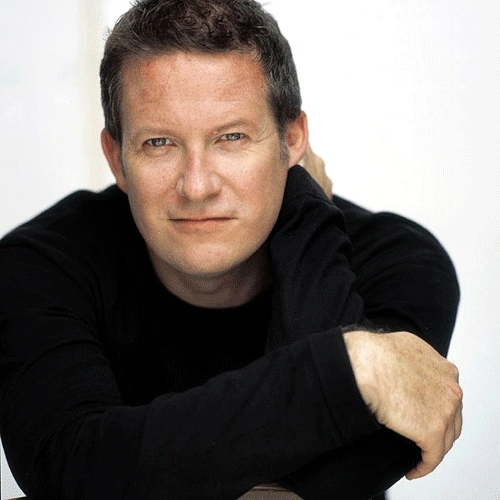
| 11 Quotes | |
| Occup. | Dancer |
| From | England |
| Born | January 13, 1960 |
| Age | 66 years |
| Cite | |
Citation Formats
APA Style (7th ed.)
Matthew bourne biography, facts and quotes. (2026, February 11). FixQuotes. https://fixquotes.com/authors/matthew-bourne/
Chicago Style
"Matthew Bourne biography, facts and quotes." FixQuotes. February 11, 2026. https://fixquotes.com/authors/matthew-bourne/.
MLA Style (9th ed.)
"Matthew Bourne biography, facts and quotes." FixQuotes, 11 Feb. 2026, https://fixquotes.com/authors/matthew-bourne/. Accessed 6 Mar. 2026.
Early Life and Background
Matthew Bourne was born on January 13, 1960, in England, and came of age in the afterglow of postwar British popular culture, when television, musical theatre, and social satire sat side by side with the country"s strong ballet tradition. He grew up at a time when dance was widening its public identity - no longer only the preserve of opera houses, but increasingly visible in West End entertainment and touring productions - and this mix of high craft and mass appeal would become central to his instincts.From the beginning, Bourne"s inner life as an artist tilted toward storytelling and character: the sense that movement could carry plot, wit, and emotional reversal without sacrificing technical rigor. That psychological orientation - less toward abstract virtuosity than toward human behavior observed with a sharp eye - later made him unusually attuned to the way audiences read bodies: who holds power, who is excluded, who performs normality, and who breaks it.
Education and Formative Influences
Bourne trained at Laban Centre for Movement and Dance (now part of Trinity Laban Conservatoire of Music and Dance) in London, where he absorbed modern dance craft alongside composition, theatre, and music literacy. The late-1970s and early-1980s British dance ecosystem also fed him: the continuing pull of narrative ballet, the rise of dance-theatre, and a broader cultural mood that valued reinvention and irony. Just as importantly, he learned to think like a maker rather than merely a performer - how to shape an evening, pace an arc, and collaborate with designers and composers in ways that supported story.Career, Major Works, and Turning Points
After early work in performance and choreography, Bourne founded Adventures in Motion Pictures and then became known through New Adventures, the company that made his name synonymous with popular, psychologically legible dance-theatre. His breakthrough came with bold reimaginings of classics: Swan Lake (1995) recast the swans as a male ensemble and turned a familiar fairy tale into a study of desire, isolation, and spectacle, achieving rare crossover success on stage and in filmed form. He followed with reinterpretations that proved the approach was not a one-off: Cinderella (1997), The Sleeping Beauty (2012), The Red Shoes (2016), and early signature works such as Nutcracker! (1992), plus the more intimate, film-noir flavored Play Without Words (2003). Touring and international invitations reinforced his position as a British cultural export, while awards and public attention expanded the audience for narrative dance far beyond conventional ballet circles.Philosophy, Style, and Themes
Bourne"s style is built on a deceptively strict contract with the audience: give them story, rhythm, and surprise, then ask them to see themselves inside the tale. He frames entertainment not as a dilution of art but as its delivery system, and he has been explicit about the ethic behind the showmanship: “When it comes down to it, it's giving people a good night out in a basic way and I think my company guarantees that”. The psychology beneath that sentence is pragmatic and democratic - a choreographer who distrusts insider codes and wants the work to land viscerally, in real time, for people who may not know the canon but know what it feels like to be thrilled, unsettled, or moved.That accessibility is matched by a meticulous respect for musical architecture and theatrical clarity. Bourne repeatedly builds movement as a form of close reading - not decorative steps laid on top of a score, but character and plot traced through musical intention: “I'm very conscious that I want the dance audience to respond and respect what I'm doing, so I'm always very true to the music and I honour the music in the way I see it - I don't mess around with the music”. The tension between fidelity and reinvention is where his themes live: familiar myths reopened to expose loneliness, sexuality, class performance, and institutional pressure. Even his humor is structural rather than ornamental, a way to disarm the viewer and then pivot into vulnerability - “My company is known for being funny as well as moving. You get a bit of everything in these shows. I think people know they're going to have a surprising experience”. In Bourne"s world, surprise is not gimmick; it is a moral tool, jolting audiences out of inherited assumptions about gender, romance, and the bodies allowed to carry beauty.
Legacy and Influence
Bourne"s enduring influence lies in making narrative dance feel contemporary without severing it from tradition: he proved that classical scores and archetypal stories could be reauthored for modern psychology and still sell out theatres. By turning ballet-adjacent work into mainstream cultural conversation - especially through Swan Lake and the continuing repertoire of New Adventures - he helped expand who feels invited into dance, and he modeled a career in which touring, popular appeal, and serious craft reinforce one another. His legacy is a repertoire that many companies cite as a gateway for new audiences, and a choreographic example that treats entertainment as a form of respect: an insistence that pleasure and depth can share the same stage.Our collection contains 11 quotes written by Matthew, under the main topics: Art - Music - Success - Travel.
Source / external links