
Maurice Hinchey Biography Quotes 4 Report mistakes
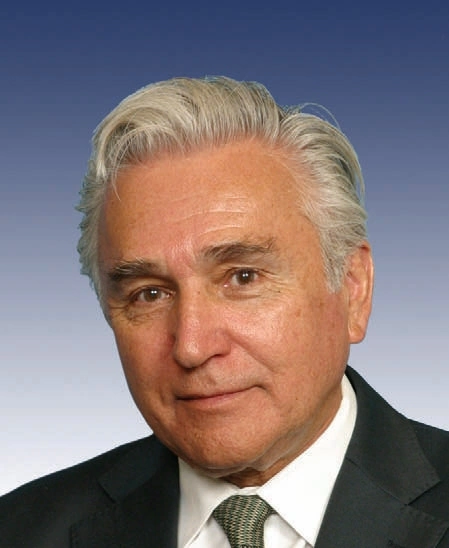
| 4 Quotes | |
| Born as | Maurice Dunlea Hinchey |
| Occup. | Politician |
| From | USA |
| Born | October 27, 1938 New York City, New York, U.S. |
| Age | 87 years |
| Cite | |
Citation Formats
APA Style (7th ed.)
Maurice hinchey biography, facts and quotes. (2026, February 11). FixQuotes. https://fixquotes.com/authors/maurice-hinchey/
Chicago Style
"Maurice Hinchey biography, facts and quotes." FixQuotes. February 11, 2026. https://fixquotes.com/authors/maurice-hinchey/.
MLA Style (9th ed.)
"Maurice Hinchey biography, facts and quotes." FixQuotes, 11 Feb. 2026, https://fixquotes.com/authors/maurice-hinchey/. Accessed 12 Feb. 2026.
Early Life and Education
Maurice Dunlea Hinchey was born on October 27, 1938, in the United States and grew up in the Hudson Valley of New York, a region that would remain central to his identity and public service. Raised in a working-class household, he came of age amid the mills, quarries, and small towns that dotted the Catskills and the middle Hudson River corridor. Those surroundings shaped his view that public policy should protect communities, safeguard natural resources, and broaden opportunity. He attended public schools and went on to study at the State University of New York at New Paltz, a campus he would later champion throughout his career. His studies in political science and history gave him a grounding in American government and reform-minded traditions that he would carry into elected office.Entry Into Public Service and the New York State Assembly
Hinchey entered elective office in the 1970s, joining the New York State Assembly at a moment when New York was grappling with industrial decline, fiscal stress, and a growing awareness of toxic pollution. He quickly emerged as one of Albany's most persistent environmental voices. As chair of the Assembly's Environmental Conservation Committee and leader of legislative inquiries into toxic substances, he helped steer investigations and policy responses to hazardous waste and contamination across the state. The work intersected with high-profile crises, including Love Canal, and brought him into close collaboration with public health advocates, local officials, and community organizers. He operated during the administrations of Governors Hugh Carey and Mario Cuomo and developed a reputation among colleagues in both parties as a determined, detail-oriented legislator focused on protecting water, air, and public health while supporting sustainable economic development.U.S. House of Representatives
In 1992, Hinchey won election to the U.S. House of Representatives, beginning a two-decade congressional tenure that lasted from 1993 to 2013. He represented districts anchored in the Hudson Valley, Catskills, and, after redistricting, parts of the Southern Tier, including communities such as Binghamton and Ithaca. On Capitol Hill, he joined the House Appropriations Committee, a powerful panel that allowed him to influence federal investments in infrastructure, education, research, environmental restoration, and public lands. Through the Interior, Environment, and related appropriations work, he became a key advocate for protecting the Hudson River, revitalizing historic and natural assets, and supporting the science and conservation programs that underpin watershed health.
Hinchey was a member of the Congressional Progressive Caucus and aligned with colleagues who sought to pair economic growth with environmental stewardship and civil liberties protections. New York's U.S. Senate delegation changed over his tenure, and he worked at different times alongside Daniel Patrick Moynihan, Hillary Rodham Clinton, Charles Schumer, and, later, Kirsten Gillibrand on regional priorities. Within the House, he forged partnerships on consumer and environmental policy with members such as Diana DeGette and Jared Polis, notably in efforts to increase transparency around hydraulic fracturing practices.
Policy Priorities and Legislative Initiatives
Environmental protection was the throughline of Hinchey's public life. He pushed for cleanups of legacy pollution and backed the use of federal and state tools, including Superfund and estuary restoration programs, to reclaim contaminated sites and revitalize riverfront communities. He was instrumental in elevating the Hudson River as a national resource worthy of sustained federal attention, and he championed the creation and funding of initiatives that preserved landscapes, expanded access to trails and open space, and supported heritage tourism. The establishment of the Hudson River Valley National Heritage Area reflected his belief that natural, cultural, and historic assets could drive both conservation and economic development.In Congress, Hinchey gained national notice for his insistence on government transparency and accountability. He authored a directive that led to the declassification and review of U.S. intelligence records related to Chile in the era surrounding the 1973 coup, work that intersected with human rights advocates and scholars. This reflected a broader, consistent focus on oversight and the public's right to understand the actions taken in its name.
Closer to home, he focused on bread-and-butter investments: rail, roads, and water systems; support for research universities and colleges in his district (including institutions such as SUNY New Paltz, Binghamton University, and Cornell University); and programs that nurtured small business innovation and downtown revitalization. He used his appropriations role to direct attention to the needs of small and mid-sized communities that might otherwise be overlooked.
As the boom in shale gas development drew national scrutiny, Hinchey pressed to subject hydraulic fracturing to federal drinking water protections. Working with colleagues Diana DeGette and Jared Polis, he co-sponsored legislation to require disclosure of chemicals used in fracking and to close regulatory gaps, a stance that made him a prominent voice among those advocating caution, science-based regulation, and protection of water resources. This work echoed his Assembly tenure and endeared him to many environmental groups and local activists across the Hudson Valley and Southern Tier.
Constituency, Collaboration, and Political Style
Hinchey's political style blended populist instincts with a technocrat's command of policy detail. He maintained close relationships with county executives, town supervisors, and mayors throughout the region, and he was known for maintaining an energetic constituent services operation. He collaborated with labor leaders, environmental advocates, and business owners to attract investment and jobs while hewing to strong environmental standards. The people around him in public life included a wide circle of local officials, civic leaders, and legislative colleagues on both sides of the aisle with whom he negotiated budget priorities.He was also a committed mentor and a family man. His daughter, Michelle Hinchey, would later enter public service herself, extending the family's engagement in state and regional issues; her emergence underscored how central civic life was to the Hinchey household. Constituents often encountered him at town halls and community events across Ulster, Dutchess, Sullivan, and neighboring counties, where he carried the same message he brought to Washington: government can be a force for the common good when it is open, accountable, and grounded in the needs of ordinary people.
Retirement, Later Years, and Legacy
Hinchey announced his retirement at the end of the 112th Congress, concluding his service in January 2013. In the years surrounding his departure, he faced significant health challenges, yet he remained a touchstone for Democrats and independents across the region who saw in his career a model of principled, place-based leadership. He died on November 22, 2017, at the age of 79. Tributes poured in from former colleagues, including members of New York's congressional delegation such as Charles Schumer and Kirsten Gillibrand, from local officials who had worked with him on transportation and environmental projects, and from community advocates who considered him an indispensable ally.His legacy lives on in the landscapes and institutions he helped to protect and strengthen. The Maurice D. Hinchey Catskill Interpretive Center, named in his honor, symbolizes his lifelong effort to connect people with the region's ecology and history. The ongoing work of the Hudson River Valley National Heritage Area reflects his conviction that preserving heritage is compatible with expanding opportunity. And in the realm of national policy, his push for transparency in intelligence matters and his early, sustained advocacy for stronger oversight of industrial practices continue to inform debates in Washington.
Maurice Hinchey's biography is, in many ways, the story of a region and its people: industrial towns charting new futures, universities generating ideas and jobs, rivers and mountains restored for public use, and citizens insisting on a government that serves them fairly. Surrounded by family, staff, constituents, and colleagues who shared those commitments, he left behind a durable record and a clear example of how sustained, locally rooted public service can shape national outcomes.
Our collection contains 4 quotes written by Maurice, under the main topics: Justice - Nature - Learning.
Source / external links