
Maurice Jarre Biography Quotes 12 Report mistakes
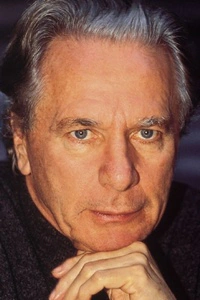
| 12 Quotes | |
| Born as | Maurice-Alexis Jarre |
| Occup. | Composer |
| From | France |
| Spouse | Leslie Caron (m. 1953–1965) |
| Born | September 13, 1924 Lyon, France |
| Died | March 28, 2009 Malibu, California, USA |
| Cause | Heart failure |
| Aged | 84 years |
| Cite | |
Citation Formats
APA Style (7th ed.)
Maurice jarre biography, facts and quotes. (2026, February 11). FixQuotes. https://fixquotes.com/authors/maurice-jarre/
Chicago Style
"Maurice Jarre biography, facts and quotes." FixQuotes. February 11, 2026. https://fixquotes.com/authors/maurice-jarre/.
MLA Style (9th ed.)
"Maurice Jarre biography, facts and quotes." FixQuotes, 11 Feb. 2026, https://fixquotes.com/authors/maurice-jarre/. Accessed 25 Mar. 2026.
Early Life and Background
Maurice-Alexis Jarre was born on September 13, 1924, in Lyon, France, into a Catholic, lower-middle-class family shaped by the frictions of the interwar years. He grew up between the everyday discipline of provincial life and the expanding soundscape of radio, dance bands, and concert music that made modern France feel simultaneously traditional and new. That tension - order versus appetite, restraint versus sweep - would later become one of the psychological motors of his film music.The Second World War arrived as a formative pressure rather than a distant headline. Jarre came of age under occupation-era scarcity and moral ambiguity, when art could be either refuge or risk, and when the theater and concert hall carried a particular charge: culture as persistence. The war years left him with a practical toughness and a skepticism about prestige detached from labor - a sensibility audible in his later ability to marry grand themes to a craftsman's sense of timing and function.
Education and Formative Influences
After early musical study that included percussion - an unusually tactile entry point for a future melodist - Jarre trained formally at the Conservatoire de Paris, where he absorbed orchestration and the French tradition of color and clarity (Ravel, Debussy) while also confronting the modernist climate that followed the war. He emerged with a composer's ear for timbre and a theater musician's instincts: music as architecture for attention, movement, and emotion, not as a self-contained monument.Career, Major Works, and Turning Points
Jarre first consolidated his identity in Paris theater, then moved decisively into cinema at the moment when international co-productions and roadshow epics demanded a new kind of musical scale. His breakthrough came with director David Lean on Lawrence of Arabia (1962), whose desert themes turned orchestral melody into landscape; the collaboration continued on Doctor Zhivago (1965), with its instantly recognizable "Lara's Theme", and later Ryan's Daughter (1970) and A Passage to India (1984). In parallel he scored films across Europe and Hollywood, including the high-profile assignment of replacing Bernard Herrmann for Alfred Hitchcock on Torn Curtain (1966), a career pivot that exposed him to studio politics as much as musical challenge. Over decades he remained a go-to composer for big narrative canvases - epics, romances, historical dramas - while also working in more contemporary idioms when projects demanded it.Philosophy, Style, and Themes
Jarre thought of music as narrative force with physical consequences. The theater trained him to time emotion, to build a scene from inside, and he spoke of that apprenticeship with almost homesick intensity: “Soon I worked during twelve years in theater works of the prestigious Theatre National Populaire. It was the best time of my life, the most difficult, the most interesting, the most exciting”. That statement reveals a psychology that valued pressure and rigor over comfort - a composer who felt most alive when music had to earn its place, cue by cue, night by night. It also explains why his film themes, however lyrical, are rarely idle; they are built to carry story weight.His signature combined bold, singable melody with French orchestral sheen and a willingness to deploy unusual instrumental masses for coloristic meaning - harps, percussion, expansive strings, and chorus used not as decoration but as dramaturgy. Just as important was his sensitivity to the editing room: he learned to write music that could reshape pacing, and Lean in particular treated Jarre's cues as a structural partner. Jarre recalled a moment that captures their symbiosis and his own confidence that music could widen cinema's emotional aperture: “In that long sequence, when Lawrence enters in the desert to rescue a lost man, Lean listened the music I wrote and wanted to extend the scene to let my work stay completely”. Yet Jarre also carried a late-career ambivalence about changing industry priorities, where marketing anxiety could overrule musical intelligence; his acid humor about executives points to a craftsman who felt increasingly out of step with decision-makers: “Nowadays, if a studio assumes that his film is bad, there is always an executive that gets more nervous than usual and thinks that if they change the music, the film will become a masterpiece”. Underneath the joke lies his ethic - music must serve truth, not panic.
Legacy and Influence
Maurice Jarre died on March 28, 2009, leaving a body of work that helped define the sound of the modern epic and proved that a film score could be both immediately memorable and structurally intelligent. He expanded the vocabulary of mainstream film music by treating orchestration as psychology and landscape, making melody a form of narrative memory that audiences carried out of the theater. His best scores remain case studies in how a composer can collaborate with directors, negotiate studios, and still imprint a personal inner weather on mass entertainment - a legacy audible in later generations of composers who pursue the same blend of thematic clarity, timbral imagination, and dramatic purpose.Our collection contains 12 quotes written by Maurice, under the main topics: Music - Movie - Career - Family.
Other people related to Maurice: Jean-Michel Jarre (Composer)
Source / external links