
Max Born Biography Quotes 6 Report mistakes
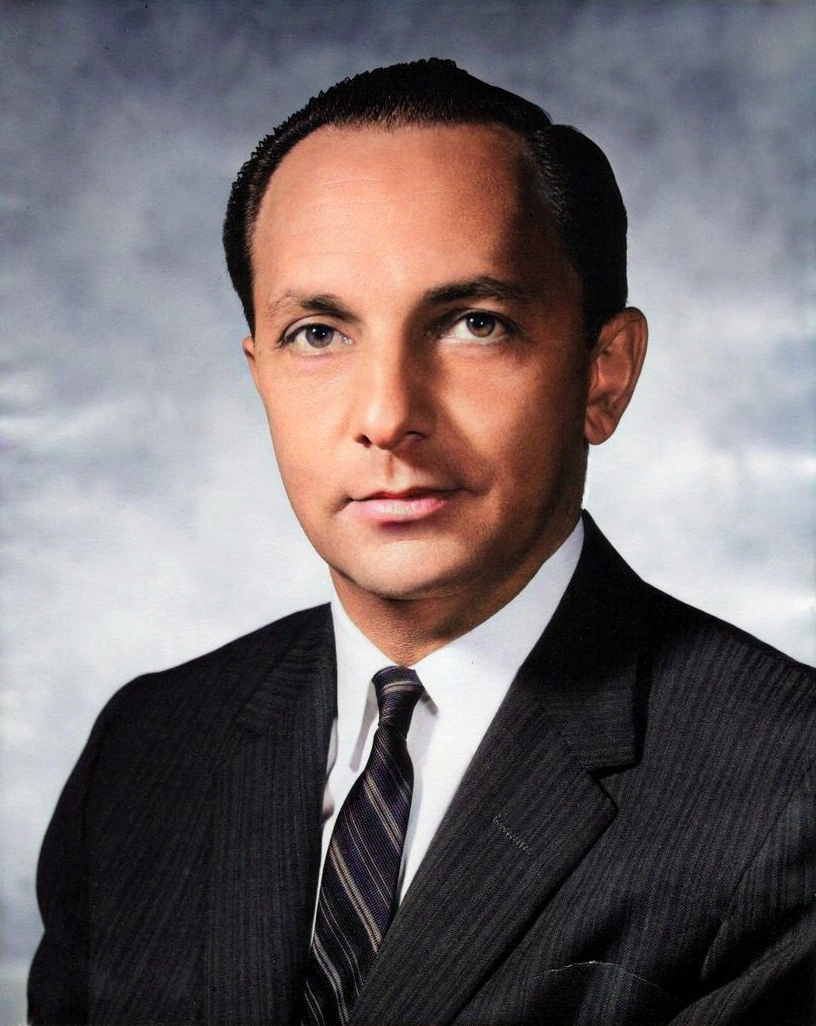
| 6 Quotes | |
| Occup. | Mathematician |
| From | Germany |
| Spouse | Hilda Wolf |
| Born | December 11, 1882 Breslau, German Empire |
| Died | January 5, 1970 Göttingen, West Germany |
| Aged | 87 years |
| Cite | |
Citation Formats
APA Style (7th ed.)
Max born biography, facts and quotes. (2026, February 11). FixQuotes. https://fixquotes.com/authors/max-born/
Chicago Style
"Max Born biography, facts and quotes." FixQuotes. February 11, 2026. https://fixquotes.com/authors/max-born/.
MLA Style (9th ed.)
"Max Born biography, facts and quotes." FixQuotes, 11 Feb. 2026, https://fixquotes.com/authors/max-born/. Accessed 13 Feb. 2026.
Early Life and Background
Max Born was born on December 11, 1882, in Breslau, Germany (now Wroclaw, Poland), into an assimilated Jewish family shaped by the German Bildungsburgertum. His father, Gustav Born, was a professor of anatomy at the University of Breslau; the household mixed academic discipline with music and conversation, a milieu that trained the young Born to treat ideas as living things rather than school exercises. His mother, Margarethe Kaufmann Born, died when he was still a boy, an early rupture that helped form the inward cast and moral seriousness visible in his later writings on responsibility in science.Imperial Germany offered Born both opportunity and pressure: a confident culture of universities and laboratories, and a nationalism that grew harsher as the century turned. He came of age as classical physics appeared complete, yet the atmosphere in mathematics and electrodynamics was already restless. That tension - between established form and unsettling new questions - became the emotional register of his life: a preference for exact structure, coupled to an openness to conceptual upheaval.
Education and Formative Influences
Born studied at Breslau and then at the University of Gottingen, the preeminent mathematical center of the era, where David Hilbert and Felix Klein modeled a style of thinking that prized axiomatic clarity and the translation of physical problems into rigorous form. He also spent time at Heidelberg and Zurich, absorbing the broader German-speaking scientific world. His early work in mathematical physics culminated in a Gottingen doctorate (1906), and he remained close to the Hilbert circle - a connection that later made him a natural bridge between the abstract methods of mathematics and the experimental puzzles that were dismantling classical mechanics.Career, Major Works, and Turning Points
After early posts (including work in Gottingen and a professorship at Breslau), Born became professor at the University of Berlin and then, in 1921, took the chair of theoretical physics at Gottingen, where he built one of the great schools of quantum theory. There he collaborated with Werner Heisenberg and Pascual Jordan in the mid-1920s on matrix mechanics and its mathematical foundations, a turning point that put him at the center of the new physics. In 1926 he introduced the probabilistic interpretation of the wave function, the "Born rule", framing quantum predictions as fundamentally statistical rather than classically deterministic. The Nazi takeover in 1933 ended his German career: as a Jew, he was dismissed and went into exile, first in Cambridge and then as Tait Professor of Natural Philosophy at the University of Edinburgh (1936-1953). In Britain he wrote influential texts, corresponded widely (including with Albert Einstein, his friend and philosophical foil on quantum indeterminacy), and continued reflecting on the ethical and political uses of scientific power. In 1954 he received the Nobel Prize in Physics for his fundamental research in quantum mechanics, especially the statistical interpretation, a belated recognition that also symbolized the survival of a displaced intellectual generation.Philosophy, Style, and Themes
Born thought like a mathematician even when arguing about nature: he sought invariants, limiting cases, and logically clean transitions from old theories to new. Yet he never treated physics as mere computation. "I am now convinced that theoretical physics is actually philosophy". That sentence is less a slogan than a confession of temperament: he experienced foundational questions as unavoidable, and he distrusted any pose of purely technical neutrality. The probabilistic turn he championed was not, for him, an abdication of reason but a disciplined recognition of what the theory actually licensed us to say.His most characteristic theme is humility before reality, paired with intellectual audacity. Quantum mechanics, in his view, did not reduce the world to chaos; it replaced unattainable microscopic certainty with a precise calculus of expectation. "If God has made the world a perfect mechanism, He has at least conceded so much to our imperfect intellect that in order to predict little parts of it, we need not solve innumerable differential equations, but can use dice with fair success". The metaphor of dice is psychological as much as scientific: Born accepted limits without resentment, turning them into a workable ethic of knowledge. From exile and two world wars he drew a broader warning against dogmatism in both religion and science: "The belief that there is only one truth, and that oneself is in possession of it, is the root of all evil in the world". In Born, epistemology and morality interlock - the same spirit that tolerates uncertainty in measurement must also resist certainty as a political weapon.
Legacy and Influence
Born's enduring influence is both technical and cultural. Technically, the Born rule sits at the core of quantum theory, shaping how every physicist moves from a wave function to experimental probabilities; his Gottingen school helped define the modern research university model for theoretical physics. Culturally, his life traced the arc of European science through catastrophe - from imperial confidence to fascist expulsion to postwar reconstruction - and his writing left a template for the scientifically literate conscience, insisting that rigor, modesty, and ethical responsibility are not competing virtues but a single, hard-won stance toward the world.Our collection contains 6 quotes written by Max, under the main topics: Deep - Science - Reason & Logic - Free Will & Fate.
Other people related to Max: Enrico Fermi (Physicist), J. Robert Oppenheimer (Physicist), Richard Courant (Mathematician), Olivia Newton-John (Musician), Otto Hahn (Scientist), Walther Bothe (Physicist), Klaus Fuchs (Physicist)
Max Born Famous Works
- 1951 The Restless Universe (Book)
- 1941 Natural Philosophy of Cause and Chance (Book)
Source / external links